Spanish diplomatic sources have firmly reiterated that Madrid's sovereignty over the North African enclaves of Ceuta and Melilla is not open to discussion. "Ceuta and Melilla are part of Spain's territorial integrity, which is internationally recognised," the sources told Euronews. "Spain's territorial integrity has never been and will never be discussed with anyone."
The statements come in response to renewed claims from Morocco's Justice Minister, Abdellatif Ouahbi, who said in an interview with Saudi channel Asharq News that the status of the two autonomous cities remains a "pending issue" in bilateral talks. Ouahbi's remarks have reignited a long-simmering dispute that has periodically strained relations between Rabat and Madrid.
Defence minister's message to Ceuta and Morocco
Spain's Defence Minister, Margarita Robles, has been equally blunt during her recent visits to Ceuta. Addressing residents, she stressed that "Ceuta and Melilla are utterly Spanish" and that the armed forces will remain deployed to support the population. "People in Ceuta should know that their Armed Forces will be by their side. We are not going to abandon them," she assured.
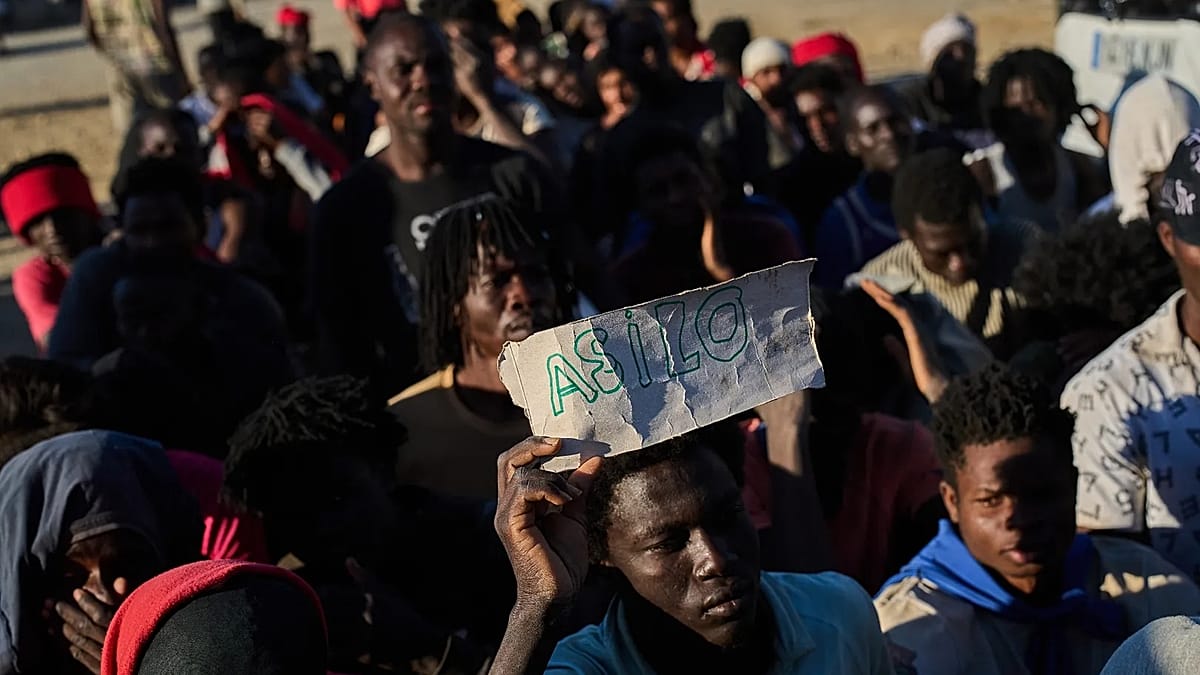
Robles also referenced the mass border crossing of 30 July, when thousands of migrants surged into Ceuta, saying that such an event must not be allowed to happen again. Analysts interpret her remarks as a dual signal: reassurance for local residents and a clear warning to Morocco that Madrid will not tolerate further pressure tactics.
The timing is sensitive. Rumours of another attempted mass entry over the weekend had circulated, though none materialised. The defence minister's presence was intended to calm nerves and demonstrate that the state is in control.
Morocco's territorial claims and the migrant crisis
Ouahbi's interview has brought the territorial question back into the spotlight. He criticised Madrid for "accepting" and "regularising" migrants who arrive irregularly, while claiming that Rabat is working to prevent them from leaving Morocco. He also suggested that Morocco might suspend its extradition agreement with Spain, a move that would have significant legal implications.
The minister denied that Morocco uses mass migration as a tool of political pressure. "We continue to assert our territorial claims and we want to resolve the problem through dialogue," he said, adding that "we have never used this issue as a tool of pressure."
However, his comments come nearly two weeks after the Ceuta migration crisis, during which thousands of people, including many minors, crossed into the Spanish enclave. The situation of those minors remains a contentious issue between Madrid and Rabat. Ouahbi has demanded their return, insisting that "we do not abandon our children. We want and demand that our children return to Morocco."
He also rejected the idea that Moroccan children could stay in Spain to help address demographic challenges. "We are not a state whose purpose is to solve any other country's demographic problem," he concluded.
The dispute over the enclaves is not new, but it has gained renewed urgency. Spain's position is that the cities are integral parts of its territory, a stance supported by the European Union. Morocco, however, has historically claimed them, though it has often been willing to set the issue aside for pragmatic cooperation on migration and trade.
For now, Madrid is holding firm. The message from both the foreign ministry and the defence minister is consistent: Ceuta and Melilla are Spanish, and that is not negotiable. The question is whether Morocco will continue to press the issue, and how that might affect the broader bilateral relationship, including cooperation on migration control and security.
As the situation evolves, the European dimension remains relevant. The EU has backed Spain's position, and any escalation could have implications for the bloc's external borders. For now, the focus is on managing the immediate aftermath of the crisis and addressing the humanitarian needs of those still in Ceuta, including the unaccompanied minors whose fate is still being determined.