How quickly we age may be written in our speech. A new study from Trinity College Dublin suggests that the way we talk—our pace, pauses, vocabulary, and even emotional tone—can reveal signs of biological ageing and early cognitive decline. The findings, published in the journal Alzheimer's & Dementia, point to a future where a simple voice recording could serve as a window into brain health.
The research team, led by Agustín Ibáñez, used an automated computer tool they call a "speech clock" to analyze audio recordings from nearly 3,000 Spanish-speaking adults across Latin America. Participants performed tasks such as narrating a short animated film, retelling a story after a 20-minute gap, and naming items within given categories. The machine-learning algorithm examined hundreds of features—speech rate, pauses, pitch, emotional content, vocabulary richness, and semantic precision—to estimate each person's chronological age and generate a "speech age gap."
"Our voice appears to contain much more information about aging than we previously recognized," said Ibáñez, senior author of the study. "It captures both the passage of chronological time and signals coming from cognition, the brain, systemic biology, and even our accumulated social environment."
What older-sounding speech reveals
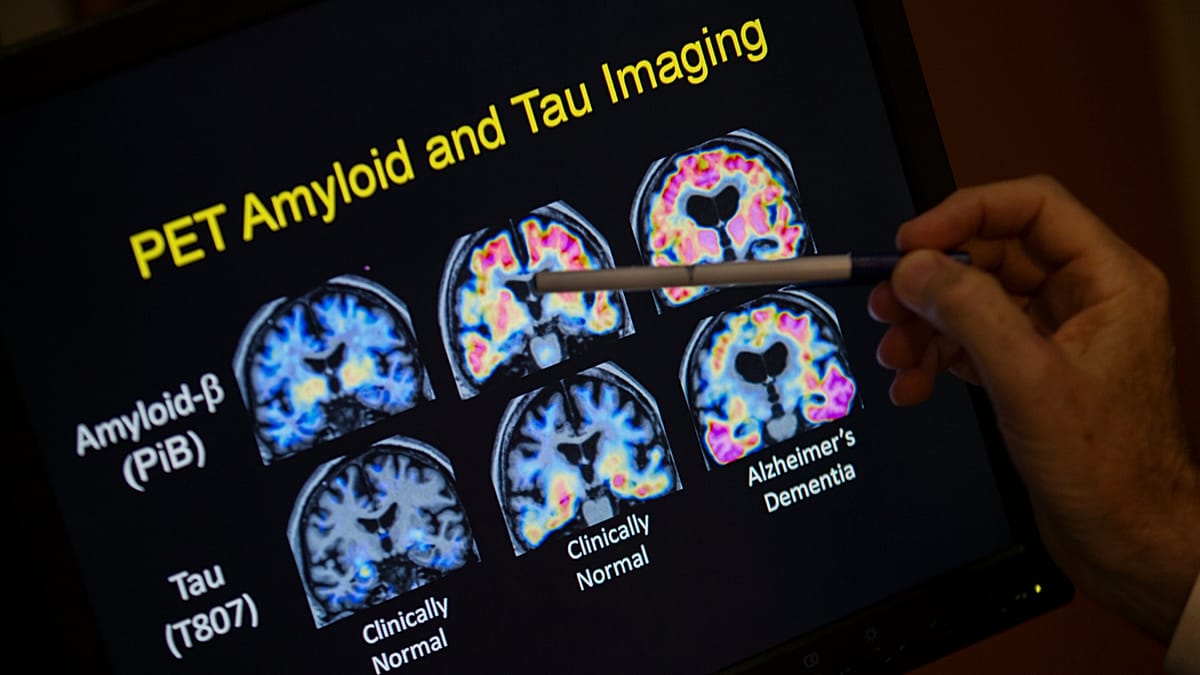
The speech clock distinguished healthy individuals from those with dementia. Healthy participants showed the smallest speech age gaps, while progressively wider gaps were seen in people with Alzheimer's disease and forms of frontotemporal dementia. People whose speech sounded older than their actual age showed signs of accelerated ageing across several biological and clinical systems. MRI brain scans indicated greater loss of brain structure and altered brain activity.
Older speech scores were also tied to higher levels of p-Tau217, a key protein in the blood linked to Alzheimer's disease. Participants with older speech scores performed worse on tests of memory, focus, and problem-solving—not just language-related tasks, but also non-verbal ones like visual memory.
"The broader finding is nevertheless striking in that a person's voice may provide a remarkably compact readout of multiple dimensions of aging," added Ibáñez. Factors such as chronological age, brain ageing, cognition, and Alzheimer's and dementia phenotypes are traditionally measured with very different and often expensive tools, yet they appear to converge in the way someone speaks, he said.
The authors note that many current measures of biological ageing require MRI scanners, blood samples, or specialised clinical assessments. By contrast, the speech clock offers a low-cost, non-invasive, automated alternative that can be carried out remotely on standard devices without specialist medical staff. This could be particularly valuable in regions with limited access to advanced diagnostics, such as parts of Latin America and rural Europe.
The researchers stressed, however, that the speech clock is not yet a diagnostic test for dementia and cannot establish whether an older-appearing speech profile predicts who will subsequently develop cognitive decline. "We are not there yet," Ibáñez cautioned. "But this is a promising step towards accessible screening tools."
The study adds to a growing body of research linking speech patterns to brain health, and it raises the possibility of integrating such tools into routine check-ups. As Europe's population ages, low-cost screening methods could help identify at-risk individuals earlier, potentially easing the burden on healthcare systems. The findings also echo broader discussions about fragmented national rules that can hinder the adoption of innovative health technologies across the EU.
While the speech clock is still in its early stages, the implications are significant. If validated in larger, more diverse populations, it could become a standard tool in geriatric assessments, complementing existing methods. For now, it serves as a reminder that the way we speak is not just a means of communication, but also a reflection of our inner biology.