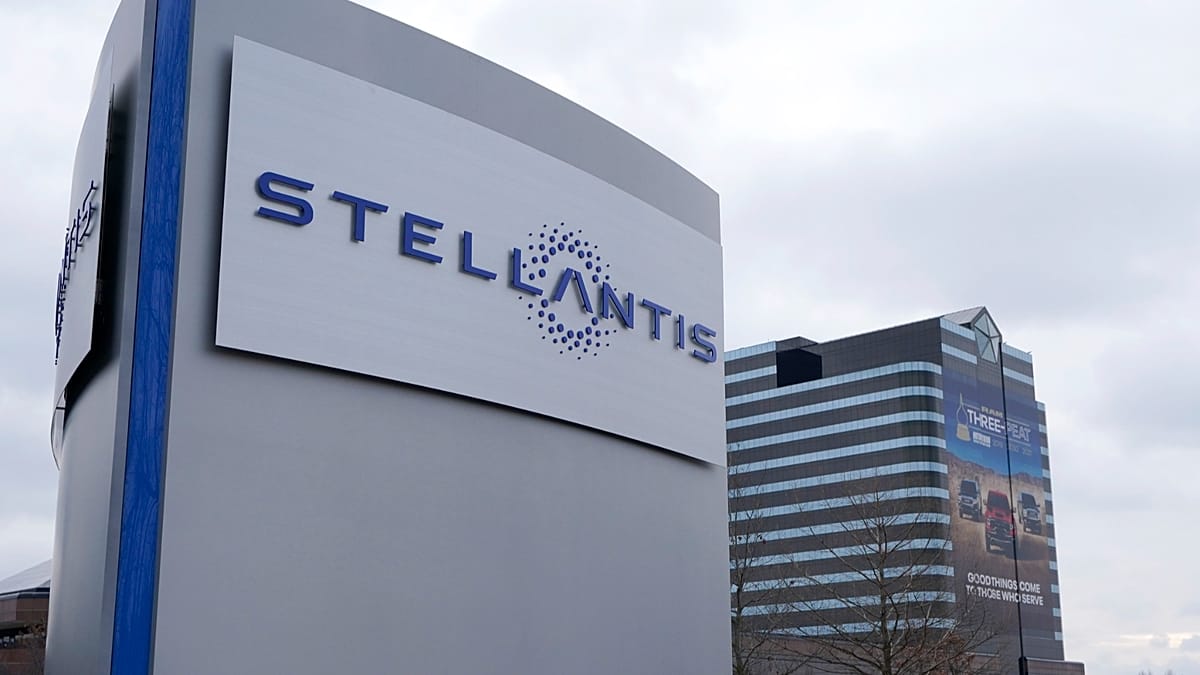
Stellantis, the multinational automaker behind Jeep, Fiat, and Peugeot, has announced a global recall of nearly 955,000 vehicles due to a software fault that can prevent rearview camera images from appearing on the infotainment screen when reversing. The issue, traced to radio software rather than the cameras themselves, affects models across several of the group's 14 brands.
The recall is the latest blow for a company that has been struggling to recover from a difficult 2025, marked by significant losses, a leadership overhaul, and thin profit margins. It also comes just months after two other major recalls, intensifying scrutiny of how well Stellantis's sprawling brand portfolio is integrated behind the scenes.
A merger of giants
Stellantis was created in January 2021 through the merger of Italian-American Fiat Chrysler Automobiles (FCA) and France's PSA Group, the parent of Peugeot and Citroën. The deal, approved by the European Commission in December 2020, formed what was then the world's fourth-largest carmaker by sales.
The merger was years in the making. FCA's late CEO, Sergio Marchionne, had long argued that carmakers needed greater scale to absorb the costs of electrification, autonomous driving, and tightening emissions regulations. After a proposed tie-up with Renault collapsed in 2019 amid political concerns from the French government and resistance from Renault's alliance partner Nissan, FCA turned to PSA. The two companies agreed to merge in December 2019, targeting annual cost savings of around €3.7 billion.
The combined group brought together some of Europe's most recognizable automotive names, including Vauxhall in the UK, Opel in Germany, and Peugeot and Citroën in France, alongside Fiat Chrysler's American and Italian brands. It remains substantially family-controlled: the Agnelli family, founders of Fiat, and the Peugeot family are major shareholders, along with the French state's investment bank.
Headquartered in the Netherlands, Stellantis operates under CEO Antonio Filosa, who runs day-to-day operations from Auburn Hills, Michigan. The company employs around 250,000 people across more than 30 countries and sold 5.4 million vehicles in 2024, generating revenues of roughly €156.9 billion. It remains one of Europe's largest carmakers by market share and a major industrial employer.
A camera glitch, not a hardware fault
The latest recall stems from a software issue in the infotainment system, not the cameras themselves. Stellantis discovered that a fault could stop the rearview camera image from appearing on the media screen when the vehicle is shifted into reverse. Of the total, 848,511 vehicles are affected in the US, spanning the 2026 and 2027 model years.
The recall covers the Chrysler Pacifica, Pacifica Plug-in Hybrid, and Voyager; the Dodge Charger; several Jeep models including the Cherokee, Compass, Gladiator, Grand Cherokee, and Wrangler; and Ram's 1500, 2500, and ProMaster ranges. A further 82,869 vehicles are affected in Canada, about 7,969 in Mexico, and 15,736 across other markets—though it remains unclear whether any of those fall within Europe.
Stellantis says it has not received reports of accidents or injuries linked to the fault. The company plans to fix the issue with a free over-the-air software update, meaning most owners will not need to visit a dealership. A prompt will appear on the vehicle's screen once the update is ready, and written recall notices are expected to reach owners by post from September.
Part of a wider pattern
This is Stellantis's third major US recall of 2026. In June, the company recalled more than 1 million Jeep Wrangler and Gladiator models over a power-steering wiring defect linked to a fire risk. In July, it recalled a smaller batch of Grand Wagoneer and Wagoneer L SUVs over faulty brake software that could disable electronic stability control.
Backup cameras have also become a recurring headache across the wider car industry. Since the US mandated the safety feature on all new passenger vehicles under 4,500 kg in 2018, camera-related faults have led to recalls covering roughly 21 million vehicles nationwide, according to an analysis by Bloomberg. Stellantis has now traced at least three separate rearview camera failures back to radio software rather than the cameras themselves in recent years, pointing to deeper issues in how the company integrates its infotainment systems across brands.
For a company that has positioned itself as a leader in the transition to electric and software-defined vehicles, these repeated quality lapses are more than a logistical headache—they raise questions about the robustness of its technology platforms. As Stellantis works to rebuild trust with regulators and consumers, the coming months will be critical in determining whether it can move beyond these setbacks.