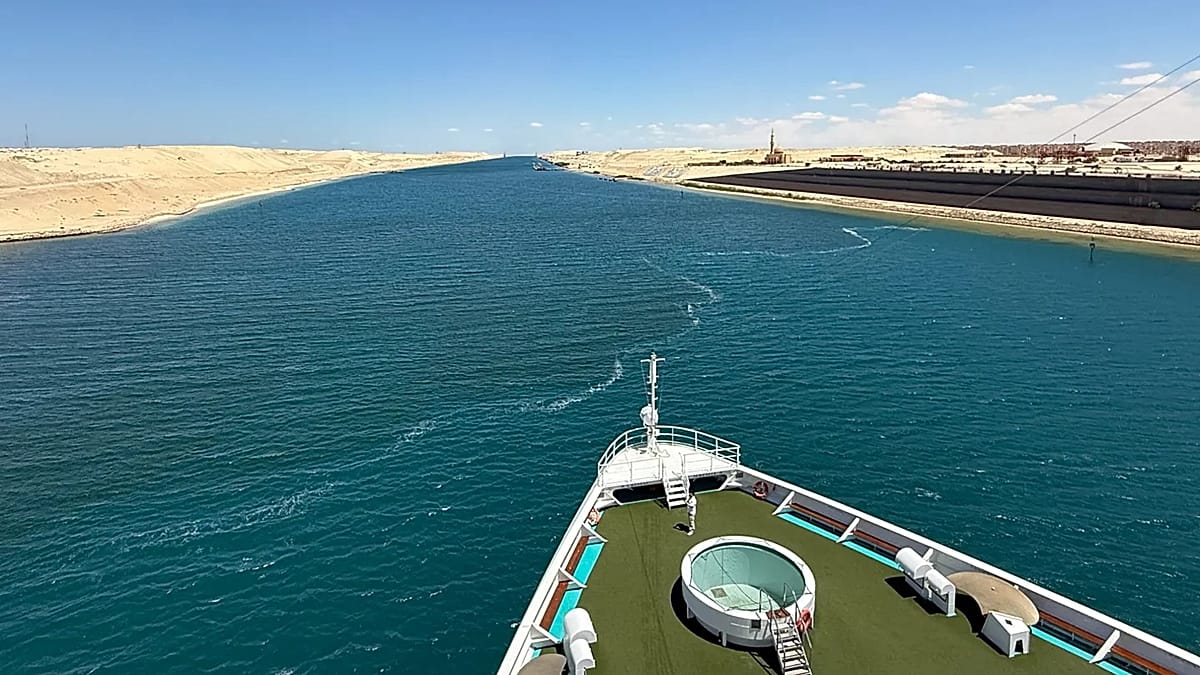
More than 300 executives and policymakers from the global travel sector convened this week on a luxury cruise ship traversing the Suez Canal, seeking solutions to a crisis that threatens to upend the European summer holiday season. The summit, organized by the World Travel & Tourism Council (WTTC), comes as the blockade of the Strait of Hormuz—some 3,700 kilometres away—sends shockwaves through aviation fuel supplies and airline economics.
Gloria Guevara, president and CEO of the WTTC, acknowledged that the conflict in the Middle East is already constraining airline capacity. “The crisis is affecting the airline supply as there are fewer seats available,” she said, though she expressed optimism that recovery in the region could occur within two months once hostilities cease.
A Connectivity Crisis for Europe
The blockade has created a perfect storm for the tourism industry just as the peak season approaches. Paraffin shortages and surging oil prices are tripling fuel costs for airlines, for which fuel typically accounts for 30% of operating expenses. The fear is that these costs will be passed on to travellers, the weakest link in the chain. The European Commission’s latest transport report warns that “travellers could experience disruption, including delays, cancellations, longer journey times and higher prices.”
Guevara urged governments to reduce taxes on airlines to prevent the burden from falling on consumers. “If taxes are lowered, there will be no impact on travellers and mobility will be allowed without affecting supply,” she argued.
Egypt’s Minister of Tourism, Sherif Fathi, told Euronews that the main challenge is not demand but transport supply. He noted that Egypt has already seen a 16% drop in tourism in April due to fewer available flights and seats. “The impact is also being felt in maritime, rail and land transport globally with direct consequences for tourism, trade and prices,” he explained.
Europe Watches Closely
The European Commission is monitoring developments with concern. Eduardo Santander, CEO of the European Travel Commission (ETC), confirmed that European authorities are “very concerned about the situation.” He warned that if conditions worsen, the Commission may force member states to share strategic reserves, similar to the approach taken with COVID-19 vaccines.
Santander identified the United Kingdom as the European country most exposed to the crisis, while Spain is relatively safer thanks to its fuel reserves. “This summer will be different,” he said. “People will be travelling closer and much more within Europe.” He also suggested the crisis could accelerate a long-sought goal: deseasonalising tourism and extending the travel season beyond the summer months.
The UK’s vulnerability is compounded by its post-Brexit trading arrangements, which have already strained supply chains. The crisis may reignite debates about the wisdom of leaving the EU, as Brexit re-enters UK Labour leadership contest with figures like Wes Streeting calling it a “catastrophic mistake.”
Despite the uncertainty, Guevara struck an optimistic note. “We are now more accustomed to managing crises and dealing with these situations,” she said. The WTTC reminded delegates that tourism accounts for nearly 10% of the global economy and supports 376 million jobs—one in nine jobs worldwide.
The floating summit, held in the waters of the Suez Canal, aimed to project confidence to an industry that has weathered wars, pandemics, and economic shocks. But for European travellers, the message is clear: this summer will be different, and planning ahead may require more flexibility than usual.