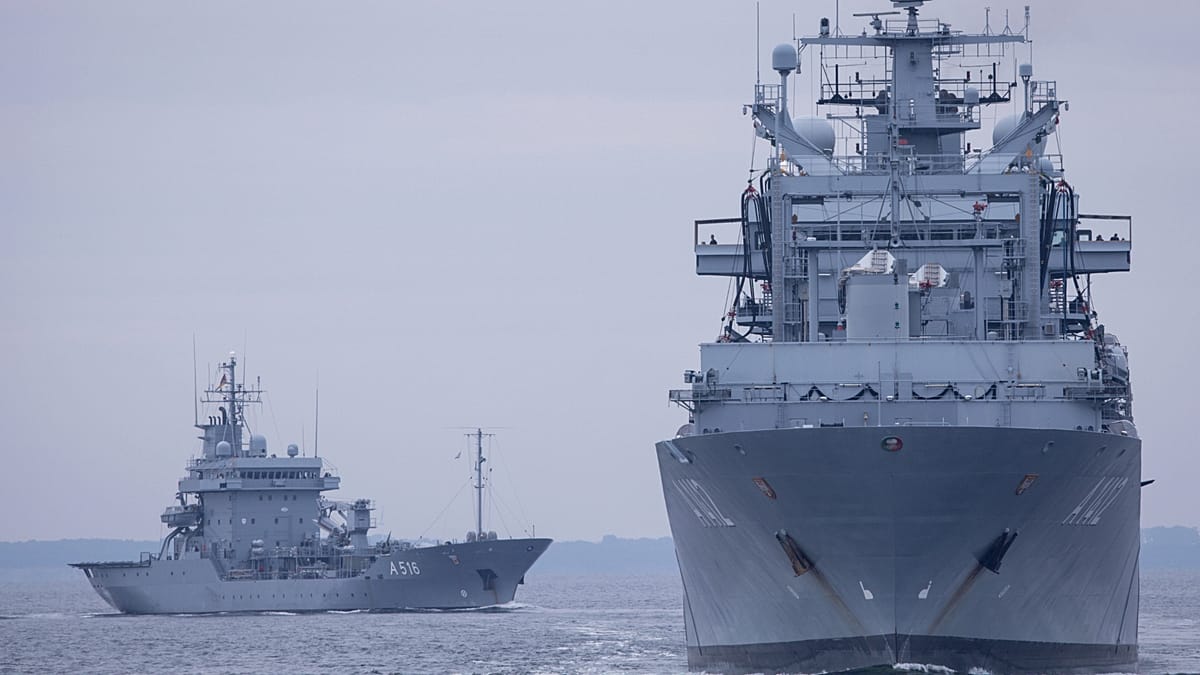
Since the beginning of 2025, the German navy has been grappling with a surge in suspected sabotage incidents. According to investigative outlet CORRECTIV, ten possible acts of sabotage have been uncovered, raising urgent questions about the perpetrators and their motives.
The most recent case came to light in late February 2026, when a two-centimetre-long slit was discovered by chance in the fuel line of the frigate Rheinland-Pfalz at its berth in Wilhelmshaven. The Bundeswehr has assessed the damage as deliberate. A spokesperson stated: “In principle, we can confirm that the threat situation for seagoing units in shipyards, as well as naval vessels under construction, has changed as a result of several suspected cases of sabotage.” The case was reported to the public prosecutor’s office in Oldenburg in March, but the investigation was later dropped after it proved impossible to determine whether the cause was intentional damage, wear and tear, or a material defect.
A Pattern of Disruption
Another incident occurred during an inspection at the Blohm+Voss shipyard in the port of Hamburg in January 2025. On the warship Emden, several kilograms of a gritty material—similar to the sand used for cleaning ship surfaces—were found in the engine room. Tagesschau reported that the material could have caused considerable damage. Hamburg’s criminal investigation department and the public prosecutor’s office stated that it was presumably sabotage. Two men, a 37-year-old Romanian and a 54-year-old Greek, who are believed to have worked in the port, were arrested. The prosecution did not name any possible instigators.
These cases follow a series of earlier incidents in 2024. On one navy warship, cable looms were cut through. In another, used oil was apparently deliberately poured into a ship’s drinking water system. In both instances, the public prosecutor’s office discontinued the proceedings due to lack of evidence.
Western security circles have pointed to Russia as a likely orchestrator. Germany is seen as a prime target for Russian hybrid attacks, given its role as one of the most important supporters of Ukraine in repelling Moscow’s full-scale invasion. The Federal Office for the Protection of the Constitution (BfV) and the Federal Criminal Police Office (BKA) have warned of so-called Wegwerf-Agenten—disposable agents. These are petty criminals recruited via social media networks, often paid in cryptocurrencies, to carry out acts of sabotage. Fees range from several hundred euros for minor tasks to tens of thousands of euros for larger jobs targeting NATO military equipment.
The pattern of attacks underscores a broader challenge for European security. As Germany and the Netherlands prepare to deploy a joint NATO command in the Baltics, the vulnerability of naval assets in shipyards becomes a critical concern. The incidents also highlight the difficulty of attributing sabotage when perpetrators are low-level operatives with no direct links to state sponsors.
For now, the German navy remains on alert, but the question of who is ultimately behind the attacks—and how to stop them—remains unresolved.