Sweden's centre-left bloc has secured a narrow parliamentary majority in the general election, ending the right-wing government's term. The alliance, led by Magdalena Andersson's Social Democrats and including the Left Party, the Greens, and the Centre Party, now holds a three-seat advantage in the 349-seat Riksdag over outgoing Prime Minister Ulf Kristersson's right-wing coalition.
The final count showed a razor-thin margin, with only about 50,000 votes separating the two blocs nationwide. For Andersson, the immediate challenge is forming a government. Her alliance is ideologically diverse, and negotiations are expected to be fraught. The Centre Party has already stated it will not back a government that gives cabinet posts to the Left Party, while the Left Party insists on ministerial representation.
Speaking after the result, Andersson said voters had chosen “a new direction” for Sweden. Kristersson has resigned, but if Andersson fails to assemble a workable cabinet, he could still attempt to form an alternative government. He has said he will respect her efforts and wished her luck given the divisions within her alliance.
Coalition-building in Sweden often takes time. In 2022, it took more than five weeks; after the 2018 election, it took nearly 20 weeks. This time, the ideological gaps within the centre-left bloc could make the process even more protracted.
Mixed results for major parties
Despite the bloc's victory, the Social Democrats recorded their worst result in over a century, losing eight seats and securing just 28% of the vote. The party, which dominated Swedish politics for most of the 20th century, remains the largest in the Riksdag but faces questions about its long-term appeal.
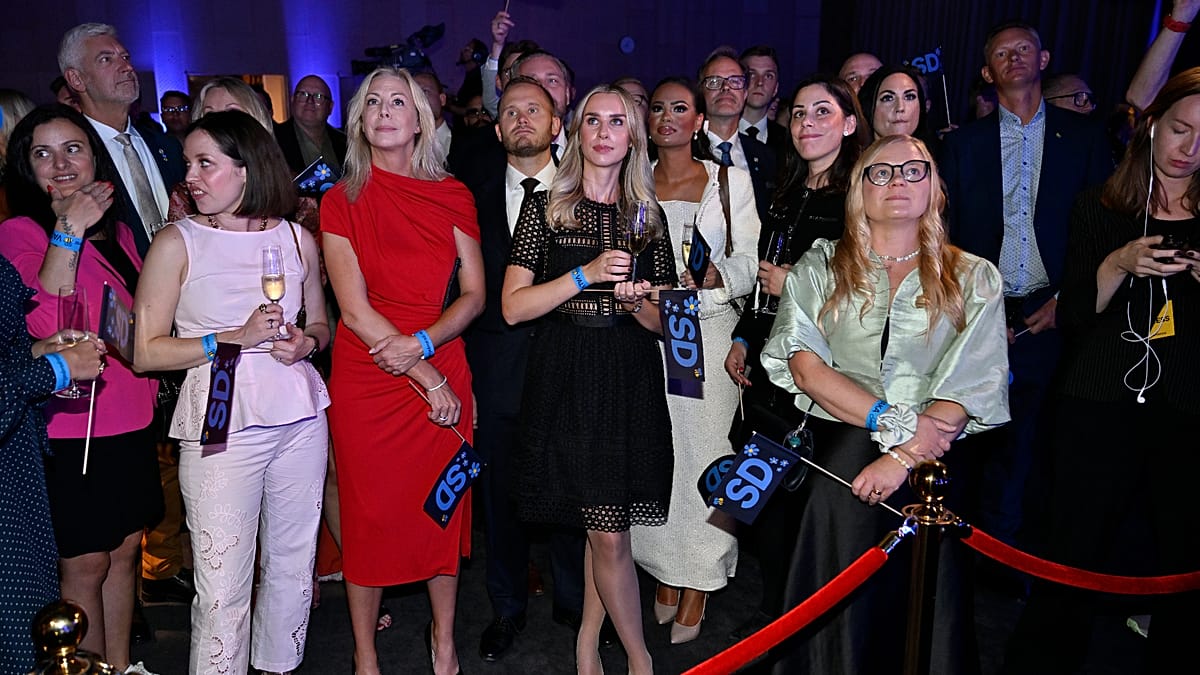
The far-right Sweden Democrats also saw support decline for the first time since entering parliament in 2010. Their vote share fell to 17.5%, and they lost 11 seats. This marks a notable shift, as the party had been gaining ground in recent elections.
International reaction was swift. Spain's Prime Minister Pedro Sánchez welcomed the outcome, framing it as a victory for social democracy and the welfare state.
The election was also marked by concerns over disinformation. Researchers found thousands of suspicious X accounts during the campaign, a development that has raised alarms about the integrity of democratic processes in Europe. The findings underscore the growing challenge of online manipulation in elections across the continent.
As Andersson begins the delicate task of forming a government, the coming weeks will reveal whether she can bridge the divides within her alliance. The outcome will shape Sweden's policy direction on issues ranging from immigration to climate change, and will be closely watched across Europe.