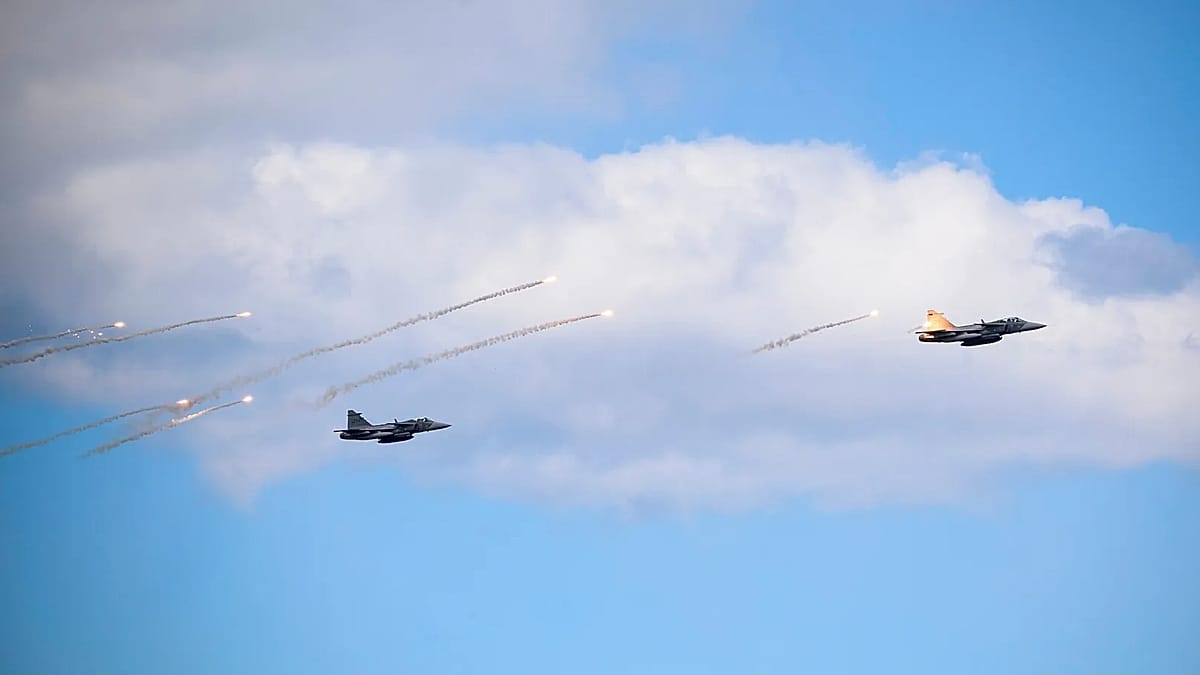
Sweden has committed to donating 16 older-model Gripen fighter jets to Ukraine, while Kyiv intends to purchase up to 20 of the latest Gripen E aircraft, in a significant boost to the country's air defence capabilities. The announcement came during a surprise visit by Ukrainian President Volodymyr Zelenskyy to an air base in Uppsala, 70 kilometres north of Stockholm, on Thursday.
Swedish Prime Minister Ulf Kristersson confirmed that the donated aircraft will be delivered in early 2027, while negotiations for the new Gripen E jets aim for a final agreement by 2030. Ukraine plans to allocate €2.5 billion from an EU loan to finance the purchase of the new models, according to a statement from the Swedish government.
"This is a historic decision for Sweden, but it also strengthens Ukraine's air defence significantly," Kristersson said at a joint press conference with Zelenskyy. The two countries had signed a letter of intent in October 2025 regarding Kyiv's potential acquisition of 100 to 150 Gripen E aircraft. Zelenskyy expressed hope that Ukraine could secure financing for all 150 planes.
Strategic Shift in Military Aid
The decision marks a reversal from 2024, when Sweden suspended plans to send Gripen jets to Ukraine after partner countries requested that priority be given to providing US F-16 fighters. The new package is part of Sweden's 22nd military aid tranche, valued at 25.2 billion kronor (approximately €2.2 billion). Since the start of Russia's full-scale invasion in 2022, Sweden has provided military aid worth more than 128 billion kronor (€11 billion).
Zelenskyy also used the visit to reiterate Kyiv's urgent need for additional Patriot air defence systems. He confirmed that he had sent a letter to US President Donald Trump and the US Congress, dated 26 May, requesting either more Patriot missile systems or licences to produce them domestically. "We are expecting a response," Zelenskyy said, noting that he had met with members of Congress and senators the previous day. "They support the proposals that were addressed to Congress and to the White House."
Ukraine remains heavily reliant on Western allies to intercept Russian missile barrages, despite having developed an innovative system for downing long-range drones that has drawn admiration from advanced militaries worldwide. The country's air defence challenges are compounded by ammunition shortages, a topic Zelenskyy has repeatedly raised with international partners. For more on this, see Zelenskyy Appeals to Trump for Patriot Missiles as Ukraine Faces Ammo Shortage.
The Gripen deal underscores Sweden's deepening commitment to Ukraine's defence, even as the Scandinavian country navigates its own security posture following NATO accession. The jets will complement the F-16s already pledged by other allies, providing Kyiv with a more diverse and resilient air fleet. Ukraine's broader strategy includes not only acquiring modern fighters but also integrating them into its existing Soviet-era infrastructure, a complex logistical challenge.
Zelenskyy's visit to Sweden also highlighted the broader European dimension of the conflict. As EU member states debate future support for Ukraine, Sweden's move signals continued solidarity. However, some European leaders have urged preparing for dialogue with Russia, a stance that has drawn criticism from Kyiv. For context, see France Urges EU to Prepare Russia Dialogue While Prioritizing Ukraine Support.
The Ukrainian president's appeal for Patriot missiles comes amid a broader push for self-sufficiency in defence production. Kyiv has been lobbying Western partners for technology transfers and licences to manufacture advanced weapons systems domestically, reducing reliance on foreign supplies. The response from Washington will be closely watched, as it could set a precedent for future military aid arrangements.
Sweden's donation and Ukraine's purchase plans represent a tangible step in strengthening the country's air defence, but analysts caution that deliveries are years away. In the interim, Ukraine will continue to depend on existing systems and allied support to counter Russian aerial threats. The war, now in its fourth year, shows no signs of abating, and the need for sustained international assistance remains acute.