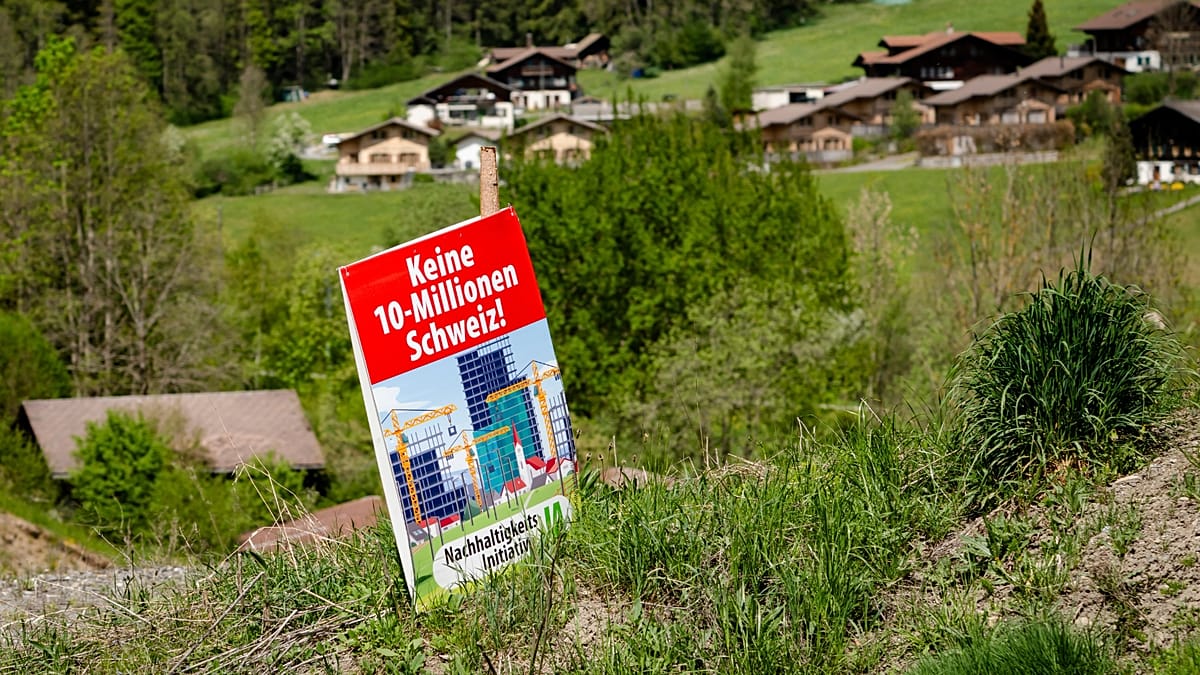
Swiss voters have decisively rejected a controversial initiative backed by the hard-right Swiss People's Party (SVP) that would have capped the country's population at 10 million. According to early results from the federal government, nearly 53% of voters opposed the measure, with turnout exceeding 57% across the Alpine nation's 26 cantons.
The so-called "sustainability initiative" sought to force the government to take action by 2050, including limiting immigration, if the population approached 9.5 million. Foreigners currently make up nearly one-third of Switzerland's 9.1 million residents, a proportion that has grown by almost a quarter over the past generation.
Implications for EU Relations
Had the initiative passed, it would have compelled Bern to restrict asylum, family reunification, and residency permits, and could have required terminating the bilateral agreement on the free movement of people with the European Union. Critics, including the federal government, parliament, and the business association EconomieSuisse, argued this would jeopardise Switzerland's deep economic and cultural ties with the bloc. Some dubbed the proposal a "Swiss Brexit," given Switzerland's position as a non-EU member surrounded by four EU states.
The SVP, which holds the most seats in parliament, has long stoked anti-migration sentiment, particularly regarding workers from neighbouring EU countries. The party argued that demographic growth has strained infrastructure, housing, social programmes, and natural resources. However, opponents countered that immigration brings essential labour and skills to sectors like healthcare, finance, pharmaceuticals, and technology.
In Geneva, Switzerland's second-largest city and a hub for UN institutions and humanitarian groups, about two-thirds of voters opposed the measure. Maria Lalu, a former diplomatic mission worker from the Philippines who arrived in Switzerland in the early 1980s, supported the proposal. "I have nothing against immigration. I also am a stranger," she said, adding that she wants immigration to be more orderly.
Schoolteacher Natascha Robert, born in Switzerland to Swiss parents, voted against the bid. "I think people always have something to bring us," she said, emphasising that growing diversity is an asset. She expressed concern that approval could harm Switzerland's relationship with the EU.
Switzerland's direct democracy allows voters to decide on policy through referendums held four times a year, with most ballots cast by mail. In a separate vote on Sunday, voters approved an amendment to the Civil Service Act.
The rejection of the population cap comes amid broader European debates on immigration and integration. In the UK, recent anti-immigration protests in Belfast have left homes burned and families displaced, highlighting tensions across the continent. Meanwhile, the SVP's initiative had been closely watched as a test of populist anti-immigration sentiment in a country where foreigners constitute a significant share of the population.
For now, Switzerland's open-door policy for EU workers remains intact, preserving the free movement that underpins its economic prosperity and cultural exchange with the continent.