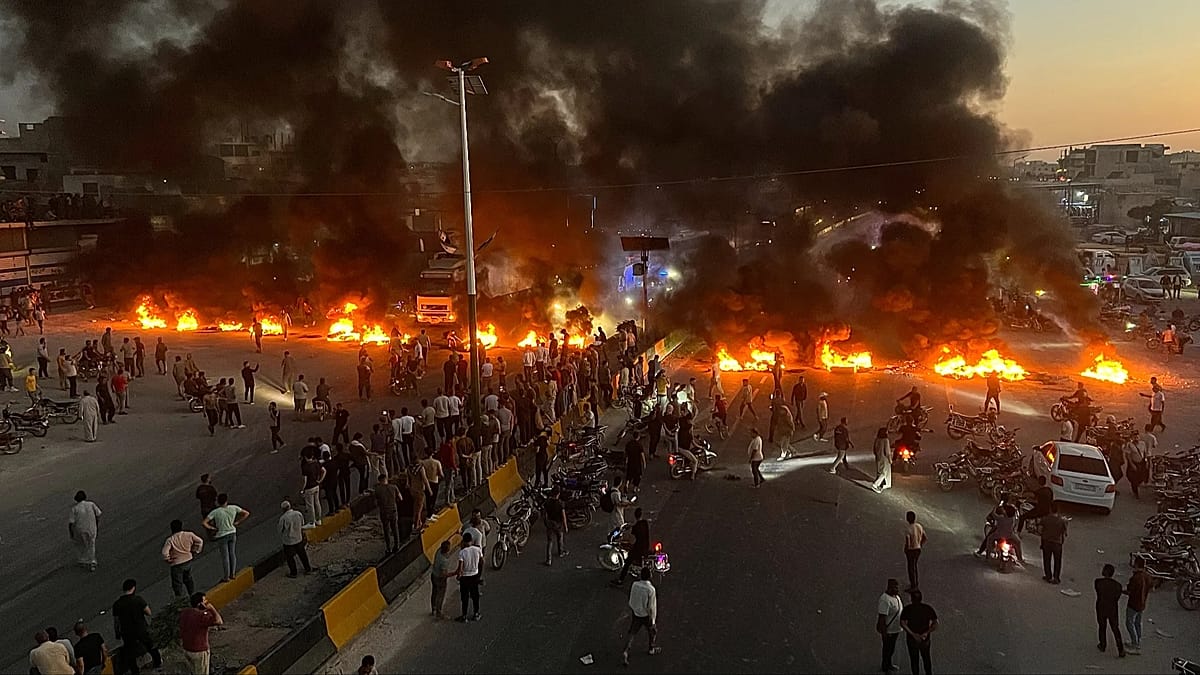
Unrest over fuel price increases spread across Syria on Monday, with demonstrators blocking roads and oil tanker routes in at least six provinces and calling for the dismissal of Energy Minister Mohammed al-Bashir. The country's People's Assembly confirmed it would summon the minister for a hearing on Thursday at noon local time (11:00 CEST), following a request signed by more than 50 MPs.
The protests were triggered by a new temporary price list issued by Syria's standing committee for petroleum product pricing, which took effect at midnight on Sunday. The cost of 95-octane petrol rose from 152 to 195 new Syrian pounds per litre, 90-octane from 147 to 185 pounds, and diesel from 125 to 175 pounds — an increase of 40%. A household gas cylinder also went up from 1,470 to 1,600 pounds.
While 100 Syrian pounds is worth roughly one euro cent, the average net monthly salary in Syria varies widely by sector and can amount to just €50 to €60, according to publicly available figures. The price hikes come as the government of interim President Ahmed al-Sharaa attempts to stabilise an economy devastated by more than a decade of civil war, which has killed over 580,000 people and displaced 13.5 million more.
Protests across the country
Demonstrations were reported in Hasakah, Deir ez-Zor, Raqqa, Aleppo, Idlib and Daraa. In Hasakah and Deir ez-Zor, protesters blocked roads used by crude oil tankers and cut the al-Suway'iya bridge crossing between Syria and Iraq near al-Bukamal. In the city of al-Shahil, residents blocked the road leading to the al-Omar oilfield, preventing tankers from passing.
In Raqqa, truck and haulage drivers staged a sit-in outside a grain storage centre, with the road to the silos remaining blocked on Monday. In Idlib province, protesters blocked the M5 motorway near Maaret al-Numan, while video circulating online showed a night-time demonstration in the city of Idlib with crowds demanding al-Bashir's removal.
Local sources reported that a young man in Hasakah province attempted to set himself on fire in protest at the price increases and worsening living conditions before bystanders intervened. Video of a separate incident showed another man threatening to burn his car. These reports could not be independently confirmed.
Government defends price rise
Al-Bashir said on Saturday that the price rise was necessary to bridge the gap between the cost of importing petroleum products and their domestic selling prices. Syria produces approximately 102,000 barrels of oil per day against domestic demand of around 325,000 barrels, leaving it heavily dependent on imports, he said. Major maintenance work at the Baniyas refinery in the southern Tartus governorate has further reduced domestic refining capacity, requiring additional imports of finished petroleum products.
The ministry said it would review prices as global market conditions change and the refinery returns to full capacity. Oil prices have risen above $100 a barrel in recent days amid disruptions around the Strait of Hormuz linked to the Iran war and Houthi attacks on Saudi Arabia.
The unrest highlights the fragile economic situation in Syria, where the government has increased the minimum wage by 550% since March as part of a broader recovery plan. But for many Syrians, the fuel price hikes threaten to erase those gains. The situation is reminiscent of the energy cost pressures felt across Europe, where rising bills have forced households to make difficult choices.
The parliamentary hearing on Thursday will be closely watched, as MPs are expected to press al-Bashir on the timing and scale of the price increases, as well as on the government's strategy for stabilising fuel supplies. The outcome could have significant implications for the al-Sharaa administration, which has struggled to assert control over all parts of the country.
For now, the protests show no sign of abating, with organisers vowing to continue until the price rises are reversed or the minister is removed. The standoff underscores the deep economic challenges facing Syria as it emerges from years of conflict, and the delicate balance the government must strike between fiscal necessity and public tolerance.