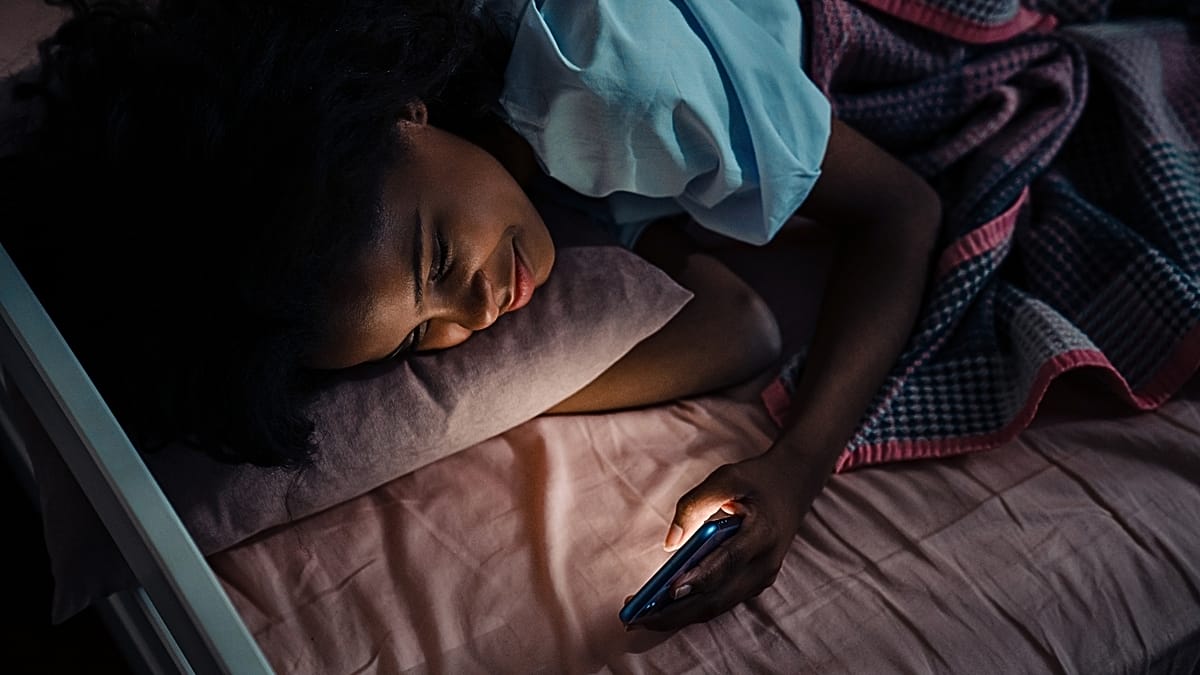
As the new school year gets underway across Europe, many teenagers are facing a familiar struggle: dragging themselves out of bed after a summer of late nights and lie-ins. The pattern of sleeping in on weekends to compensate for early weekday starts has a name — social jet lag — and new research suggests it may be taking a toll on young people's mental health.
A review led by the University of Southampton in the United Kingdom, published in the journal European Child & Adolescent Psychiatry, examined data from 12 studies involving more than 230,000 participants. The findings indicate that adolescents who experience greater social jet lag — the mismatch between their body's preferred sleep schedule and the one imposed by school and social obligations — are more likely to report symptoms of anxiety.
The relationship appears to be bidirectional: higher anxiety levels also predict greater social jet lag, creating a potential vicious cycle. However, the authors stress that this is an association, not a proven cause-and-effect link.
Why teenagers' body clocks shift
Everyone has a chronotype — a natural preference for being a morning or evening person. While this tends to remain stable through adulthood, adolescence brings a significant shift toward eveningness. "During puberty, the body's internal clock usually shifts back by a few hours, meaning teenagers naturally don't start feeling sleepy until later and would ideally wake up later too," said Sarah Chellappa, a co-author of the paper from the University of Southampton.
"Teenagers also face demands on their time, from early school starts to socialising online, which can rob them of sleep, especially during the week," she added. The clash between this biological preference and rigid school timetables creates what the researchers describe as a "perfect storm" for circadian misalignment, when the internal body clock is out of sync with the external world.
Anxiety is already the most common mental health problem among adolescents. The World Health Organization estimates that globally, 4.4% of 10–14-year-olds and 5.5% of 15–19-year-olds experience an anxiety disorder — intense, persistent fear or nervousness that is hard to control. Left unaddressed, these struggles can have long-term consequences, making early identification and intervention crucial.
The authors argue that public health recommendations should promote sleep health among adolescents and emphasise the importance of consistent sleep timing. But they also point to broader structural changes. "It's important to look beyond what individuals can do alone and recognise how broader societal systems can influence sleep," said Hannah Ravenhall, the paper's lead author. "This starts with acknowledging the biological sleep changes that occur in adolescence, advocating for their sleep needs, and reconsidering secondary school start times to support young people's wellbeing."
In practice, that could mean schools revisiting their start times and parents rethinking evening screen rules. Such small structural adjustments, the researchers argue, may do more for teenagers' mental health than simply telling them to "go to bed earlier."
The findings come as several European countries debate school schedules and screen use among minors. In Belgium, for instance, the launch of new night train connections has sparked conversations about how travel and sleep interact, while elsewhere, governments are considering restrictions on social media for under-16s, a move that could indirectly affect evening screen time.
For parents and educators, the takeaway is clear: helping teenagers maintain a regular sleep schedule — even on weekends — could be a simple yet effective way to support their mental health. As the school year ramps up, a little flexibility in start times and a firmer line on late-night scrolling might go a long way.