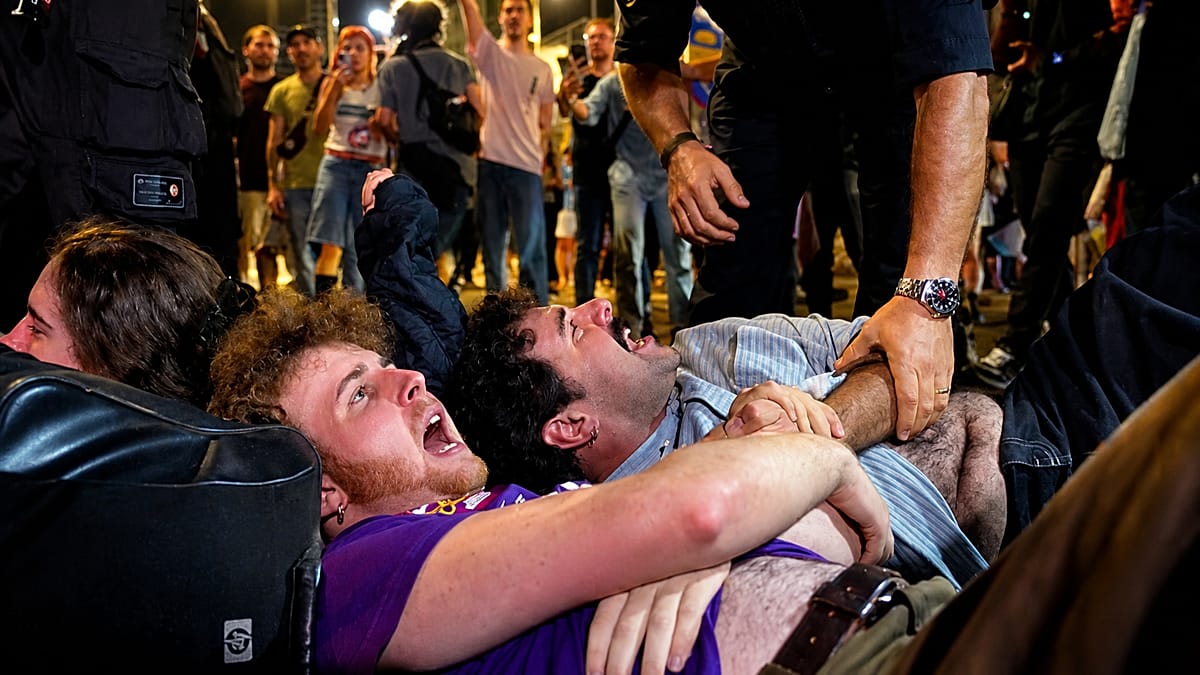
Thousands of demonstrators gathered in Tel Aviv on Saturday to press for a coalition government that would bring together Jewish and Arab political parties, following an election that left Israel without a clear winner. The protest, which saw activists block a major intersection, was broken up by police using water cannons and arrests.
The demand reflects growing frustration with the political paralysis that has gripped the country since Tuesday's vote, the fifth in under four years. With neither Prime Minister Benjamin Netanyahu's right-wing bloc nor the opposition led by Yair Lapid securing a majority in the Knesset, the path to forming a government remains unclear.
Coalition arithmetic and the Arab vote
The Joint List, an alliance of predominantly Arab parties, has emerged as a potential kingmaker. Its leaders have signaled willingness to support a government that would end Netanyahu's long tenure, but only if their policy demands are met. The protesters in Tel Aviv argue that including Arab parties is not just a tactical necessity but a moral imperative for a society that is roughly one-fifth Arab.
“We cannot keep pretending that Arab citizens are not part of this country,” said one organizer, who asked to remain anonymous. “A unity government that excludes them is not unity at all.”
The demonstration came as Israeli opposition celebrates narrow lead in exit polls, but the final results have narrowed the gap, leaving Netanyahu with a possible path to a coalition with religious and far-right parties. However, his legal troubles—he is on trial for corruption—complicate any deal, as some potential partners have ruled out sitting with him.
The European Union has watched the Israeli election closely, given its strategic partnership with the country and its role in the Middle East peace process. EU foreign policy chief Josep Borrell has called on all parties to form a stable government that can resume negotiations with the Palestinians.
“The EU stands ready to work with any Israeli government that respects democratic norms and international law,” Borrell said in a statement. “But we are concerned about the rise of extremism on both sides.”
The protest in Tel Aviv also drew attention to the broader question of Jewish-Arab relations, which have been strained by recent violence in mixed cities. Some demonstrators carried signs reading “Jews and Arabs refuse to be enemies” in Hebrew and Arabic.
Police said they dispersed the crowd after protesters ignored orders to clear the road. At least a dozen people were detained, according to local media. The protest was largely peaceful, but the heavy-handed response drew criticism from civil rights groups.
As coalition talks are set to begin in earnest, the demand for a unity government including Arab parties is likely to remain a central theme. The coming weeks will test whether Israel's fractured political system can produce a government that reflects the country's diversity—or whether it will lurch toward yet another election.
For now, the streets of Tel Aviv have become a barometer of public frustration. The protesters' message is clear: the status quo is unsustainable, and any government that ignores the Arab minority does so at its own peril.