Ten nations — Denmark, France, Germany, Italy, the Netherlands, Norway, Spain, Sweden, Ukraine, and the United Kingdom — have formally launched a coalition to develop an integrated anti-ballistic missile defence system for Europe. The joint declaration, released on the sidelines of a major summit in Paris, frames the effort as a necessary response to the escalating threat of ballistic missiles on the continent.
“We believe that the protection of Europe requires a global solution of integrated missile defence architecture to deter and defeat future missile threats,” the signatories stated. The coalition’s stated purpose is “purely defensive,” aimed at shielding populations and critical infrastructure from attacks that have become more frequent and sophisticated since Russia’s full-scale invasion of Ukraine.
Macron: ‘Protect Ukraine, Strengthen Our Collective Security’
French President Emmanuel Macron, speaking on the social platform X, underscored the strategic rationale: “Faced with the ballistic threat, we are making a clear choice: protect Ukraine, strengthen our collective security, and build the Europe of defence.” His remarks came as Paris hosted the “Coalition of the Willing” meeting, drawing at least 25 heads of state or government to discuss support for Kyiv and increased pressure on Moscow.
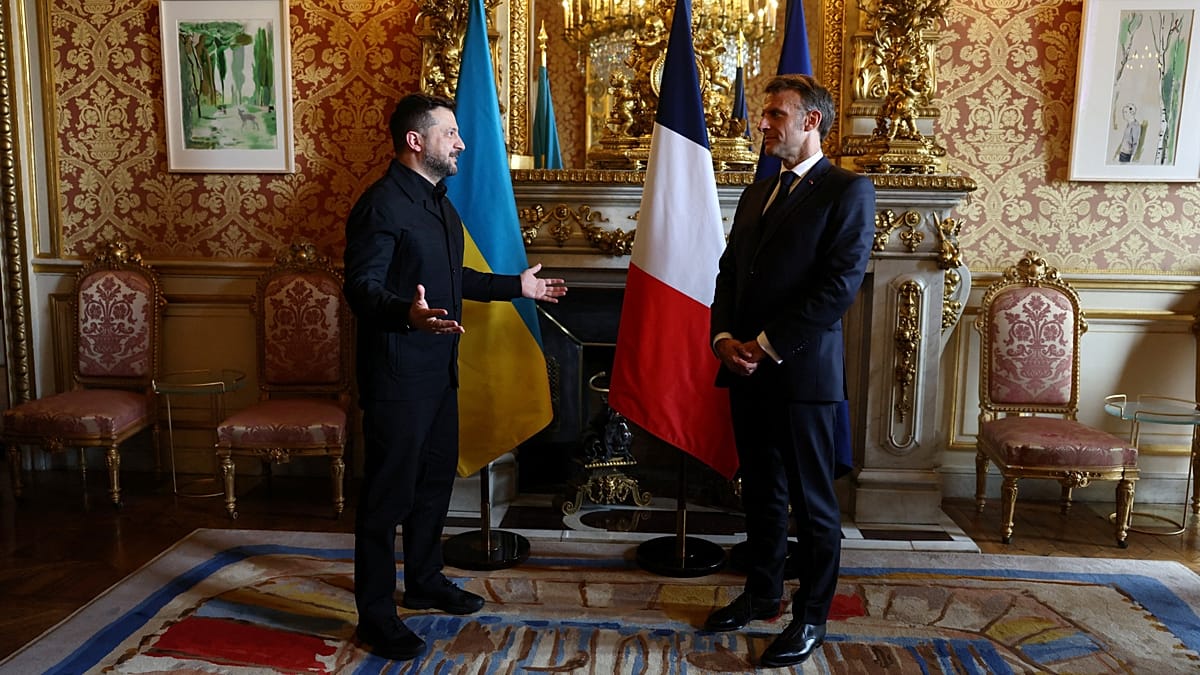
Ukrainian President Volodymyr Zelenskyy, who met Macron ahead of the summit, stressed the urgency of reinforcing Ukraine’s air defences. “It is important to strengthen Ukraine, reinforce our air defences, and accelerate the development of Europe’s anti-ballistic capabilities,” Zelenskyy said. He noted that “France has precisely the capabilities and advanced technologies needed to help.”
The summit, held at the Hôtel des Invalides and co-led with the United Kingdom, aims to push for a ceasefire and renewed peace talks, according to the French presidency. The gathering builds on commitments made at the recent G7 summit in Évian and the NATO summit in Ankara, where allies agreed to deliver €70 billion in military aid to Kyiv in 2026.
The coalition has now expanded to 37 countries, meeting both in person and via video conference. Two new participants — Moldova and North Macedonia — attended Monday’s session for the first time, signalling growing engagement from Eastern Europe and the Balkans.
Kremlin Dismisses Summit as ‘Coalition of Warmongers’
The Kremlin dismissed the gathering, labelling it a “coalition of warmongers” whose leaders “do not want peace.” The criticism came as Russian missile and drone attacks continued to target Ukrainian cities. In Zaporizhzhia, a residential building burned after a Russian drone strike late Sunday, underscoring the persistent threat that the new missile defence coalition aims to counter.
Macron, in a speech to the armed forces on the eve of France’s Bastille Day holiday, delivered a defiant message. “The message we are sending to the world is the following: Yes, peace is our goal. Yes, we cherish freedom and rights. And yes, we stand ready to fight to defend them always, even at the cost of blood if necessary,” he said.
The French president added that “in a few years, we will have built new capabilities in Europe and orchestrated a strategic awakening,” emphasising that “Europe is becoming a power” that is “ready to defend itself.”
The initiative marks a significant step toward a more autonomous European defence posture, complementing NATO’s existing missile defence framework. For Ukraine, the coalition offers a pathway to integrate its air defence needs into a broader continental strategy, while for European capitals, it represents a concrete investment in deterrence against a resurgent Russia.
As the summit concluded, the focus shifted to implementation. The coalition’s next steps will involve defining technical specifications, funding mechanisms, and a timeline for fielding the new architecture — a process that will test the political will of the ten founding nations and the wider group of 37 allies.