Thanksgiving Day across the United States was marked by severe storms that brought flooding, high winds, and heavy snow, complicating one of the busiest travel periods of the year. From the Jersey Shore to the California coast, communities faced rising waters and power outages, while airports struggled with treacherous conditions.
Flooding and rescues on the East Coast
In New Jersey, streets in Sea Isle City and Ocean City were inundated, and parts of Avalon saw water spread across the town. Scott J. Wahl, business administrator for the Borough of Avalon, described the flooding as among the worst in the town's history. A few drivers had to be rescued after ignoring barricades and driving into floodwaters, but no injuries were reported, Wahl said.
Governor Mikie Sherrill declared a state of emergency for all of New Jersey, and parts of New York were under a similar declaration from Governor Kathy Hochul. The National Weather Service warned of continued disruption at eastern airports through Friday morning, citing poor visibility, turbulence, strong winds, and ice forming on aircraft. At Philadelphia International Airport, aircraft were seen stranded on the tarmac amid the bad weather.
Wind gusts of 80 km/h or higher were expected along the Interstate 95 corridor, adding to the challenges for travelers. By Thursday afternoon, more than 600,000 homes and businesses were without electricity, mostly in East Coast states, according to the outage tracking website poweroutage.us.
Macy's parade postponed
In Manhattan, Macy's took the unusual step of postponing its 100th Thanksgiving Day Parade until Saturday. The company said it acted in an abundance of caution after consulting city officials, amid concerns about how the parade's giant balloons would fare in the wind. The decision came as a disappointment to the thousands who had gathered to watch the iconic event, but safety concerns took precedence.
Snow and ice in the Midwest
Further west, the St. Louis area in Missouri was hit by rain and snow, with up to 33 cm of snow expected. In Wentzville, Missouri, heavy snow partially collapsed the roof of the Wentzville Ice Arena, though no injuries were reported. The storm system brought a mix of precipitation that made roads hazardous and complicated travel plans for many.
West Coast king tides and coastal flooding
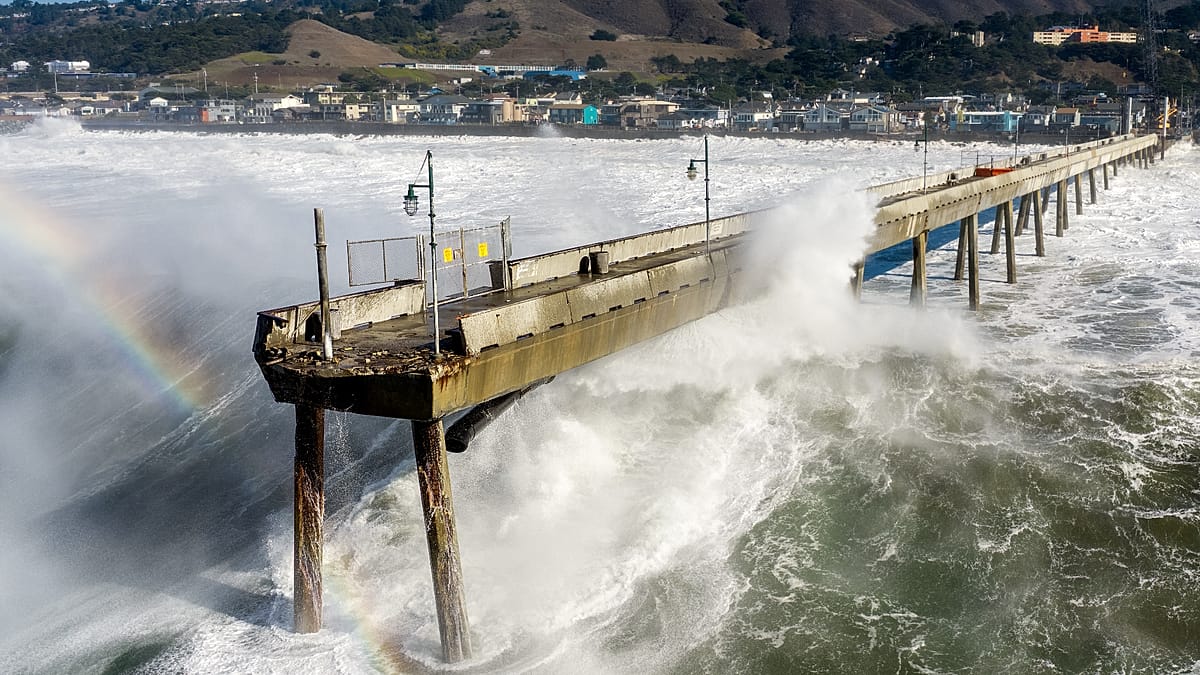
On the West Coast, coastal flood warnings were issued from Southern California to the Oregon and Washington coasts because of king tides. These occur when the gravitational pulls of the moon and sun align to raise water levels. A wave tore down part of a pier in Pacifica, California, on Wednesday, underscoring the power of the surf.
The storms highlight the increasing frequency of extreme weather events, a trend that has also been felt across Europe. Recent storms in Portugal, for example, smashed November rain and wind records, as reported by European Pulse. While the US storms are a domestic event, they serve as a reminder of the global challenges posed by climate change.
For European travelers, the disruptions are a cautionary tale about the importance of planning and flexibility. As the travel industry increasingly uses AI to help with trip planning, such tools may become more valuable in navigating unpredictable weather. Meanwhile, airports are working to improve communication with passengers, as seen in efforts to provide early alerts and simpler journeys.
Although both coasts of the US were affected, travel is usually busier in the days leading up to Thanksgiving than on the holiday itself. Still, the storms have left many Americans stranded or without power, and recovery efforts are expected to continue through the weekend.