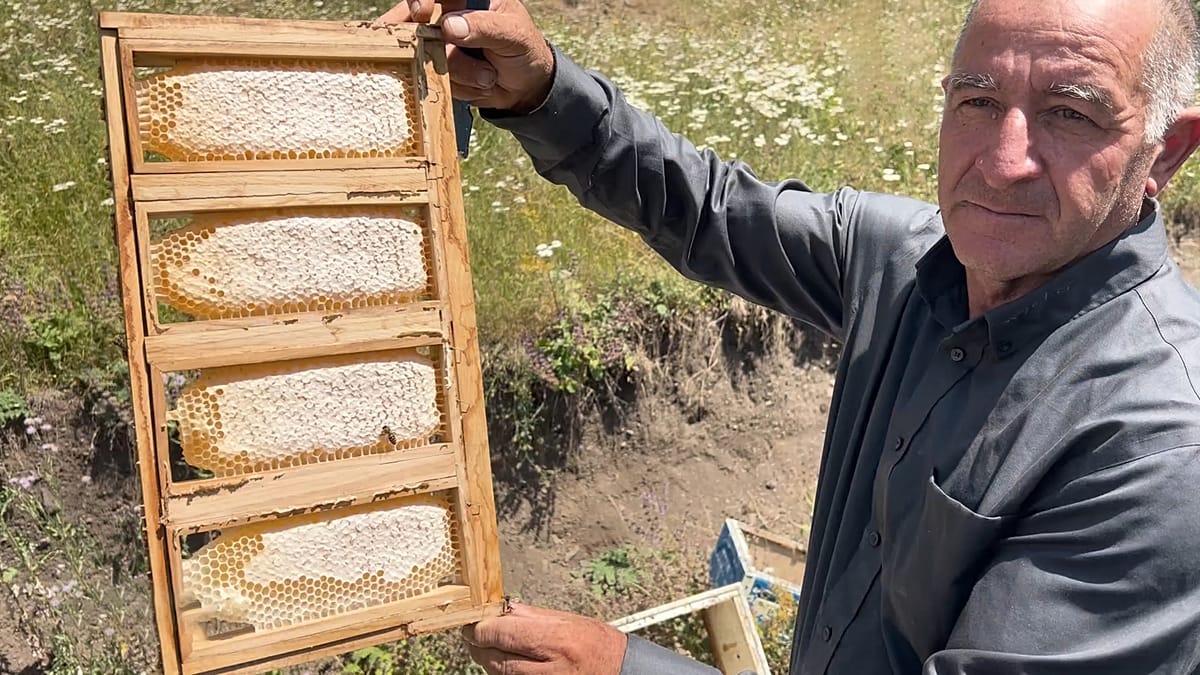
In the foothills of the Lesser Caucasus, where wildflowers bloom across the meadows of Kalbajar, a quiet revival is taking place. Sabir Mustafayev, a beekeeper with more than four decades of experience, is carrying on a craft that has been in his family for three generations. For him, beekeeping is not just a livelihood—it is a living link to his ancestors and to the land itself.
Mustafayev's family originally kept bees in Kalbajar, a region known for its rich flora and long-standing apiculture traditions. But conflict and displacement forced them to leave, like many others. In 2021, after the area came back under Azerbaijani control, the family returned and re-established their apiary. They soon opened a honey shop in Kalbajar, followed by a branch in Baku, the capital.
Adapting to a changing climate
Beekeeping has changed significantly since Mustafayev first started. He notes that global warming has altered flowering seasons and reduced nectar flows, forcing beekeepers to adjust their practices. "We now have to move hives more often and monitor weather patterns closely," he explains. "The bees are more stressed, and so are we."
These challenges are not unique to Azerbaijan. Across Europe, from the struggles of rural households to the broader pressures on agriculture, climate change is reshaping traditional livelihoods. In Kalbajar, beekeepers are experimenting with new techniques, such as providing supplemental feeding and selecting more resilient bee strains.
The Honey Festival: a sweet showcase
The annual Honey Festival has become a key event for local producers. It brings together beekeepers from across the region to display their honey, exchange knowledge, and explore ways to reach new audiences beyond Azerbaijan. For Mustafayev, the festival is an opportunity to introduce Kalbajar's honey to a wider market, including potential buyers in Europe and beyond.
"Our honey has a unique flavor because of the diverse mountain flowers," he says. "We want people in Paris, Berlin, and London to taste it." The festival also highlights the cultural heritage of beekeeping, with demonstrations of traditional hive construction and honey extraction methods.
A family legacy
Mustafayev's son and grandson are already learning the trade, ensuring that the family tradition continues. "My grandfather kept bees, my father kept bees, and now I do," he says. "I hope my grandson will too." The family's shop in Baku has become a popular destination for honey lovers, offering varieties such as acacia, chestnut, and mountain flower honey.
The revival of beekeeping in Kalbajar is part of a broader trend in the region, where returning residents are rebuilding their lives and reviving local industries. Similar stories of resilience can be seen across Europe, from Ireland's agricultural traditions to the cultural celebrations that bind communities together.
As the Honey Festival grows in popularity, Mustafayev is optimistic about the future. "We have a good product, and we have a story to tell," he says. "The world is starting to listen."