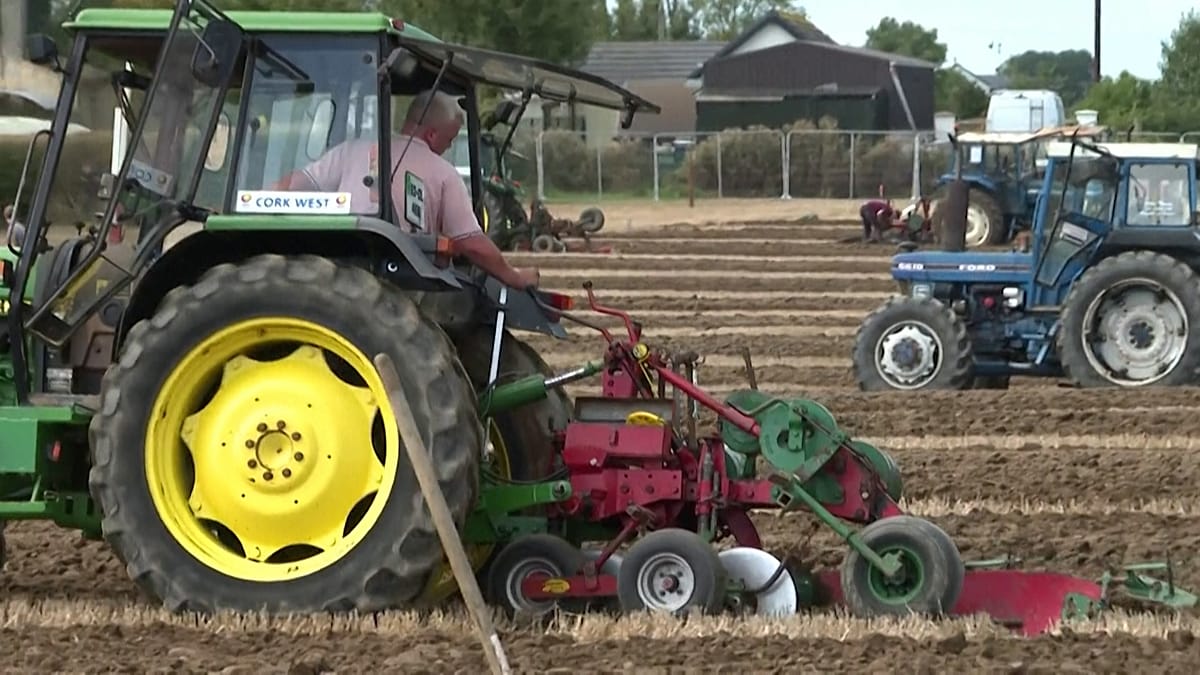
In the rolling fields of County Laois, the rhythmic clop of hooves and the low hum of electric motors shared the same soil. Ireland's National Ploughing Championships, a fixture of the rural calendar since 1931, once again proved to be more than a competition. It was a living museum and a glimpse of the future, all rolled into one sprawling outdoor arena.
This year's event drew tens of thousands of visitors, from farmers in well-worn boots to agritech startups in branded fleeces. The championship, often described as Europe's largest outdoor agricultural gathering, has become a vital meeting point for the wider European farming community. Delegations from France, Germany, Poland, and beyond walked the muddy aisles, comparing notes on soil health, subsidy reform, and the latest machinery.
From Horsepower to Horsepower
The contrast was stark: on one side, vintage enthusiasts guided majestic Shire horses pulling traditional wooden ploughs, their furrows as straight as any GPS-guided pass. On the other, autonomous tractors, bristling with sensors and cameras, demonstrated their ability to work a field without a human in the cab. The juxtaposition was not lost on attendees.
“It’s about respecting where we came from while embracing where we’re going,” said Seán O’Brien, a dairy farmer from Cork, watching a driverless machine turn at the headland. “My grandfather would be amazed, but he’d also recognise the same goal: turning the soil to grow food.”
The autonomous tractor demonstration was a highlight, with manufacturers from Germany and Italy showcasing machines that can plough, sow, and spray with precision. These vehicles use real-time kinematic GPS and machine learning to navigate fields, promising to reduce fuel use and soil compaction. For many European farmers facing labour shortages, the technology is not a novelty but a necessity.
Yet the event also underscored the challenges facing the sector. With the EU’s Common Agricultural Policy under review and climate targets tightening, farmers are under pressure to produce more with less. The ploughing championships provided a platform for discussions on regenerative agriculture, carbon farming, and the role of technology in meeting the Green Deal’s ambitious goals.
“We’re not just here to show off machines,” said Anna Kowalska, a Polish agronomist representing a cooperative. “We’re here to learn how to make our farms more resilient. The future of European food security depends on sharing knowledge across borders.”
The event also had a lighter side, with sheepdog trials, craft fairs, and food stalls offering everything from artisan cheese to locally distilled whiskey. For many families, it is an annual pilgrimage, a chance to celebrate rural life and its enduring traditions.
As the sun set over the final day, the last horse was led back to its trailer, and the autonomous tractors were loaded onto low-loaders. The ploughing championships had once again bridged the gap between past and future, reminding Europe that its agricultural heritage is not a relic but a foundation for innovation.
For a continent grappling with climate change, geopolitical tensions, and the need for sustainable food systems, the message from County Laois was clear: the future of farming is rooted in both tradition and technology. And Europe, with its diverse landscapes and shared challenges, is uniquely placed to lead the way.