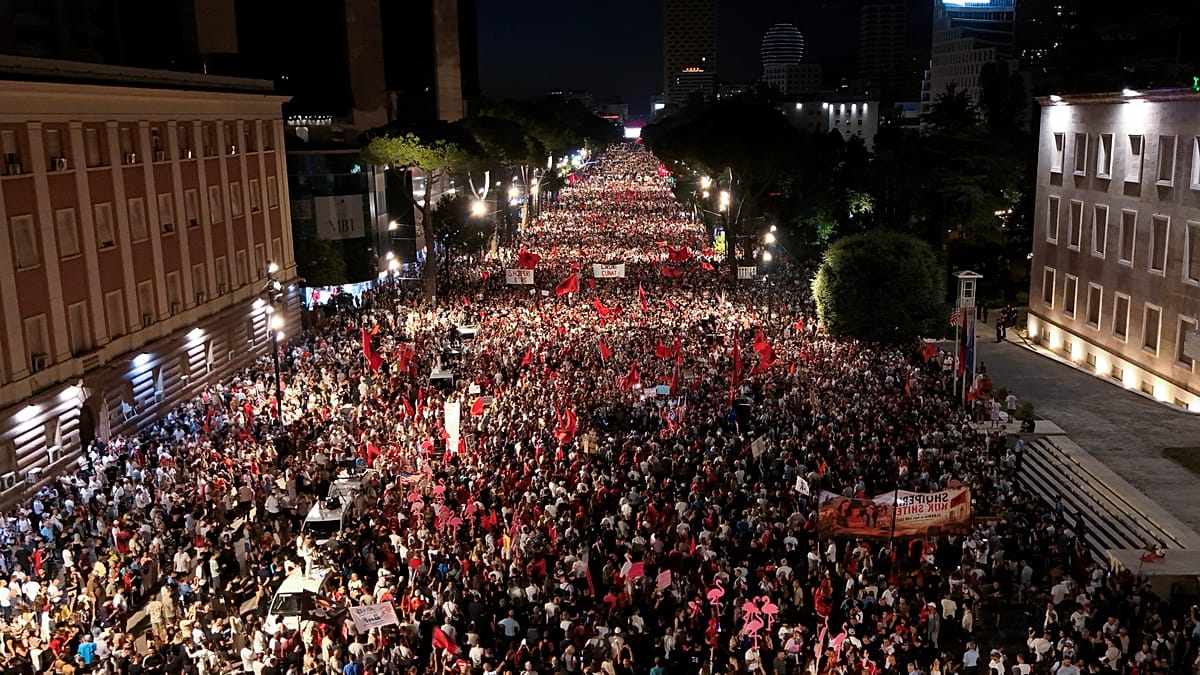
On Saturday, tens of thousands of demonstrators flooded the streets of Tirana for the 35th consecutive day of protests against a planned luxury tourist resort in the protected Zvërnec area, linked to Ivanka Trump and Jared Kushner. The rally, which coincided with Prime Minister Edi Rama's 62nd birthday, is believed to be the largest since the movement began in late May.
What started as an environmental campaign against the construction of a high-end hotel complex on the uninhabited island of Sazan—a former communist-era military base—has evolved into a broad anti-government uprising. Protesters accuse Rama's administration of corruption and lack of transparency, demanding his resignation. “What began as the ‘pink flamingo revolution’ has turned into widespread public discontent,” protester Alketa Ademi told AFP. “The lack of transparency, the arrogance – enough! The prime minister has to go.”
Symbolic Acts and Escalating Tensions
Many protesters carried giant pink flamingos, a reference to the migratory birds that frequent the nearby lagoon, as they marched toward parliament along the capital's main boulevard. One group bore a large concrete cake, a dual symbol of Rama's birthday and the feared environmental damage from the resort. In a striking act reminiscent of the 1991 overthrow of communist dictator Enver Hoxha's statue, demonstrators erected a bust of Rama and toppled it with a rope.
Saturday evening saw a breakaway group head to a police station where 19 protesters arrested during Thursday's march were held. They smashed windows, prompting security forces to respond with tear gas and water cannons. “Release the kids,” the crowd chanted. The Albanian Helsinki Committee expressed concern over the escalation, condemning the disproportionate use of force and calling for an independent investigation.
These violent incidents contrast with the generally peaceful nature of the previous 34 days of protests, which drew citizens from across the country. Last week, hundreds broke through a police cordon outside parliament, leading to clashes that injured 15 officers and resulted in 25 detentions. Police used tear gas and water cannons, while protesters threw eggs and stones.
Banners reading “Albania is not for sale” and “Repeal the law on protected areas” highlighted the core grievances. The government fast-tracked legislation to enable the $4.6 billion (€4.02 billion) resort, which opponents argue threatens the fragile ecosystem of the Adriatic lagoon. The project, first announced in 2024, gained urgency after barbed wire and excavators appeared on nearby beaches in late May, signaling that construction would proceed despite public opposition.
The movement, dubbed the 'Pink Flamingo Revolution', underscores growing frustration with governance in Albania, a candidate for EU membership. Similar environmental disputes have emerged elsewhere in Europe, such as the blocked glamping project in Sardinia's Tavolara area, where the government revoked special zone status after public outcry. The Tirana protests also echo broader European concerns about transparency and rule of law, as seen in recent nationwide protests in France demanding legal reforms.
As the protests continue, the question remains whether Rama's government will address the demands or face further escalation. The European Union, which has urged Albania to uphold environmental and governance standards, is watching closely.