European Union leaders have rallied behind the International Criminal Court (ICC) in The Hague after the United States imposed fresh sanctions on senior court officials involved in investigations into alleged Israeli war crimes in Gaza.
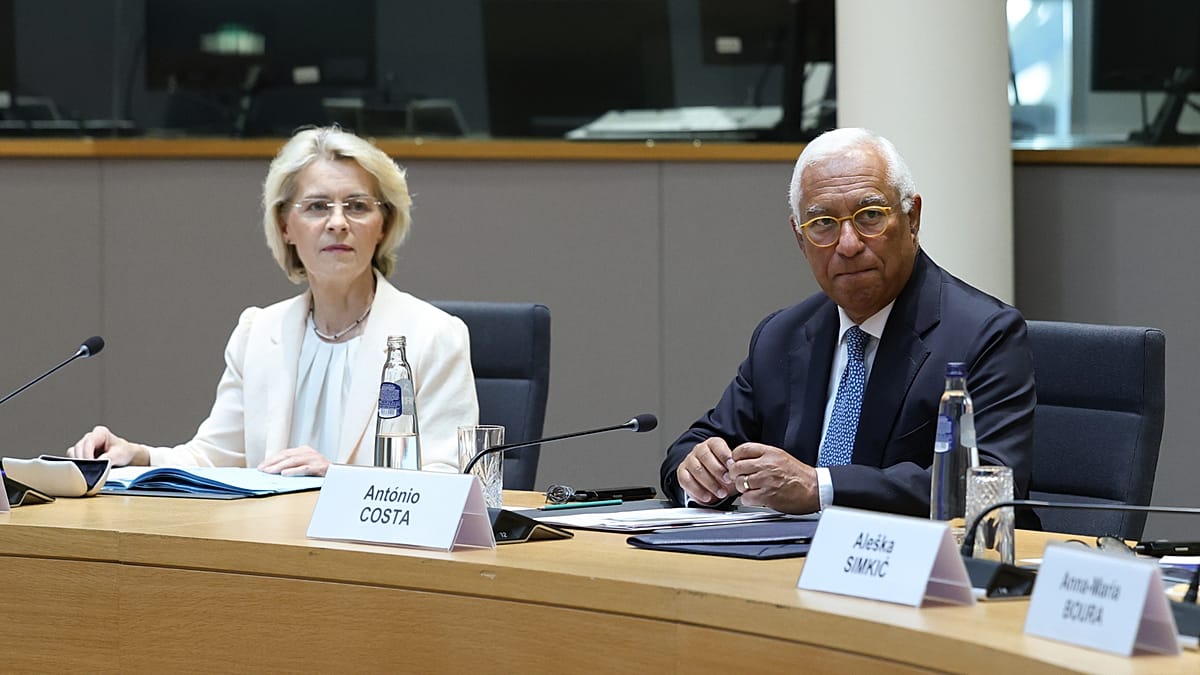
European Commission President Ursula von der Leyen and European Council President António Costa issued a joint statement on Wednesday, underscoring the court's role in delivering justice for victims of atrocities. "The ICC helps deliver justice to the victims of some of the world’s most horrific crimes," they said, adding that "to carry out this essential work, its judges and officials must be able to act independently and without external pressure."
The sanctions, announced by US Secretary of State Marco Rubio, target ICC President Tomoko Akane of Japan and Abdoulaye Seye, a Senegalese lawyer leading the court's probe into Israel's conduct in Gaza. Rubio accused the court of being a "corrupt and fatally politicised supranational court" that has "maliciously abused its authority and exceeded its mandate," and vowed that Washington would "not tolerate its assault on state sovereignty." He further alleged that both officials had pursued prosecutions against states that have not consented to ICC jurisdiction.
Neither the US nor Israel are parties to the Rome Statute, the treaty that established the ICC. However, Palestine has been a member since 2015, granting the court jurisdiction over crimes committed on its territory. The ICC has previously issued an arrest warrant for Israeli Prime Minister Benjamin Netanyahu, a move that has drawn mixed reactions from European capitals.
European backlash and calls for a blocking statute
The Dutch government, which hosts the court, was quick to criticise the US decision. Foreign Minister Tom Berendsen said his government "disapproves" of the sanctions, while a German government spokesperson affirmed Berlin's support for the ICC, noting that the court "has held accountable those guilty of the gravest crimes" and is "fulfilling its mandate exactly as intended."
The ICC itself described the sanctions as a "flagrant attack" on its independence. The measures are the latest in a series of US actions aimed at undermining the court, which has already sanctioned up to 11 of its top officials, including former chief prosecutor Karim Khan. Rubio has previously spoken of his desire to "dismantle" the court "brick by brick" and has urged member states to withdraw from the Rome Statute.
Some senior members of the European Parliament are calling for a stronger response. Iratxe García, president of the Socialists and Democrats group, urged the EU to activate the so-called Blocking Statute, a legal instrument that would make it illegal for EU-based companies and banks to comply with US sanctions. Such a move would shield European entities from the extraterritorial reach of American measures.
The sanctions have already had a profound impact on the daily lives of ICC judges, according to court officials. The US has also seen some success in persuading other nations to leave the court: Venezuela and Chad recently announced their withdrawal, and Hungary's previous government under Viktor Orbán had declared its intention to exit before the decision was reversed after Péter Magyar's landslide electoral win in April.
All 27 EU member states are parties to the ICC, yet the arrest warrant for Netanyahu continues to provoke ambiguity. France, Germany, and Italy have declined to publicly commit to enforcing the warrant should Netanyahu set foot on their territory. This hesitation stands in contrast to the bloc's official stance of supporting international justice.
As the dispute escalates, the EU faces a test of its commitment to the rules-based international order. The activation of the Blocking Statute would be a significant step, but it remains uncertain whether member states will agree to such a confrontational measure. For now, the bloc's leaders have chosen to voice solidarity with the court, while leaving the door open for further action.