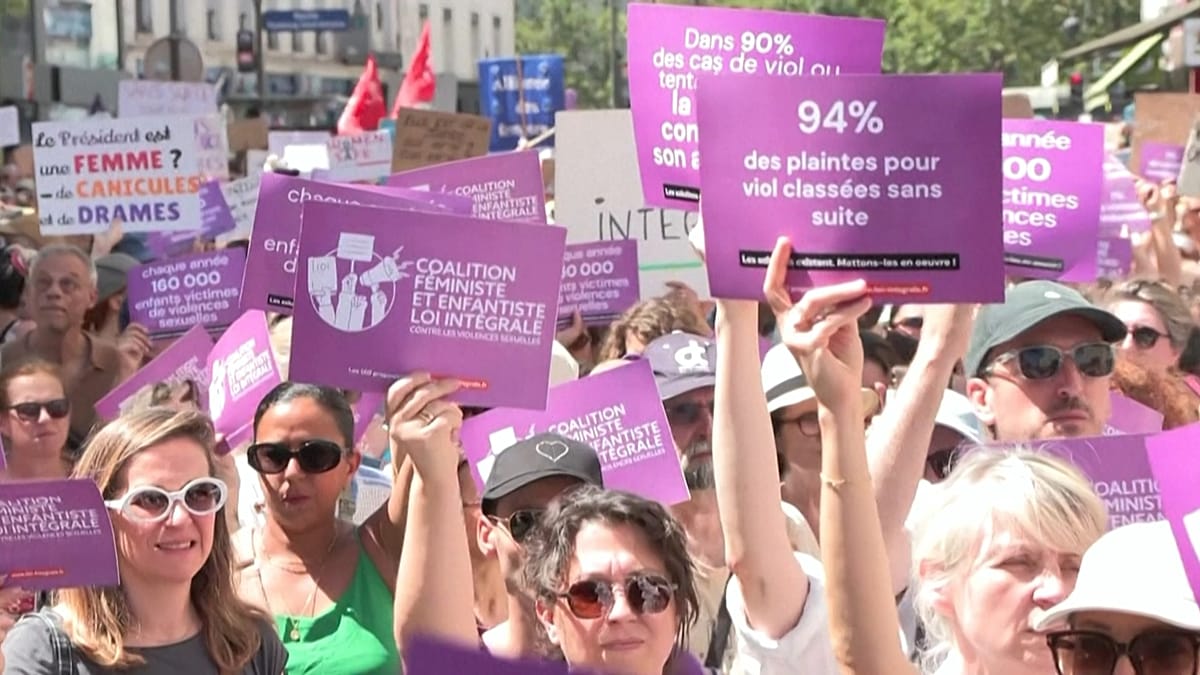
On Saturday, tens of thousands of demonstrators took to the streets in cities across France, from Paris to Marseille, Lyon to Toulouse, demanding that the government enact a comprehensive law to combat sexual violence. The protests, organised by feminist and child protection associations, were galvanised by the rape and murder of 11-year-old Lyhanna, whose body was discovered in an abandoned silo near Fleurance in the Gers department earlier this month.
Lyhanna disappeared on 29 May. Her remains were found nearly a week later. The main suspect, a 41-year-old father of a school friend, had been formally accused of child rape on two previous occasions, but both investigations were dropped or stalled. The case has become a symbol of systemic failure, exposing gaps in France's judicial and child protection systems.
A justice system under scrutiny
Speaking at the Parisian demonstration, which set off from the Place de la Bastille toward the Place de la Nation, Anne-Cécile Mailfert, president of the Women's Foundation, declared: “We cannot be satisfied with this under-resourced justice system that protects aggressors rather than victims. With 94% of rape complaints being dismissed without further action, there are many aggressors who are reported to the justice system and are not held accountable.”
France's justice system is notoriously slow and understaffed. According to data from the Council of Europe, the country has among the fewest professional judges per capita in Europe. This structural weakness has long been criticised by legal experts and human rights organisations, but the Lyhanna case has brought it into sharp public focus.
President Emmanuel Macron acknowledged the gravity of the situation last month, stating that he feared for trust in France's institutions. “There have been clear malfunctions. We must now understand what falls under individual responsibilities and what concerns systemic lapses within all the public services involved,” he said.
Government response and ambitious review
Justice Minister Gérald Darmanin apologised for what he called a “huge failure” in the Lyhanna case. On 8 June, he announced an ambitious plan to review some 70,000 outstanding child sexual abuse cases by 14 July. “Not a single senior judge will go on holiday,” Darmanin said, adding that he would meet with every chief prosecutor to assess the situation.
However, the feasibility of this plan has been questioned given the chronic under-resourcing of the judiciary. Critics argue that without substantial investment in personnel and infrastructure, such a review risks being superficial or unmanageable.
Protest organisers are determined to capitalise on the emotion generated by Lyhanna's death to push for a “360-degree” law that would address prevention, judicial treatment, and support for victims, especially the most vulnerable. They have been demanding such legislation since late 2024, but successive governments have only offered piecemeal measures.
“We need a comprehensive framework law, not laws dictated by the urgency of successive cases,” said a spokesperson for the collective #NousToutes, one of the organising groups. The demonstrators are calling for better training for judges and police, more resources for victim support services, and a shift in the culture of impunity that they say allows repeat offenders to escape justice.
The protests come at a time when France is also grappling with other challenges, including a deadly heatwave that has been linked to a nearly 30% rise in deaths, particularly in the Paris region. The convergence of these crises underscores the strain on public services and the urgency of systemic reform.
As the demonstrations wound down on Saturday evening, activists vowed to keep up the pressure. “We will not stop until we have a law that truly protects children and holds aggressors accountable,” Mailfert said. The government has yet to announce any concrete legislative steps, but the scale of public anger suggests that the Lyhanna case may indeed become a turning point in France's fight against sexual violence.