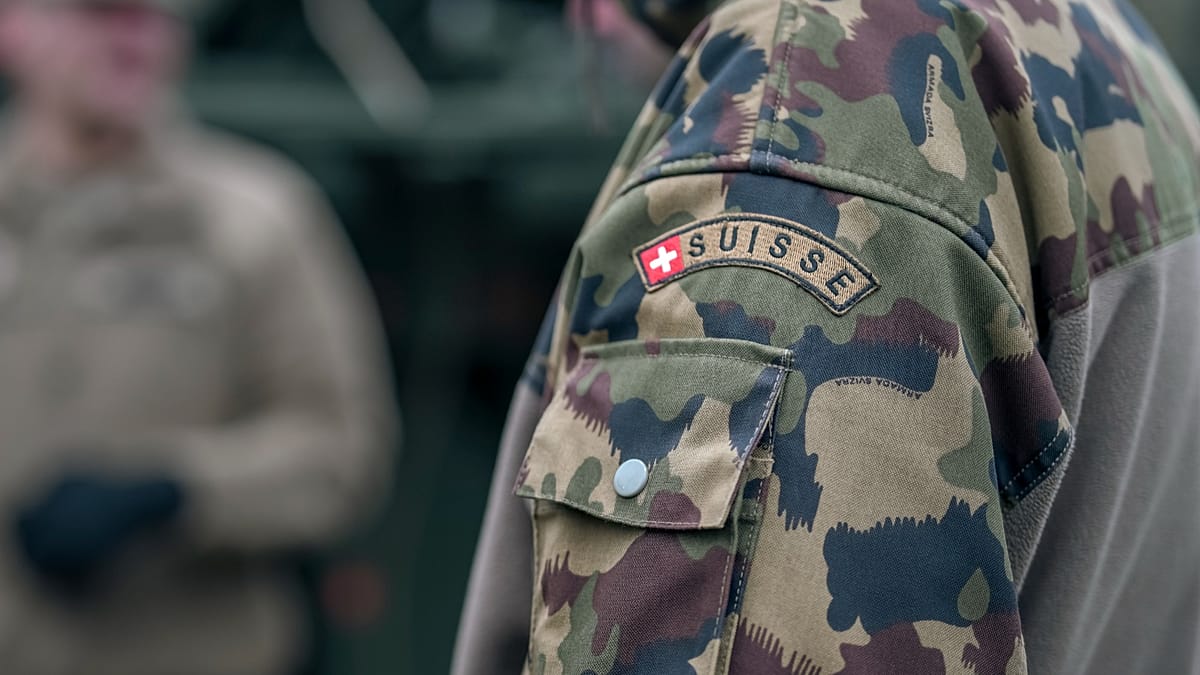
Switzerland's federal government announced on Wednesday that it will ask parliament for an additional 970 million Swiss francs (roughly €860 million) for air defence acquisitions in 2026. The request, unveiled after a cabinet meeting in Bern, reflects growing concerns about hybrid warfare and the prolonged delivery times that now characterise the international arms market.
In March, the government had already sought 3.4 billion francs for this year's armament programme. The new funds are intended to secure down payments for short- and medium-range ground-to-air systems, a medium-range semi-stationary radar, and counter-drone capabilities. Officials stressed that without such upfront payments, urgent purchases could be delayed for several years.
Threat assessment drives spending
The government's statement highlighted that "hybrid operations and long-range attacks constitute the most likely threats to Switzerland." It added that the armed forces currently lack the resources to adequately protect the country against aerial threats. This assessment aligns with broader European security concerns, as many NATO and neutral states have ramped up defence spending following Russia's full-scale invasion of Ukraine.
Switzerland, which maintains a policy of military neutrality, is already awaiting delivery of a fleet of US-made F-35A fighter jets. However, negotiations over the final price have dragged on, and the order faces delays. In parallel, Bern is exploring the purchase of a European surface-to-air defence system to complement the Patriot system it has ordered from the United States.
The government also noted that manufacturers are increasingly demanding substantial down payments, and that global production capacity is "saturated" for years to come. This has led to longer lead times for everything from missiles to radar equipment.
Beyond air defence, the cabinet plans to invest an additional 100 million francs over the coming years to urgently strengthen security at more than 60 military sites. The work is expected to be completed by the start of 2029.
Parliament has yet to approve the additional funding. It will also need to vote on a significant increase in value-added tax (VAT) through 2040, which the government says is necessary to finance the army's defence priorities. According to official estimates, the armed forces will require extra investments of 24 billion francs (€25 billion) over the next decade to counter the most likely threats.
The move comes as European nations reassess their defence postures. For instance, Sweden's incoming government is expected to take a tougher line on EU budget contributions, partly to fund its own military expansion. Meanwhile, Ukraine's parliament has reconvened with key defence and foreign ministry posts still unfilled, underscoring the volatile security environment on the continent's eastern flank.
Switzerland's decision to bolster its air defences reflects a broader trend among neutral and non-aligned European states. Even as it remains outside NATO, Bern has increasingly cooperated with the alliance on interoperability and joint exercises. The additional spending, if approved, would mark one of the largest single increases in Swiss defence investment in recent decades.