Sweden is poised to elect a Social Democrat-led government, but the shift to the centre-left in Stockholm will not soften its position in the European Union's next long-term budget talks. On the contrary, the incoming administration is expected to be even more hawkish than the current one, according to officials and party documents.
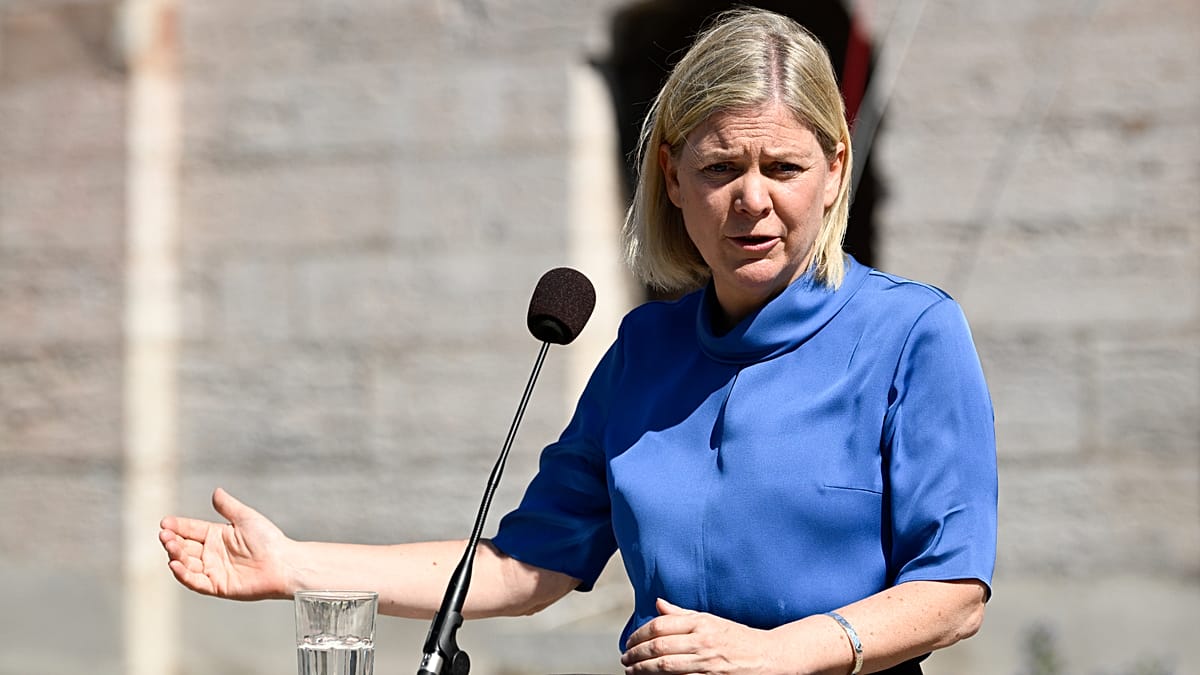
Magdalena Andersson, leader of the Social Democratic Party (S), is on course to become prime minister after the 13 September election. Polls put her party at 32%, well ahead of the national-conservative Sweden Democrats (20%) and the centre-right Moderate Party of current Prime Minister Ulf Kristersson (17%). If confirmed, Sweden would join Spain, Denmark and Malta as one of the few EU countries with a centre-left government, bucking a broader European trend toward the radical right.
But those expecting a softer Swedish line in the EU's sensitive budget negotiations will be disappointed. "The next Swedish government is likely to be much tougher," a Swedish official told European Pulse, speaking on condition of anonymity. "During the parliamentary hearings they always ask why the current government is not doing more to oppose the budget proposal."
Sweden belongs to the so-called "frugal" bloc, alongside Germany and the Netherlands — net contributors that pay far more into the EU budget than they receive. Stockholm has been particularly hostile to the European Commission's €2 trillion proposal, even in the reduced form put forward by the Cypriot presidency. Swedish officials estimate the original plan would increase the country's contribution by around 60%, just as public finances are strained by surging defence spending and military aid to Ukraine.
A hawkish Social Democrat
Andersson served as finance minister from 2014 to 2021, spanning the negotiations of the previous seven-year budget, when she personally secured an annual rebate of more than €1 billion — a discount she now appears determined to preserve. At a March hearing of the Committee on EU Affairs, Social Democrat MP Matilda Ernkrans said the current government had depleted the country's finances, severely limiting the scope for reform in the next mandate. "Against this background, an increase in the EU fee of the magnitude now being discussed is completely unacceptable," she said, pointing in particular to the need to maintain the rebate.
"The Social Democrats are focused on domestic policies and do not want to sacrifice their social agenda to Brussels," the Swedish official said, adding that some form of rebate will likely be necessary to reach a final agreement. This push to shrink the EU budget to protect fiscal space for domestic social policy puts Sweden's Social Democrats at odds with their centre-left peers in the Socialists and Democrats (S&D) group in the European Parliament, where they are regularly sidelined in budget discussions.
The S&D has backed extending common borrowing at EU level, following the model of NextGenerationEU, Europe's post-pandemic recovery fund. Andersson, by contrast, initially opposed the scheme while in office, even though her government ultimately signed up to it. On EU-level debt more broadly, her position has shifted: she has backed joint borrowing to build up Europe's defence and support Ukraine militarily, arguing "this needs to happen at a furious pace and all countries must do it, even those with worse economic conditions," as she said in 2025.
Still, Stockholm is set to remain wary of EU-level borrowing, since the interest rates involved are higher than Sweden's own borrowing costs — making it economically unattractive. "Sweden has long adhered to the mantra of being 'the most frugal in Europe'. This negotiating position yielded particularly good results in the negotiations on the EU's joint pandemic recovery fund," reads an S-sponsored report on the EU budget. "Sweden succeeded in limiting the level of grants to member states, securing a Swedish rebate of around 11 billion Swedish krona per year and establishing a conditionality mechanism based on the principles of the rule of law."
Finally, the future Swedish government is unlikely to shift the country's sceptical stance towards EU "own resources" — Europe-wide taxes to directly finance Brussels. The report notes "there is a traditionally critical attitude on the part of Sweden towards the introduction of new own resources."
Sweden's tough line could complicate negotiations, especially as other net contributors like Poland's economy grows and may seek a larger say. The country's stance also resonates with broader debates about EU fiscal solidarity, as seen in Germany's recent security measures and its own budget constraints. For now, Stockholm's message is clear: it will not pay more to Brussels without getting something back.