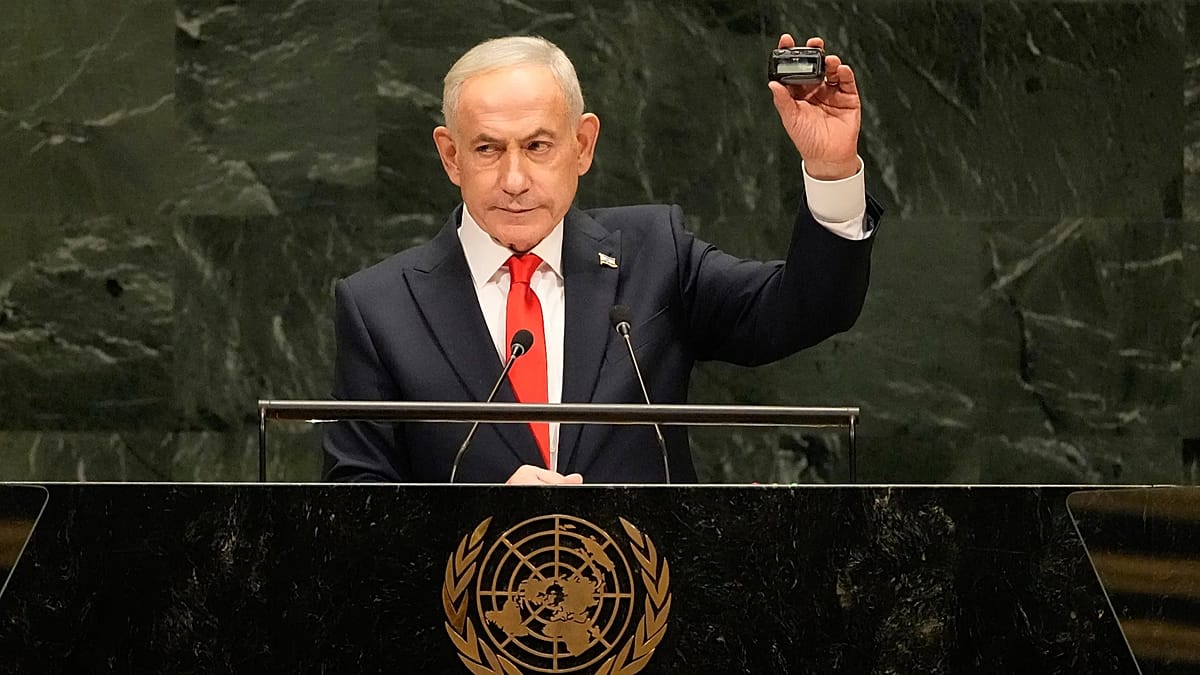
Benjamin Netanyahu is facing a fresh political storm as new reports allege he ignored foreign warnings about Hamas's October 7 attack, while the Israeli prime minister used a defiant speech at the United Nations to counter his critics and appeal to voters ahead of next month's election.
The New York Times on Saturday confirmed an earlier Haaretz report that UAE President Mohammed bin Zayed secretly warned Netanyahu of the impending Hamas attack, but that the Israeli premier did not relay the warning to his security chiefs. The Atlantic separately reported that Egypt's intelligence chief, Abbas Kamel, made a secret visit to Israel eleven days before the attack to warn of a significant Hamas operation.
On Sunday, former Israeli defence minister Yoav Gallant told Israeli Army Radio that Israel had received a message from Hamas through Shin Bet channels weeks before the attack, in which the then Hamas leader Yahya Sinwar threatened to "shake the prisons". Gallant said he first learned of the foreign warnings from media reports, adding that if true, such a warning from a foreign leader "is not a political asset; it is a fundamental failure in the overall assessment of the situation".
Netanyahu's UN address and the domestic backlash
Netanyahu's speech at the UN General Assembly, widely seen as directed at Israeli voters, came as opposition leaders called for an investigation into the alleged warnings and whether he ignored them. The prime minister's office has repeatedly denied the reports, calling them false and accusing the media of manipulating the Israeli public.
The revelations have intensified scrutiny of Netanyahu's handling of the October 7 attack, which is a central issue in the election campaign. Israelis are due to vote on 27 October for the 120-seat Knesset, and the prime minister's political future may hinge on how voters perceive his response to the worst security failure in the country's history.
Gallant also alleged that Netanyahu excluded him and senior security officials from sensitive conversations with the United States during the war. "During the war, I learned many times about important conversations Netanyahu held with the Americans on the most sensitive issues, such as hostages and ammunition, only after the Americans called me and tried to verify what had been said in those conversations," he said, adding that "their trust in the prime minister was low".
The reports have also drawn international attention, with European leaders closely watching the developments. The controversy comes as Israel's relations with some European countries have been strained over the conduct of the war in Gaza. Earlier this month, Israel dismissed French President Emmanuel Macron's remarks on the West Bank as a "grotesque absurdity".
Netanyahu's UN speech, which was met with walkouts and protests in New York, was a defiant defence of Israel's actions, but it did little to quell the domestic political turmoil. The prime minister's office reiterated its denial of the latest reports, stating that "no warning was given to the prime minister from the United Arab Emirates before 7 October" and that "prime minister Netanyahu neither met nor spoke with Abbas Kamel" in the months before the attack.
As the election campaign enters its final weeks, the revelations are likely to dominate the political debate. The opposition has seized on the reports, with leaders calling for a full inquiry into the warnings and Netanyahu's response. The prime minister, however, remains defiant, framing the criticism as an attempt to undermine Israel's security and his leadership.
The controversy also resonates beyond Israel's borders, as European governments and publics grapple with the implications of the October 7 attack and the subsequent war in Gaza. The revelations have raised questions about the reliability of intelligence sharing and the importance of heeding warnings from allies, issues that are of concern to European security officials as well.
With the election just weeks away, Netanyahu's political fate may depend on whether voters believe his denials or the mounting evidence of missed warnings. The coming days are likely to bring further revelations, and the prime minister's ability to weather the storm will be tested both at home and on the international stage.