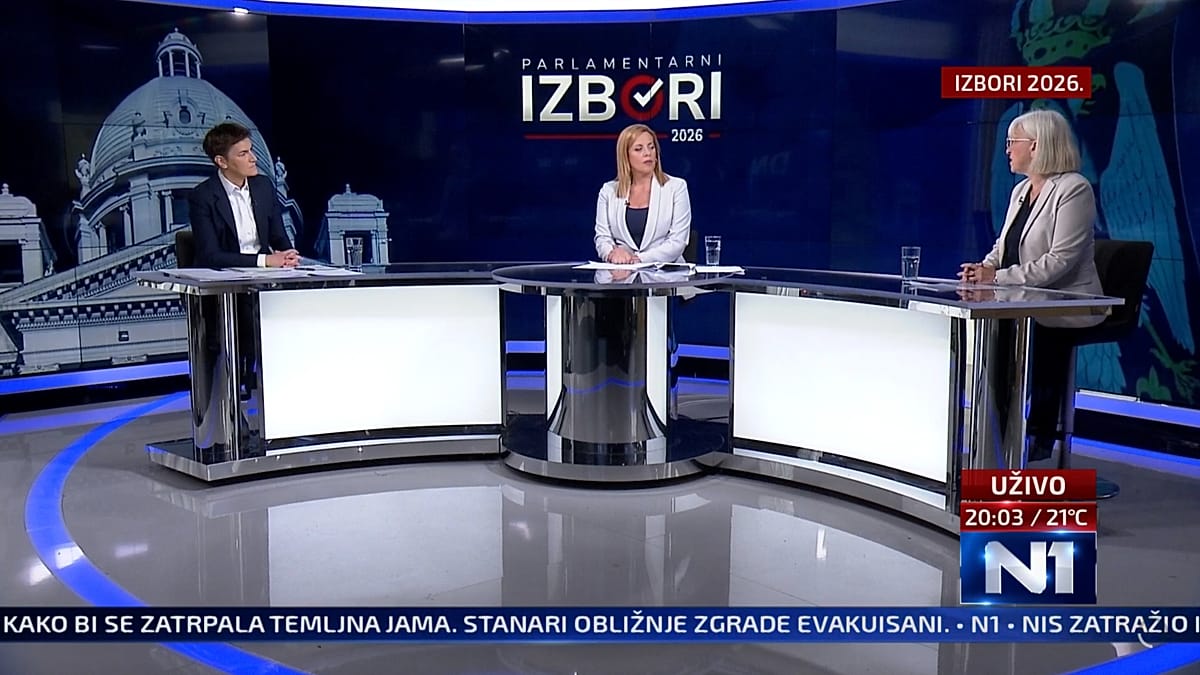
For the first time in nearly a decade, Serbian voters watched a live televised debate between a senior government figure and a leading opposition candidate. The encounter, broadcast on N1 on the evening of 24 September, came just over a month before the country's early parliamentary election on 25 October.
The debate pitted Ana Brnabić, speaker of the outgoing parliament and a former prime minister, against Mirjana Nikolić, dean of the University of Arts in Belgrade and lead candidate of the opposition platform Student List – Students win. Both women are prominent in their respective camps: Brnabić holds third place on the electoral list of President Aleksandar Vučić's Serbian Progressive Party, while Nikolić represents a movement born out of months of student-led protests.
The two rivals agreed to appear together, but the atmosphere was tense from the start. Brnabić opened by criticising Nikolić for refusing to shake her hand in the studio, saying, “You are constantly offending me, starting from your refusal to shake my hand. I consider that to be a basic human gesture. Generals are at war with each other and still shake hands.” Nikolić responded sharply: “Decent Serbia is yet to come.”
A rare moment of direct confrontation
The debate was remarkable not only for its content but for its very existence. Government officials have largely avoided N1 for years, accusing the channel of bias – a claim N1 has rejected. The last time a ruling party official appeared on the network was in 2017. In a media landscape where outlets often align openly with one political side, genuine cross-party debates are rare.
Brnabić acknowledged her reluctance, saying she had not been on N1 since 2017 and that the channel had previously refused to air even paid promotional clips from her party. She added, “I wasn’t thrilled about coming now either, remembering how your television tried to dehumanise my friend and my president. You criminalised him.” She explained that President Vučić had insisted she accept the invitation after N1 changed ownership.
N1 was recently acquired by Alpac Capital, a Portuguese investment firm that also owns Euronews. Alpac has promised editorial independence and a professional, unbiased approach. The channel has said it will organise further thematic debates in the run-up to the election.
Nikolić expressed her own doubts, saying she had wondered “whether it was the right moment to take part in this debate” and whether the format would allow for genuine exchange. She noted that recent encounters with officials had been unpleasant, citing a parliamentary committee meeting “full of shouting, stomping and humiliating opponents.”
The debate drew a large audience, becoming the most-watched programme in its time slot with a rating above 48 points. Viewers saw the two candidates clash over education – the chosen theme – before the discussion widened to corruption, violence, and the protests that have shaken Serbia since November 2024.
Those protests were triggered by the collapse of a concrete canopy at the Novi Sad railway station, which killed 16 people. Students occupied universities for weeks, blaming the tragedy on systemic corruption and mismanagement. The movement eventually registered as a political list, and many polls now see it as the main challenger to President Vučić's rule.
The debate itself was a test of whether Serbia's polarised political culture can accommodate direct confrontation. As the election approaches, more such encounters are expected. Whether they will ease tensions or deepen them remains an open question.