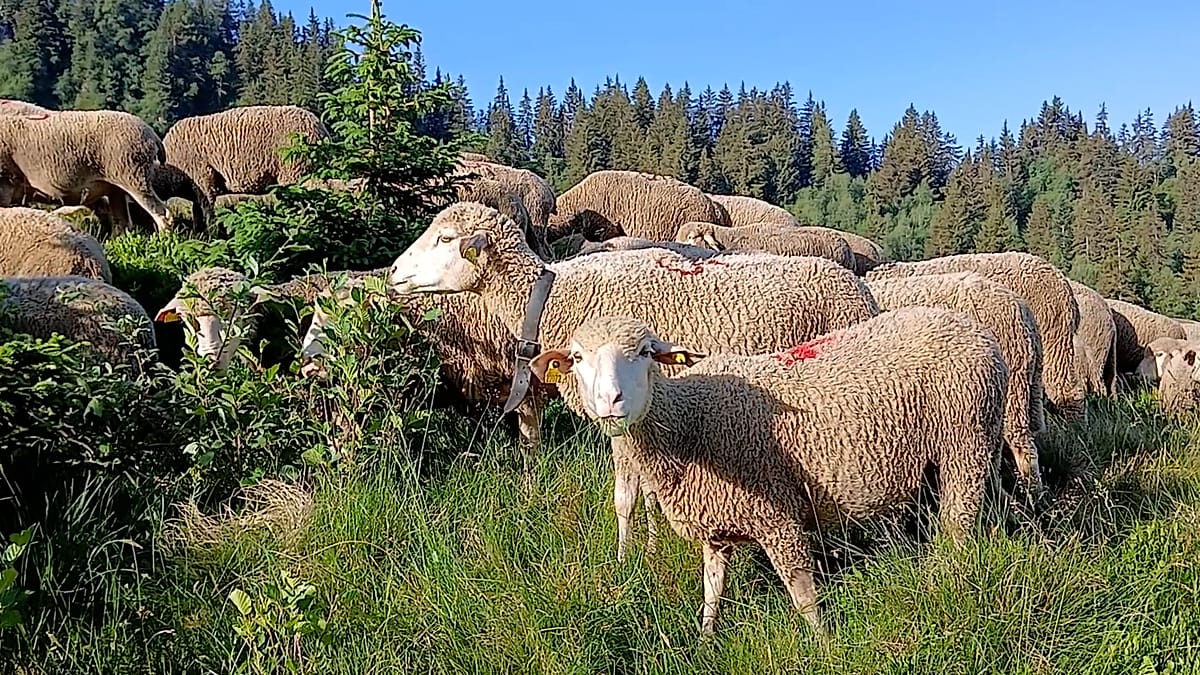
In the Belledonne massif of the French Alps, the ancient practice of transhumance has made its seasonal return, as shepherds guide flocks of sheep and goats to high-altitude pastures at Le Collet d’Allevard. This year’s festival, a vibrant celebration of rural life, draws locals and visitors alike to witness the movement of animals along historic routes that have been used for centuries.
A Tradition Rooted in Alpine Ecology
Transhumance, the seasonal migration of livestock between lowland winter pastures and mountain summer grazing grounds, is a cornerstone of Alpine agriculture. In the Auvergne-Rhône-Alpes region, this practice not only sustains local farming communities but also maintains biodiversity by preventing shrub encroachment and preserving open landscapes. The festival at Le Collet d’Allevard, organized by local associations and the commune of Allevard, includes parades of decorated animals, traditional music, and regional food stalls, offering a glimpse into a way of life that balances productivity with environmental stewardship.
“This is more than a spectacle; it’s a living heritage that connects us to the land and our ancestors,” said Marie Dupont, a shepherd from the nearby village of La Chapelle-du-Bard. “The sheep know the path, and the community comes together to ensure the journey is safe and celebrated.” The event has grown in popularity in recent years, reflecting a broader European interest in sustainable food systems and rural traditions.
Revival Amid Modern Challenges
The return of transhumance festivals across the Alps comes as farmers face pressures from climate change, wolf predation, and economic consolidation. In France, the practice had declined sharply after World War II as agriculture intensified, but a resurgence since the 1990s has been driven by organic farming, tourism, and EU rural development funds. The European Union’s Common Agricultural Policy (CAP) provides subsidies for extensive grazing systems, which support transhumance as a low-impact method of livestock management.
Similar traditions are observed in other European countries, from the trashumancia in Spain’s Pyrenees to the alpeggio in the Italian Dolomites. In the French Alps, the Belledonne massif—a range east of Grenoble—has become a focal point for this revival, with local authorities investing in trail maintenance and signage to accommodate both herders and hikers.
Cultural and Economic Impact
The festival at Le Collet d’Allevard also serves as an economic driver for the region, attracting tourists who spend on accommodation, food, and crafts. For the village of Allevard, known for its thermal springs and ski resorts, the event extends the summer tourism season. “Transhumance is a bridge between our past and our future,” said Jean-Pierre Morel, mayor of Allevard. “It reminds us that agriculture and tourism can coexist, especially when we highlight what makes our region unique.”
This year’s edition featured over 1,200 sheep and 200 goats, along with donkeys and horses, moving through the streets before ascending to the pastures at an altitude of 1,800 metres. The event included workshops on cheese-making and wool processing, as well as a market for local products such as Beaufort cheese and honey. Such activities align with broader European trends toward slow tourism and gastronomic heritage, as seen in similar festivals like La Rioja’s wine battle in Haro.
Environmental and Policy Context
Transhumance also plays a role in wildfire prevention, as grazing animals reduce flammable vegetation in forested areas—a growing concern as heatwaves intensify across France. The practice is recognized by UNESCO as an Intangible Cultural Heritage of Humanity, and France has included it in its national inventory of cultural heritage. However, challenges remain: wolf packs have returned to the Alps, leading to conflicts with shepherds who demand better protection measures from the government.
In response, the French Ministry of Agriculture has increased funding for guard dogs, electric fencing, and compensation for livestock losses. The EU’s LIFE programme also supports projects that promote coexistence between large carnivores and extensive grazing. For now, the festival at Le Collet d’Allevard stands as a testament to the resilience of Alpine traditions, blending ecological wisdom with community celebration.