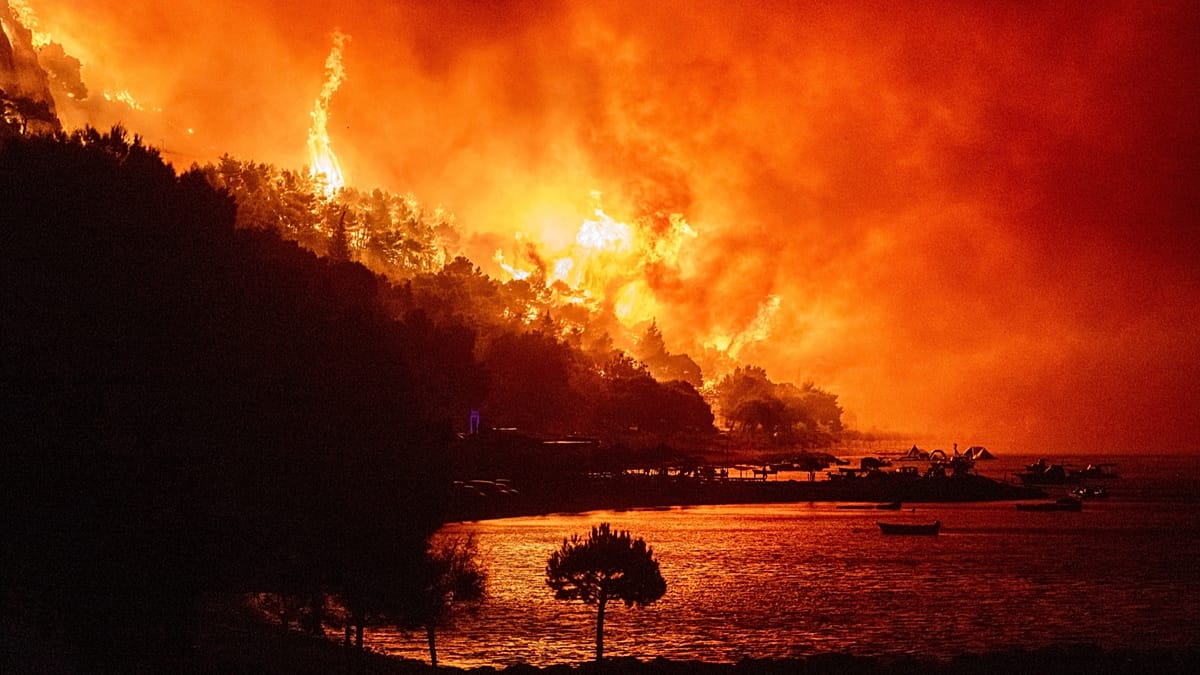
Europe is grappling with a series of wildfires fuelled by extreme heat and drought, a symptom of a summer that scientists link to human-caused climate change. The continent, warming faster than any other, has seen thousands of heat-related deaths and repeated blazes sweeping through parched landscapes.
On Monday, the situation remained critical in several countries, with a German border town partially evacuated and France reporting progress in containing one of its largest fires.
Belgium: rain offers relief but fires persist
Rain began falling in Belgium on Monday, providing some respite in the fight against the country's largest modern wildfire, which has devastated around 3,000 hectares of the High Fens nature reserve on the border with Germany. Some 500 firefighters and military personnel are battling the blaze, which has sent a massive plume of black smoke drifting into neighbouring Germany and France.
Germany's defence ministry said two military water-bombing helicopters would be deployed to assist Belgian efforts. In the German town of Monschau, near the frontier, authorities ordered the evacuation of nearly 30 residents living on two streets close to the border.
Belgium, like much of Europe, has endured a fresh spell of intense heat and drought in recent days. Temperatures reached 37°C in some areas on Friday, creating ideal conditions for wildfires to ignite and spread.
Greece: deaths and mass evacuations on Salamis
In Greece, two people died and hundreds were evacuated from beaches on the island of Salamis, near Athens, after two fires broke out. The fire department reported that over 570 people were rescued by coast guard patrol boats and other vessels, according to a spokesperson quoted by AFP.
Greece, which had largely escaped the worst of the heatwave earlier in the summer, has been hit by several major wildfires since late July, driven by strong winds. In the past 24 hours, 36 blazes have been recorded across the country.
Portugal and Spain: cross-border fires strain resources
In Portugal, hundreds of firefighters are battling multiple blazes, including one near the Spanish border close to the village of Dine, where five firefighters sustained minor injuries when their vehicle caught fire. Other fires are burning near Boticas and Chaves, according to the civil protection agency ANEPC.
In Spain, a soldier died on Sunday while helping to extinguish a major wildfire in Aragon, the region's leader confirmed. Authorities have deployed the largest firefighting arsenal in the region's history, with French reinforcements expected to help contain the fire, which has threatened a 1,000-year-old monastery.
Croatia: arrests over suspected arson
Croatian police have arrested four people suspected of starting some of the wildfires that have swept the Adriatic coast in recent days. The suspects are believed to have set fires that scorched pine forests and olive groves, as the country battles a wave of blazes exacerbated by drought and heat.
France: Landes fire stabilised
In southwestern France, a fire that burned 1,700 hectares in the Landes department has been stabilised after three days of ground and air operations. Local official Gilles Clavreul said the situation was evolving "favourably" as temperatures dropped to 28°C, compared with 40°C when the fire broke out on Thursday, and humidity levels rose.
The stabilisation of the Landes fire offers a rare piece of good news amid a continent-wide crisis. However, with forecasts of continued heat and dry conditions, authorities remain on high alert. The European Union has activated its civil protection mechanism, and member states are sharing resources, as seen with Germany's helicopter deployment to Belgium.
As Europe faces the reality of more frequent and intense wildfires, the need for coordinated action and investment in firefighting capabilities has never been clearer. The mass evacuations across the continent underscore the urgency, while innovative solutions like Swiss ski resorts repurposing snowmaking pipes offer a glimpse of adaptation. The human toll, from Greece to Spain, is a stark reminder of the stakes.