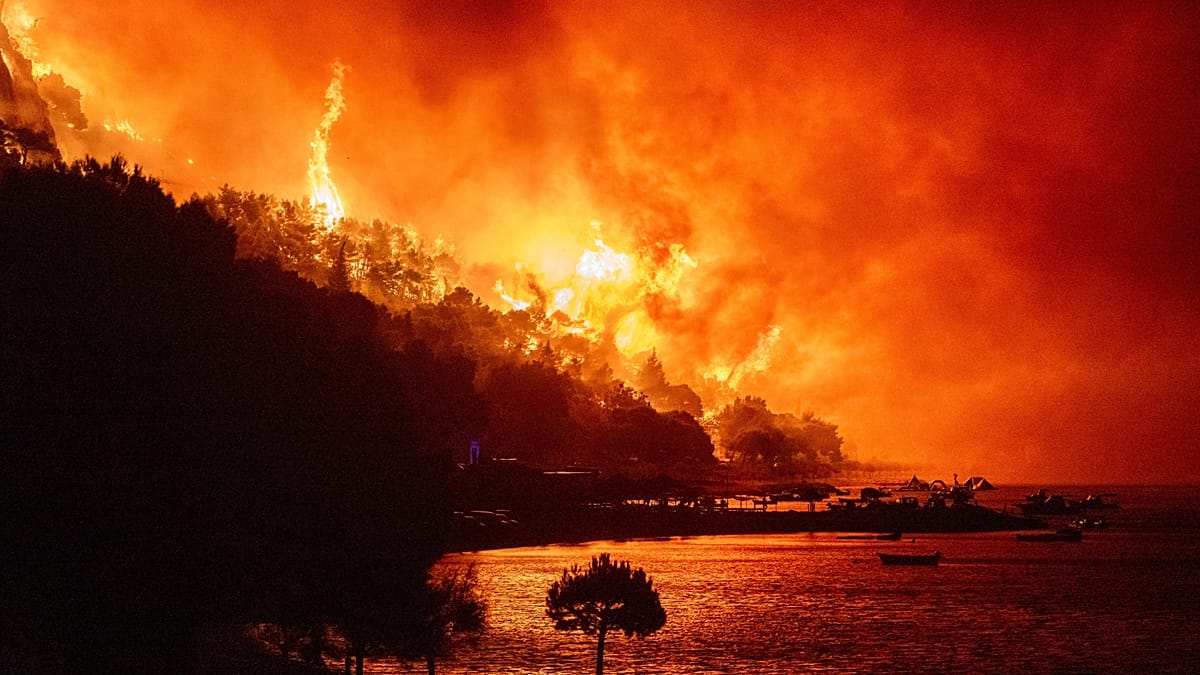
Europe is grappling with a new wave of devastating wildfires as scorching temperatures and prolonged drought create tinderbox conditions across the continent. From the pine forests of southwestern France to the rugged coast of Croatia, thousands of residents and holidaymakers have been forced to abandon their homes and campsites.
In France, authorities reported that a blaze which ignited on Thursday near the town of Luglon in the Landes department continued to burn fiercely on Saturday. The Landes Prefecture said the fire had already consumed around 1,580 hectares, with the flames particularly active to the southeast of Luglon, close to the village of Garein. "In total, 550 firefighters are currently mobilized to fight the spread of the fire. Air resources will resume their rotation," the prefecture said in a statement. An additional 100 people were evacuated from the area on Saturday, adding to the hundreds already displaced.
Germany's largest forest fire on record
In Germany's Eifel region, a major fire near the town of Hürtgenwald has forced the evacuation of at least 1,800 people. Around 1,400 firefighters are battling the flames, which authorities believe to be the largest forest fire in the history of North Rhine-Westphalia. The blaze has scorched vast tracts of woodland, and thick smoke has been visible for miles.
German firefighting reinforcements have also been dispatched to assist Belgian crews battling a separate fire in the Fagnes natural park, near the border between the two nations. That fire, which started on Friday, has already burned through at least 16 square kilometres of forest, according to Belgian authorities.
Meanwhile, in Spain's northeastern Aragon region, around 1,000 people have been evacuated as a fire that has ravaged more than 15,000 hectares continues to burn. Firefighters say they have managed to halt its advance towards populated areas, and cooler temperatures with possible light rain are forecast, offering a glimmer of hope.
Greece on high alert
Greece remains on high alert as strong winds across parts of the country raise the risk of new outbreaks. The fire service reported that more than 50 agricultural and forest fires have erupted in the last 24 hours, though most have been contained. The strain on firefighting resources is evident, with sea rescues in Greece adding to the pressure on emergency services.
Eastern Europe under pressure
In Croatia, emergency crews are battling a wildfire on the island of Dugi Otok, where more than 100 firefighters and two water-bombing planes are in action. On the Pelješac peninsula, 240 firefighters and three aircraft managed to bring another fire under control on Friday. The Adriatic coast, a popular tourist destination, has been particularly hard hit, with Croatia wildfire leaves ten in intensive care as thousands flee the coast.
Serbian authorities reported late Friday that they were fighting 25 forest fires, one of which has devastated 25 square kilometres of land in the Deliblatska national park near Belgrade. The scale of the fires has stretched national resources, prompting calls for international assistance.
European Commission President Ursula von der Leyen said on Saturday afternoon that Europe was on "high wildfire alert" and that there was increasing pressure on Eastern European nations. Her remarks underscore the growing concern that climate change is making such disasters more frequent and more intense across the continent.
As the heatwave persists, experts warn that the risk of new fires remains high. The EU has activated its Civil Protection Mechanism, and member states are sharing resources to combat the blazes. For now, the priority is protecting lives and property, but the longer-term challenge of adapting to a warmer, drier Europe is becoming ever more urgent.