At the COP31 climate summit in Antalya, Türkiye's energy minister Alparslan Bayraktar signed a preliminary agreement with China aimed at drawing roughly $15 billion (€13.5 billion) into Turkish solar and wind projects. The deal, announced on Thursday, outlines plans for seven gigawatts of new renewable capacity, alongside energy storage systems and improvements to the national grid.
The agreement also includes provisions for technology sharing to support the local production of wind-turbine equipment in Türkiye. Bayraktar described the cooperation as a step toward deepening energy ties between Ankara and Beijing, though no specific timeline or financing structure was disclosed.
Strategic alignment at COP31
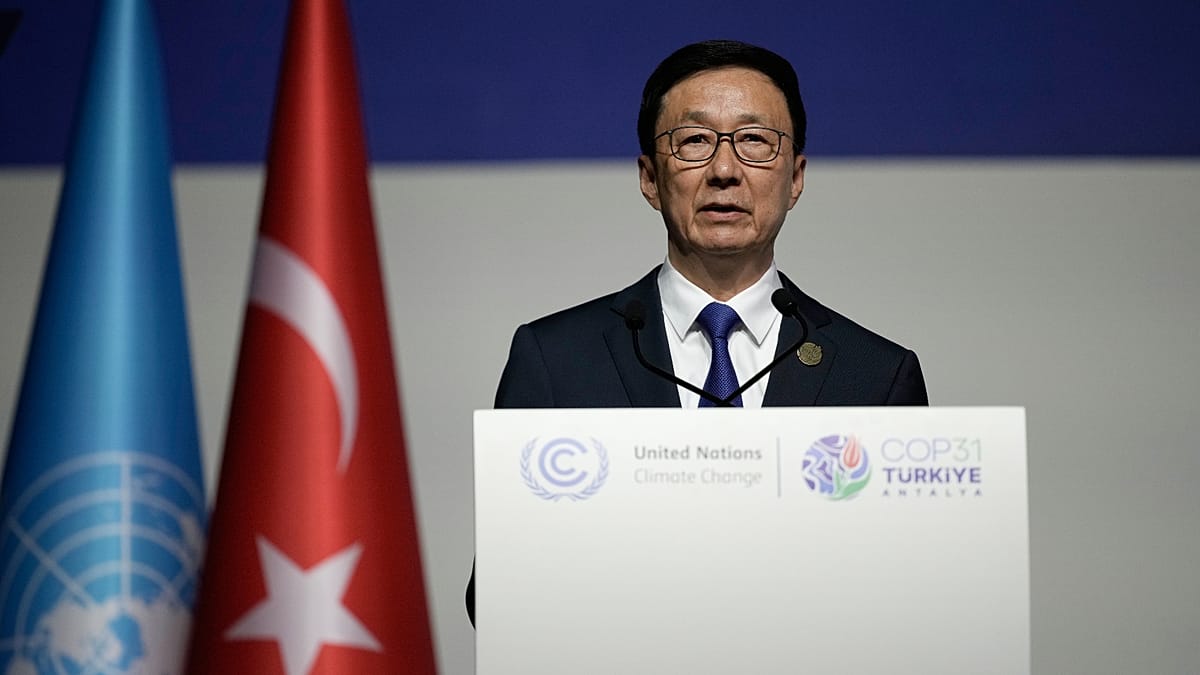
The signing followed a meeting between President Recep Tayyip Erdoğan and Chinese Vice President Han Zheng on the summit's sidelines. According to China's state news agency Xinhua, Han expressed Beijing's readiness to encourage more Chinese companies to invest in Türkiye, singling out renewable energy as a key area for collaboration.
This deal comes as Türkiye pushes to dramatically expand its renewable footprint. At the end of September, the country had about 43.8 GW of combined solar and wind capacity, representing just over a third of its total electricity generation. Under its new national energy strategy, Ankara aims to raise that figure to 175 GW by 2040, a move designed to shift the country's energy consumption away from oil and gas toward electricity.
The agreement is part of a broader pattern of Chinese investment in European energy infrastructure. While Türkiye is not an EU member, its energy market is closely linked to the continent, and projects like these could influence regional supply dynamics. For context, a recent analysis suggested that coordinated solar and battery rollout could cut EU power costs by 40%, highlighting the potential benefits of large-scale renewable deployment.
However, the Turkish deal also raises questions about financing and execution. The announcement lacked details on how the projects would be funded or when they would break ground. Chinese companies have been active in Turkey's energy sector for years, but large-scale investments have sometimes faced regulatory and currency hurdles.
For Europe, the development is a reminder of China's growing role in the continent's energy transition. While the EU has been cautious about Chinese involvement in critical infrastructure, Türkiye's willingness to partner with Beijing could set a precedent. The COP31 summit in Antalya has been overshadowed by geopolitical tensions, yet energy cooperation continues to advance.
Analysts note that Türkiye's ambitious 2040 targets will require substantial foreign investment, and China is an obvious partner given its manufacturing scale and competitive pricing. But the deal also underscores the delicate balance Ankara must strike between its NATO membership and its deepening economic ties with Beijing.
As Europe's own solar boom faces its first dark, windless test of the season, the importance of reliable storage and grid flexibility becomes ever clearer. Türkiye's plan to integrate storage into its renewable expansion could offer lessons for the wider region.
For now, the agreement remains a framework rather than a binding commitment. Both sides have signaled willingness to move forward, but the path from memorandum to operational wind farms and solar parks will require detailed negotiations and robust project planning.