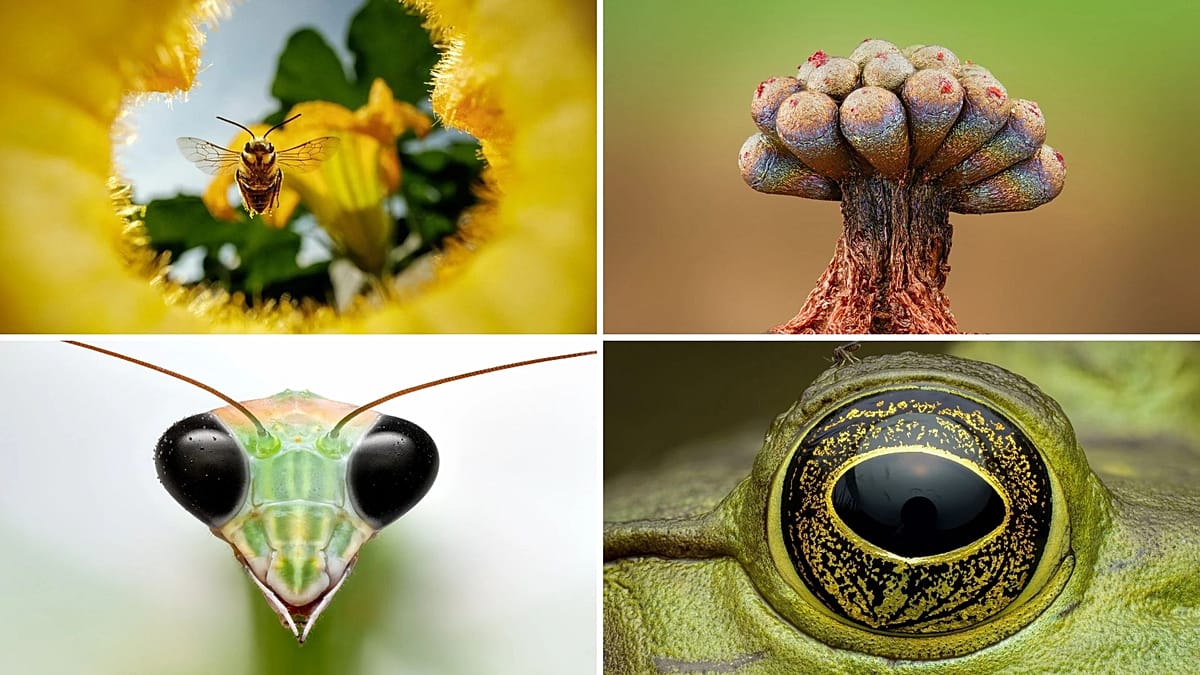
The eighth edition of the Close-up Photographer of the Year (CUPOTY) competition has revealed its shortlist, drawn from a record 15,388 submissions by photographers across the globe. The selected images offer an intimate glimpse into the often-overlooked minutiae of the natural world, from the intricate facets of a dragonfly's eye to the delicate structures of slime moulds.
This year's entries span 11 categories, including Animals, Insects, Arachnids, Underwater, and a dedicated section for young photographers. The competition, which has become a key event in the nature photography calendar, continues to attract both seasoned professionals and enthusiastic amateurs.
“Close-up photography has a wonderful way of revealing details and perspectives that often go unnoticed,” said Tracy Calder, co-founder of the competition. “This year’s shortlist is a fabulous showcase of imagination, technical expertise, and natural curiosity.”
From garden giants to bubble kingdoms
Among the standout images is The Garden of Giants by Csaba Daroczi, a striking portrait of an insect that transforms the familiar into the extraordinary. Neil Losin’s Squash Bee captures the delicate interaction between a bee and a flower, while Filippo Carugati’s Bubble Kingdom offers a surreal underwater scene.
Other notable entries include Luke Martin’s Bullfrog Eye, a hyper-detailed close-up that reveals the complex texture of the amphibian's iris, and Peter O'Neill’s Trapped, which tells a story of predation and survival. Dario Podesta’s Rubber Boy adds a touch of whimsy with its depiction of a tiny creature clinging to a leaf.
The Butterflies & Dragonflies category features Jack Forrester’s Tiger Swallowtail Caterpillar, a vibrant study of larval form, and Derek Moorse’s Dragonfly Portrait, which showcases the insect's compound eyes in stunning detail. Rupert Lees’ Trophic Embrace and Jeremiah Winden’s Spiny backed further demonstrate the diversity of life at close range.
Underwater photography is well represented, with Rene Brunda’s Underwater flight capturing a moment of aquatic grace, Ofek Liepaz’s New Beginnings depicting a fragile ecosystem, and Sandra Stalker’s Summer Pearl offering a serene view of marine life.
The Fungi & Slime Moulds category includes Karsten Buch’s Myxomycete Metatrichia vesparia, a vivid image of a slime mould, and David Myles’ Dewy Physarumalbum, which highlights the delicate beauty of these organisms. Andrey Kuznetsov’s Chosen One and Gabriel Stankiewicz’s Climb to the Crown (in the Intimate Landscape category) round out a diverse selection.
Studio Art entries, such as Charlotte Greenwood’s Origins III and Donald Bolak’s Rose Thorns, demonstrate the creative possibilities of close-up photography, while the Young Photographer category features Spencer Hitchen’s Wolf Spider and Emma Navazesh’s Curious Squirrel, proving that talent knows no age.
The overall winner and category champions will be announced in January 2027. Until then, the shortlist offers a fascinating perspective into the hidden details of our world—though arachnophobes may want to proceed with caution.
For those inspired to explore the natural world further, recent advances in technology are bringing us closer to understanding animal communication, as AI helps decode the language of wildlife. Meanwhile, Europe's commitment to preserving such biodiversity is reflected in initiatives like the EU's sustainable tourism strategy, which aims to protect fragile ecosystems from the pressures of mass travel.