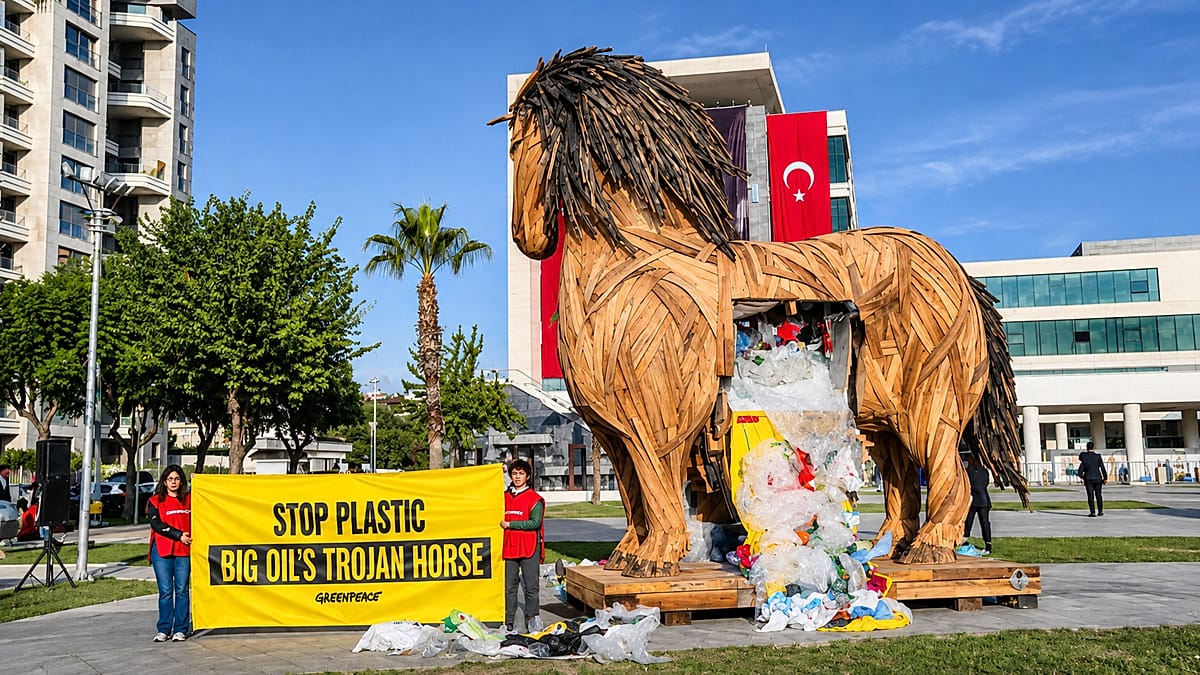
ANTALYA — Delegates arriving at the COP31 climate summit in Antalya were met with an unsettling sight: a six-metre-tall Trojan Horse, its hollow belly spilling plastic bottles, bags, and packaging onto the ground. The installation, created by Greenpeace International in collaboration with Danish artist Thomas Dambo, is a stark warning about the hidden costs of the global plastics boom.
The choice of the Trojan Horse is deliberate. Like the mythical gift that concealed Greek soldiers, plastic waste often arrives disguised as convenience, only to reveal its destructive nature later. Greenpeace says the sculpture represents the "plastic trap" that humanity has built for itself, with production still rising despite mounting evidence of environmental and health harms.
A summit under pressure
COP31, hosted by Turkey, is the first UN climate conference to take place in the Middle East and North Africa region. Negotiators are grappling with how to accelerate the transition away from fossil fuels, but Greenpeace argues that the agenda is incomplete without a strong focus on plastics, which are derived from petrochemicals and contribute to greenhouse gas emissions throughout their lifecycle.
"We are here to remind leaders that you cannot solve the climate crisis without addressing the plastics crisis," said a Greenpeace spokesperson at the scene. "The Trojan Horse is a symbol of the false solutions and empty promises that have allowed the plastic industry to expand unchecked."
Thomas Dambo, known for his large-scale recycled wood sculptures, said the project was a challenge to create. "I've built many things from waste, but this is the first time I've built a horse that literally vomits plastic," he told reporters. "I hope it makes people stop and think about what we are leaving behind."
Turkey's role in the plastic trade
The location is significant. Turkey has become one of the world's largest importers of plastic waste, much of it from European countries that export their recycling burdens. According to recent data, Turkey received over 500,000 tonnes of plastic waste in 2023, making it the top destination for EU plastic scrap. Environmental groups have repeatedly raised concerns about illegal dumping and inadequate processing facilities in the country.
"Turkey is not just a host for this summit; it is also a frontline state in the plastic waste crisis," said a local environmental activist. "We see the impacts in our rivers, on our beaches, and in the health of our communities."
The installation has drawn mixed reactions from delegates. Some praised Greenpeace for its creativity, while others questioned the timing, arguing that the focus should remain on carbon emissions. But Greenpeace insists that plastics and climate are inseparable, pointing to the fact that plastic production is projected to account for 20% of global oil demand by 2050.
This is not the first time Greenpeace has used dramatic visuals to make a point at a climate summit. In previous years, the organisation has deployed inflatable polar bears, giant oil barrels, and even a replica of a melting glacier. The Trojan Horse, however, is unique in its collaboration with a renowned artist, giving the protest an aesthetic dimension that resonates beyond the conference halls.
As the summit continues, negotiators are expected to discuss a proposed global plastics treaty, which would set binding targets for reducing plastic production and waste. The European Union has been a vocal advocate for such a treaty, but divisions remain among member states over the level of ambition. Meanwhile, Turkey's own position has been cautious, balancing economic interests with environmental commitments.
For now, the Trojan Horse stands as a silent but powerful reminder of the challenges ahead. Whether it will spur action or simply become a photo opportunity remains to be seen. But for the thousands of delegates passing through Antalya, the image of a horse overflowing with plastic is likely to linger long after the summit ends.