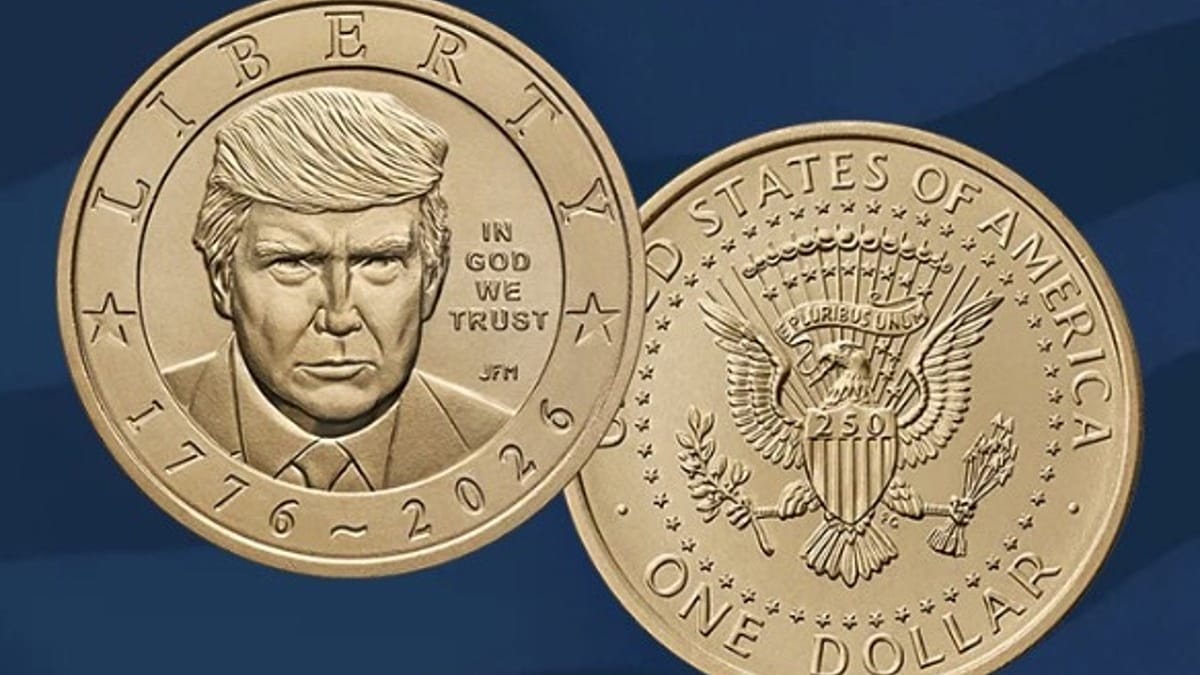
The United States Mint has released a new $1 coin bearing the likeness of President Donald Trump, marking the first time a serving American president has appeared on a coin intended for everyday use. The coin, dubbed the "golden dollar," entered circulation on Thursday, with the Mint urging Americans to check their change while collectors can purchase rolls and bags directly from the agency.
The 25-coin rolls are priced at $61, and 100-coin bags at $154.50. However, finding one in daily transactions may require patience, as dollar coins have never gained widespread traction among US shoppers, circulating far less than paper bills.
A collector's twist
For numismatists, the release includes an added incentive: 250,000 of the coins were struck on 4 July with a special "July 4th" privy mark, randomly distributed among the rolls and bags. Despite its golden hue, the coin contains no gold—it is composed of 88.5% copper, with smaller amounts of zinc, manganese, and nickel.
The obverse was designed by Chief Engraver Joseph Menna, based on an official White House photograph. It shows Trump facing nearly straight ahead, framed by the inscriptions "LIBERTY," "IN GOD WE TRUST," and the dual date "1776–2026." The reverse features the Presidential Seal, originally sculpted by former Chief Engraver Frank Gasparro, with the numeral 250 added to the eagle's shield to commemorate the nation's 250th anniversary.
Legal and historical context
While this is the first time a sitting president has appeared on a circulating coin, there is a partial precedent. In 1926, Calvin Coolidge was featured alongside George Washington on a half dollar marking the 150th anniversary of American independence—but that was a commemorative issue, not a coin meant for daily use.
The legal basis for the Trump coin has been contested. US law generally prohibits portraits of living individuals on coins, but the administration has cited the Circulating Collectible Coin Redesign Act of 2020, signed by Trump during his first term, which permits $1 coins with designs emblematic of the 250th anniversary throughout 2026.
The design process has also drawn criticism, with some questioning the appropriateness of placing a sitting president on circulating currency. The Mint struck the coins in Philadelphia, and they carry no mint mark.
For European observers, this move highlights the growing intersection of politics and national symbolism in the United States. While European nations typically reserve coin portraits for monarchs or historical figures, the US decision reflects a broader trend of personalizing public office. As the continent watches, the debate over presidential imagery on currency may resonate in countries where such practices are rare.