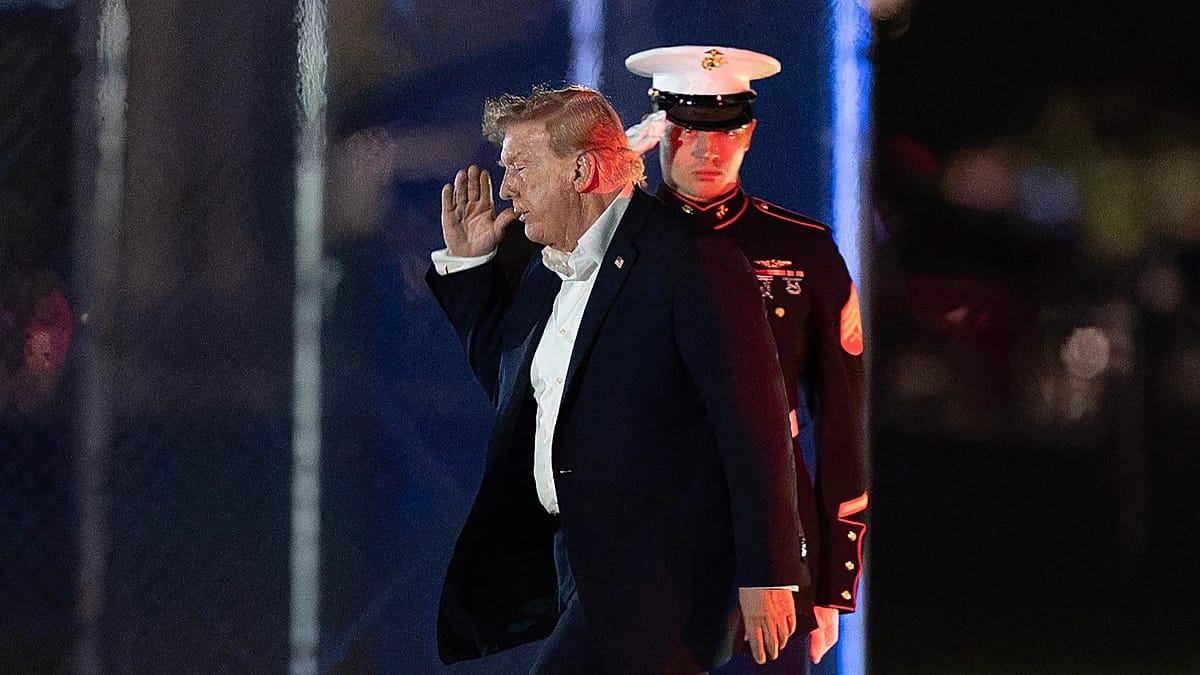
US President Donald Trump said on Monday that Ukraine and Russia had agreed to halt strikes on energy infrastructure, a move he framed as a response to rising global diesel prices. In a post on his Truth Social account, Trump wrote: "Ukraine has agreed not to hit Russian Energy targets. Russia has agreed to do, likewise!" He added that the "World’s Diesel price rise is mostly caused by the Russia/Ukraine War, not Iran."
However, Ukrainian President Volodymyr Zelenskyy has not confirmed any formal agreement. Speaking to reporters, he said Ukraine had "proposed that its partners secure an agreement with Russia that would stop the destruction of critical infrastructure." He added: "If our partners are ready to ensure that Russia genuinely refrains from striking our electricity system, other energy facilities, critical infrastructure, and food supply routes, then, of course, we are ready to ensure a corresponding halt to our strikes."
The announcement comes after Trump, during a weekend trip to Dublin, urged Kyiv to stop targeting Russian diesel facilities. "Zelenskyy has to do one thing. He has to stop knocking out diesel fuel in Russia," Trump told reporters. "Let him go after targets, but not diesel, because he's causing a shortage of diesel."
Ukraine has intensified its attacks on Russian energy infrastructure as part of what Zelenskyy calls "long-range sanctions," aimed at crippling the Russian economy and undermining the Kremlin's war effort. Russia, for its part, has repeatedly struck Ukrainian power grids and other critical facilities since its full-scale invasion began in February 2022, particularly during winter months, in an attempt to break Ukrainian resolve.
Global energy markets under strain
While both the war in Ukraine and the conflict in the Middle East have disrupted global energy supplies, experts point to the latter as the more significant driver of recent oil price spikes. Since late February, when the US and Israel carried out strikes on Iran, oil prices have soared. In response, Iranian forces effectively shut down the Strait of Hormuz, a chokepoint that normally carries about a quarter of the world's seaborne oil trade. The strait remains a key sticking point in negotiations between Washington and Tehran, with attacks on vessels continuing.
Trump's attempt to shift blame for rising fuel costs comes as Americans face higher prices at the pump ahead of November's midterm elections, which will determine control of Congress for the final two years of his term. California Governor Gavin Newsom, a Democrat, criticised US Energy Secretary Chris Wright on X, writing: "Everyone knew Trump’s Iran war would disrupt the Strait of Hormuz and skyrocket costs. So why did Energy @SecretaryWright do nothing to protect us?" He added: "Americans are owed answers about what the Trump Admin knew and why they failed to shield us from these predictable consequences."
For Europe, the stability of energy markets remains a pressing concern. The continent has been grappling with the fallout of the war in Ukraine, including energy price volatility and supply diversification efforts. The potential pause in strikes on energy infrastructure, if realised, could offer some relief, but European leaders remain cautious. The Baltic states, long vocal about the Russian threat, have repeatedly warned of Moscow's intentions, as Latvia's prime minister recently noted that the EU is finally heeding those warnings.
Meanwhile, the situation on the ground remains tense. A recent Russian strike on a train near the Polish border was condemned by both Warsaw and Kyiv as an escalation, highlighting the fragility of any ceasefire. The attack, which killed and injured civilians, underscores the challenges of securing a broader agreement.
As the world watches, the question remains whether Trump's announcement will translate into a verifiable and lasting arrangement. Zelenskyy's insistence on partner guarantees suggests that trust in Moscow's commitments is thin. For now, the energy infrastructure pause remains a proposal rather than a confirmed deal, and global markets continue to react to the uncertainties of two major conflicts.