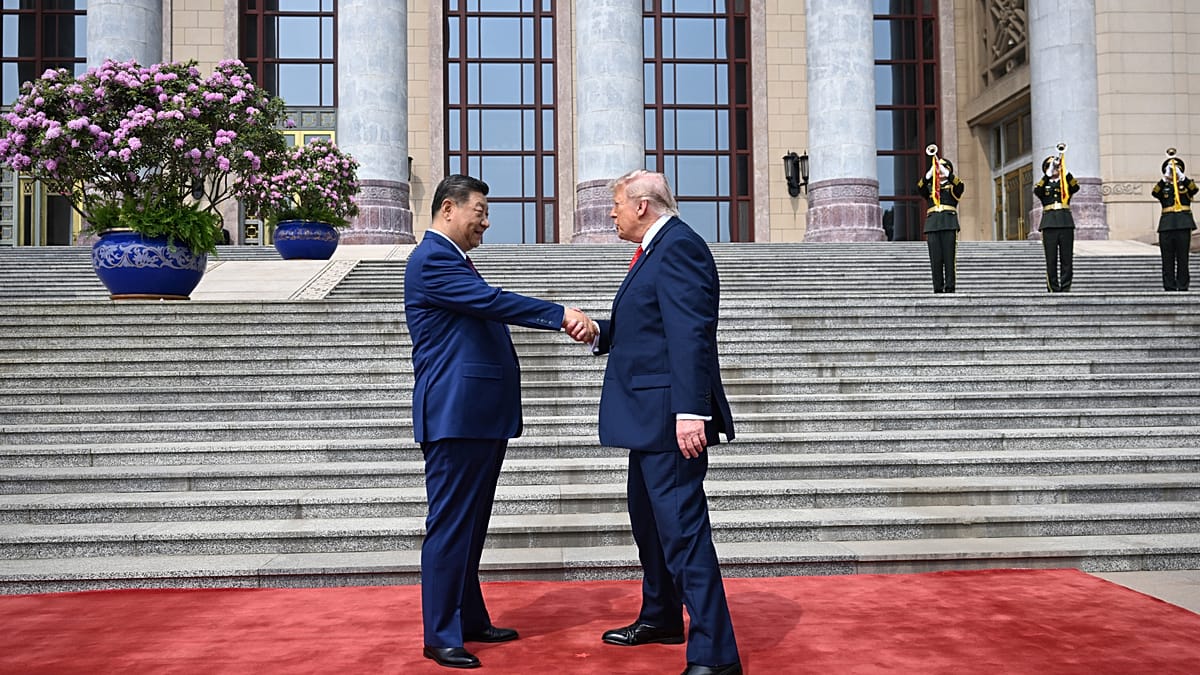
US President Donald Trump touched down in Beijing on Thursday for a high-stakes summit with Chinese President Xi Jinping, as the world's two largest economies seek to de-escalate tensions that have roiled global markets and unsettled European capitals. The meeting, held at the Great Hall of the People, comes amid a backdrop of protracted trade disputes, heightened rhetoric over Taiwan, and the ongoing conflict involving Iran.
Trade and Technology at the Forefront
At the heart of the discussions are the persistent trade imbalances and technology export controls that have defined US-China relations in recent years. Trump, accompanied by a delegation that includes several US tech titans, is expected to press Xi on market access for American firms and the lifting of restrictions on advanced semiconductor sales. The presence of Nvidia's CEO in the delegation underscores the centrality of AI chip export curbs to the agenda, as reported in US Tech Titans Join Trump in Beijing as AI Chip Export Curbs Top Agenda.
For Europe, the outcome of this summit carries significant implications. The European Union, which has its own trade disputes with both Washington and Beijing, is bracing for potential shifts in tariff policies and technology supply chains. A potential US-China deal could redirect trade flows, affecting European exporters in sectors from automotive to machinery. Conversely, a breakdown in talks might lead to further protectionism, disrupting global supply chains that many European companies rely on.
Taiwan and Iran: Geopolitical Flashpoints
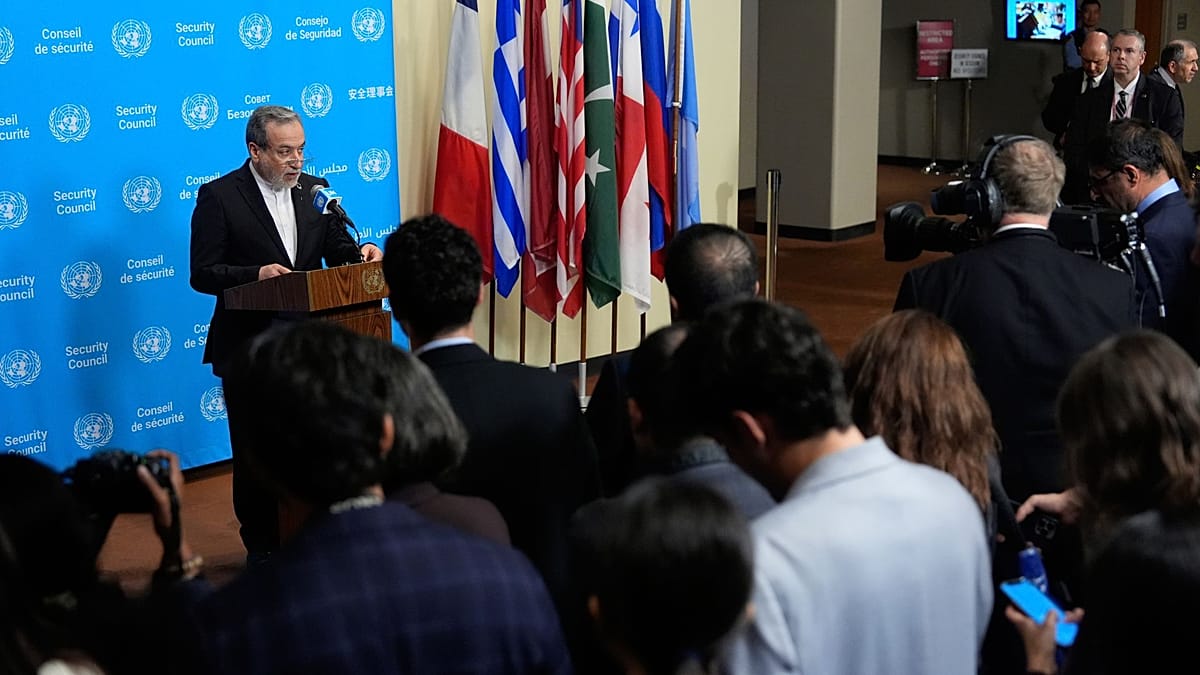
Beyond trade, the summit addresses two critical geopolitical issues: Taiwan and Iran. The US has maintained a policy of strategic ambiguity toward Taiwan, but Trump's administration has taken a more assertive stance, increasing arms sales and diplomatic visits. Xi is expected to reiterate China's opposition to any official US-Taiwan contacts, a position that resonates with European governments that generally adhere to the One-China policy.
On Iran, the US has sought to isolate Tehran through sanctions, while China remains a key buyer of Iranian oil and a diplomatic ally. European powers, including France and Germany, have attempted to preserve the 2015 nuclear deal, known as the JCPOA, which the US withdrew from in 2018. Any US-China agreement on Iran could either reinforce or undermine European efforts to maintain dialogue with Tehran.
European Reactions and Preparations
European leaders are watching the Beijing summit with a mix of caution and pragmatism. The European Commission has prepared contingency plans for a range of scenarios, from a US-China trade truce to an escalation of tariffs. In Brussels, diplomats note that the EU's own trade negotiations with China, including the stalled Comprehensive Agreement on Investment, could be affected by the summit's outcome.
As Europe Braces for Fallout as Trump and Xi Meet in Beijing, the bloc is also strengthening ties with other middle powers. Australia, for instance, has been balancing its China trade with diverse partnerships, as highlighted in Australia Balances China Trade with Diverse Partnerships, Ambassador Tells Brussels. This trend reflects a broader European strategy to diversify supply chains and reduce dependency on any single power.
What the Summit Means for Europe
The Trump-Xi meeting is not merely a bilateral affair; it is a global event with profound consequences for the European Union. A stable US-China relationship could ease pressure on European companies caught between two regulatory regimes, particularly in technology and finance. However, any deal that excludes European interests—such as a carve-out for US firms in China's market—could leave EU businesses at a competitive disadvantage.
Moreover, the summit's outcome will influence the EU's own strategic autonomy. If the US and China reach a broad understanding on issues like climate change or global health, Europe may find itself sidelined in setting international norms. Conversely, a failure to reach agreement could embolden European leaders to pursue a more independent foreign policy, as seen in recent EU initiatives on digital regulation and defense.
As the talks continue, European capitals will be parsing every statement from Beijing and Washington. The stakes are high, and the continent's policymakers know that the decisions made in the Great Hall of the People will resonate from the Élysée to the Bundestag, and from Warsaw to Lisbon.