US President Donald Trump has weighed in on the fate of Iran's supreme leader, saying he believes Ayatollah Mojtaba Khamenei is alive but was seriously wounded in the February strikes that killed his father. In an interview with conservative commentator Glenn Beck, Trump dismissed reports that the younger Khamenei had died, citing the behaviour of Iranian negotiators as evidence.
“I don't think he's dead. He was very seriously wounded. The left side of his body, the arm, the leg, the whole thing. He was very seriously wounded, but I don't think he's dead,” Trump said. He added that if Khamenei were dead, Tehran's officials were “putting on a pretty good show” by repeatedly referring to his final blessing on key decisions.
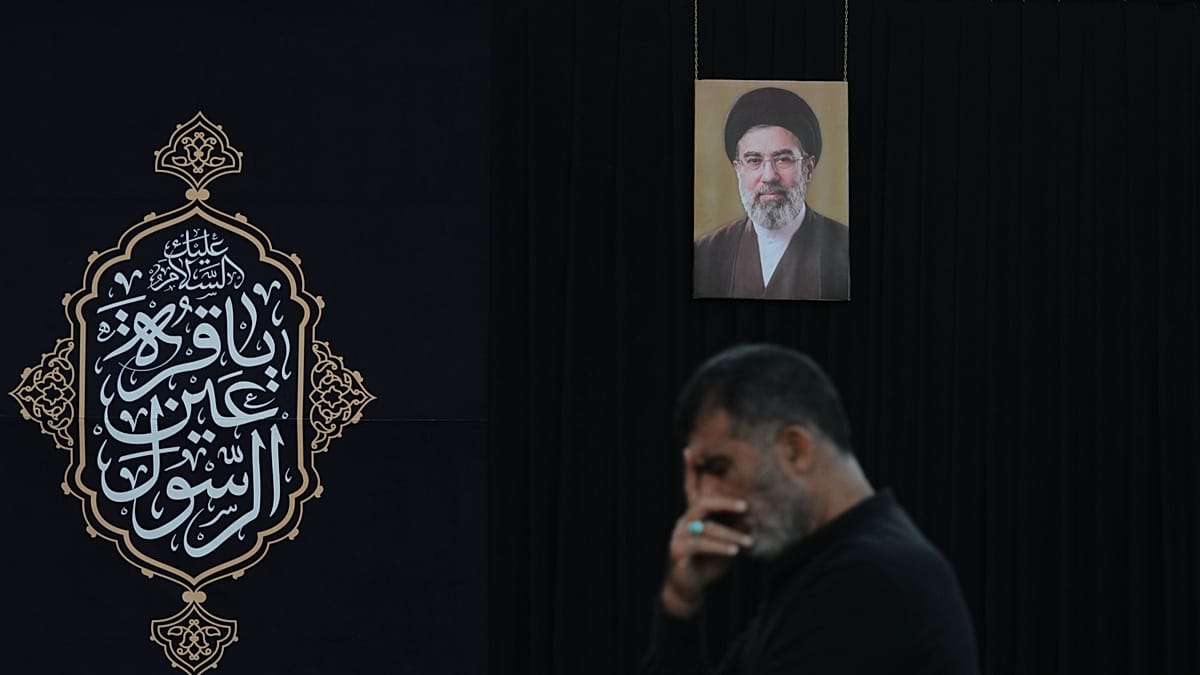
Mojtaba Khamenei, 56, was appointed ayatollah by Iran's Assembly of Experts on 8 March, days after his father Ali Khamenei was killed in the joint US-Israeli strikes of 28 February that triggered the current conflict. Since then, he has not appeared in public, nor have any verified photographs, videos, or audio recordings of him emerged. He was notably absent from his father's funeral ceremonies in July.
The Atlantic, citing unnamed sources close to the Iranian government, reported this week that Tehran was “abuzz” with speculation about his fate. A former official and relative, Mohammad Hossein Khoshvaght, told the magazine that fewer than five people had met with Khamenei since March, “due to security precautions.” Iranian President Masoud Pezeshkian has previously said communication with Khamenei had become “extremely difficult.”
US media, citing unnamed Iranian officials, have reported that Khamenei sustained serious injuries in the strikes, underwent multiple surgeries on his legs and arms, and has difficulty speaking due to severe burns to his face and lips. US Defence Secretary Pete Hegseth has said he was wounded and likely “disfigured.” Tehran has not confirmed these accounts.
Strait of Hormuz and nuclear ambitions
Trump also addressed the situation in the Strait of Hormuz, claiming it was effectively open. “We take a lot of ships through the strait now. We're taking them in,” he said, adding that mines had been cleared. However, the strait remains formally closed to unrestricted commercial traffic under Iranian authority. Iranian forces have continued to intercept vessels attempting to transit routes not approved by Tehran, and US naval operations have been required to escort vessels through.
The president said military and economic pressure on Iran was producing results. “These measures are moving towards a very big victory. We will achieve a major victory very soon,” he said. He reiterated his stance on Iran's nuclear programme: “We cannot allow Iran to obtain nuclear weapons. That is the whole issue — 99.9% of the issue is this. We cannot allow it, because they are crazy and they will use it.”
The uncertainty over Khamenei's condition comes as Washington and Tehran remain locked in a tense standoff. European capitals, including Paris, Berlin, and London, have been closely monitoring the situation, given the potential for regional escalation and its impact on energy supplies and migration flows. The EU has repeatedly called for de-escalation, but the bloc's diplomatic leverage appears limited as the Trump administration pursues a maximum-pressure campaign.
For now, the question of who truly leads Iran remains unanswered. The absence of any public appearance by Mojtaba Khamenei since March is unprecedented in the Islamic Republic's history, and analysts say the regime's stability could be at risk if the supreme leader is incapacitated. As Trump put it, “We'll see what happens.”