FIFA has cleared United States striker Folarin Balogun to play in Monday's World Cup last-16 match against Belgium, after US President Donald Trump personally called FIFA President Gianni Infantino to request a review of the player's red-card suspension. The move, confirmed on Sunday, has ignited a controversy over fairness and political interference in football's flagship tournament.
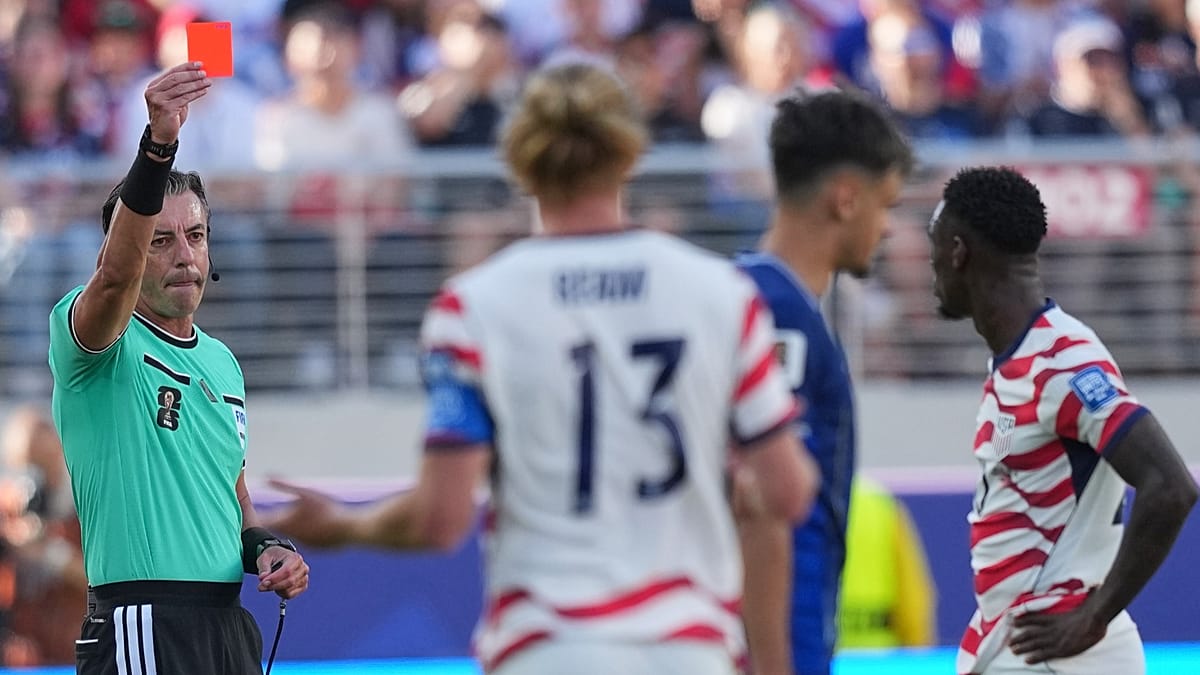
Balogun, the US team's top scorer with three goals in the tournament, received a straight red card following a video review for stepping on the foot of a Bosnian defender during a round-of-32 victory. Under FIFA's standard disciplinary rules, a straight red card automatically triggers a one-match ban that cannot be appealed by the player's team.
However, FIFA announced on Sunday that the suspension would be suspended for a probationary period of one year, citing article 27 of the FIFA disciplinary code. The governing body stated that Balogun would serve the ban only if he commits a similar offense within the next twelve months. No specific explanation for the reversal was offered beyond the legal reference.
Two sources familiar with the matter told the AFP news agency that Trump spoke directly with Infantino on Wednesday, the same day the red card was issued. US Secretary of State Marco Rubio also publicly called for the card to be rescinded. Trump later wrote on his Truth Social platform: "Thank you to FIFA for doing what was right, and reversing a great injustice!"
Belgian Outrage and Questions of Precedent
The decision was immediately condemned by Belgian football officials. The Royal Belgian Football Association released a statement saying they are "astonished" by a move that is in "direct contradiction" with FIFA's own rules. The association is "investigating all potential options" to "safeguard the legitimate rights of all participating teams and to protect the fundamental principles of fair play in our sport."
Belgium coach Rudi Garcia, speaking at a press conference, said: "I didn't know that at the FIFA World Cup, the 5th of July is now the 1st of April, and that it's April Fool's Day." Goalkeeper Thibaut Courtois described the timing as "a bit of a surprise," coming just one day before the match in Seattle.
FIFA's decision has some precedent. During qualifying last year, Portugal's Cristiano Ronaldo received a three-game ban for an elbow, but two matches of that suspension were suspended, allowing him to play in Portugal's World Cup opener. That move also drew criticism at the time.
Garcia, however, rejected comparisons: "We're not defending the national team or the federation. We are defending football, whether it's ethics or integrity."
The stakes are high for the co-hosts. The US team, playing on home soil, has raised expectations with a strong start to the tournament and is targeting a historic run to at least the quarter-finals—a stage they have not reached since 2002. Balogun's presence against Belgium is seen as crucial; he had earlier said the ban was "something I have to just accept."
US head coach Mauricio Pochettino welcomed the reversal, calling the red card "too big" for an unintentional foul. "It's not that we are victims, but we are not the bad men, the mean ones here," he said. Forward Christian Pulisic described the decision as a "boost," while US Soccer said it was "pleased."
The incident adds to a pattern of Trump's direct engagement with global sports governance. Earlier this year, Trump held separate calls with Ukrainian President Volodymyr Zelenskyy and Russian President Vladimir Putin on US Independence Day, and his administration has also intervened in NATO-related matters. The controversy also echoes broader tensions between the US and European allies, as seen in the Antwerp diamond industry's gift to Trump after winning tariff relief.
As the match approaches, the focus will be on whether Balogun can deliver for the US, but the shadow of political intervention will linger over the tournament's integrity.