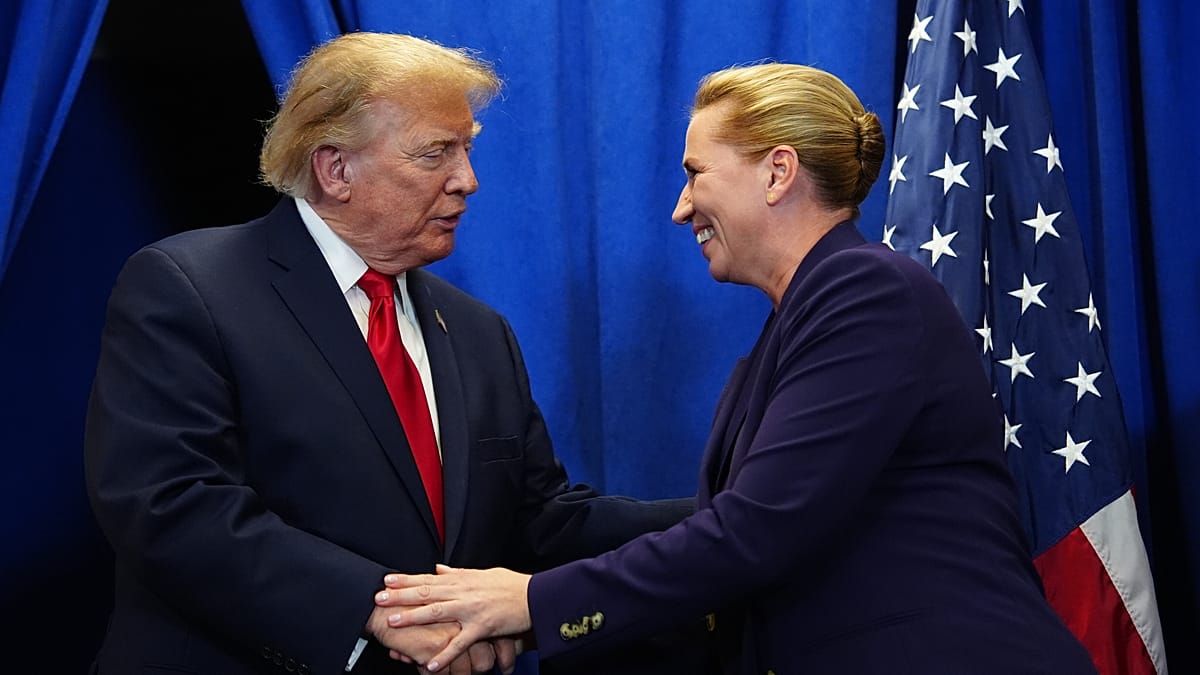
After ten months of tense negotiations, the governments of Denmark, Greenland and the United States have signed a new defence agreement that settles the legal framework for American military activity on the world's largest island. The deal, signed on the sidelines of the UN General Assembly in New York, reaffirms Washington's access to Greenland's bases and infrastructure, but stops well short of granting the United States ownership or sovereignty.
President Donald Trump, Danish Prime Minister Mette Frederiksen and Greenlandic Prime Minister Jens-Frederik Nielsen put their signatures to the document, ending a period of open friction between Copenhagen and Washington. The White House had spent much of the past year accusing Denmark of neglecting Greenland's defence and demanding that the island be handed over to the United States outright. That maximalist demand was dropped during negotiations, though the final text still gives the Pentagon significantly more room to operate.
What the deal actually says
The agreement builds on the 1951 Defense of Greenland Agreement, which already allowed the US to maintain military installations on the island. At the height of the Cold War, the US operated 17 bases and stationed around 10,000 personnel there. Today, only the Pituffik Space Base on the northwest coast remains active. Under the new pact, Washington will reopen two more sites: Narsarsuaq in southern Greenland, a former Cold War installation, and Mestersvig on the east coast.
The most significant new provision is Article 10, which gives the United States an effective veto over foreign investment in Greenland from countries that are not NATO members, NATO partners, or EU member states. The text states that such states or their investors shall not be allowed to gain control or significant influence over Greenlandic assets unless the parties agree that the activity would not threaten national security or public order. This is a clear attempt to block Chinese or Russian economic penetration of the island, which sits along critical Arctic and North Atlantic flight and missile paths.
Former US Judge James E. Baker, who directs the Syracuse University Institute for Security Policy and Law, told Euronews that the agreement should be read in good faith. "Trust is the coin of the realm with alliances. And trust is built through diplomacy, process, and the identification of shared interests and values, not threats," he said. "The agreement should put the US relationship with Denmark and Greenland and NATO back on a path that recognises and respects our longstanding friendship, alliance, and mutual security interests, including in the Arctic."
NATO Secretary General Mark Rutte welcomed the deal on social media, writing that it "enhances our collective security and supports a safer and more stable future for us all." The agreement explicitly keeps NATO central to Greenland's security and defence, and it reaffirms the sovereignty and territorial integrity of Denmark as well as the right to self-determination of the Greenlandic people.
Trump's 'permanent control' claim
Speaking at the UN General Assembly, Trump said the arrangement gives Washington "permanent control over security and all other needs" in Greenland. He added that "no US adversary will ever be permitted to establish a military presence in Greenland anymore, or make sensitive investments there without our express written approval."
Those words go beyond what the text actually provides. The agreement is indeed described as permanent, meaning it will remain in force even if Greenlanders vote to separate from Denmark. But it does not transfer ownership or sovereignty. It grants the US enhanced military access and a veto over certain foreign investments, while leaving Greenland's political status unchanged.
The deal also has implications for the wider European security architecture. It comes as NATO allies are watching superpower competition reshape the Arctic, and as the alliance seeks to balance its commitments in the region. The agreement is likely to be seen in Brussels and other European capitals as a pragmatic compromise that preserves Greenland's ties to Europe while acknowledging Washington's strategic interests.
For Copenhagen, the deal avoids the humiliation of being forced to cede territory. For Nuuk, it secures continued American investment and protection without surrendering autonomy. And for Washington, it locks in a military foothold in a region where both China and Russia are expanding their presence. Whether that amounts to "permanent control" is a matter of interpretation, but the legal reality is more nuanced than the president's rhetoric suggests.