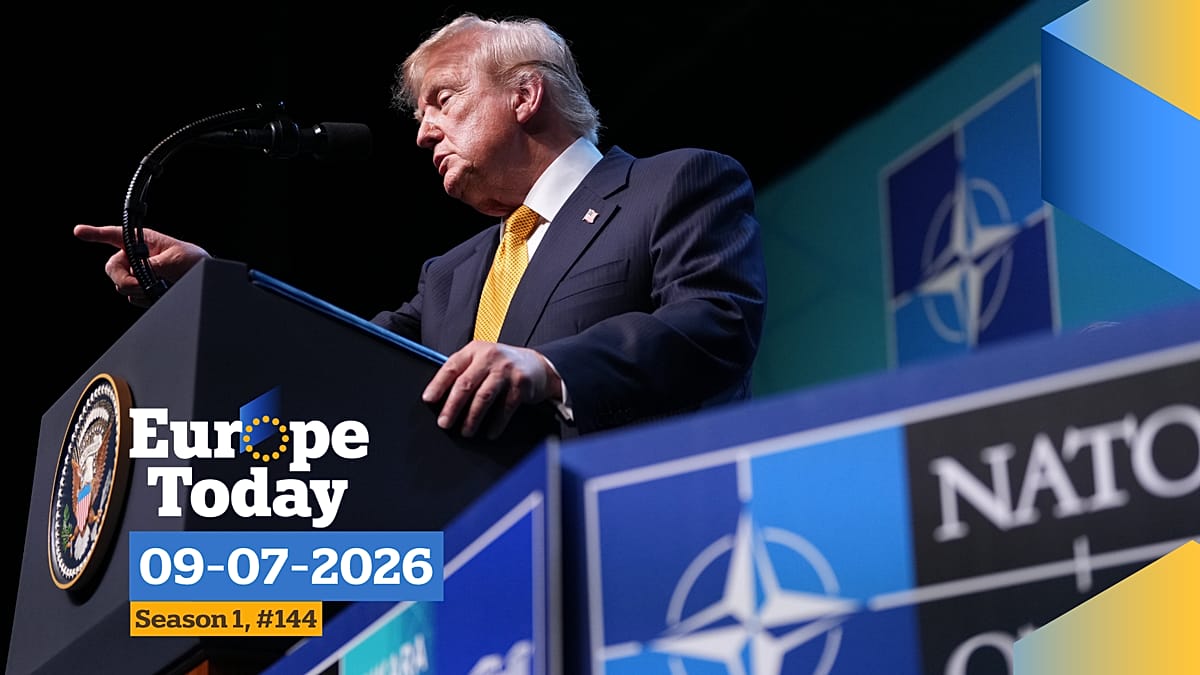
The final day of the NATO summit in Ankara was overshadowed by President Donald Trump's announcement that the ceasefire with Iran is over, as he ordered fresh US strikes and declared that Ukraine would receive a license to produce Patriot missile interceptors domestically. The move, which came as allied leaders agreed to record defence spending commitments, has deepened transatlantic tensions and raised questions about the future of European security.
Summit Outcomes and Transatlantic Strains
Speaking from the Turkish capital, Euronews correspondent Shona Murray reported that the summit's achievements—including a pledge to increase defence budgets and continued support for Kyiv—were eclipsed by Trump's unilateral actions. Former NATO official Jamie Shea, in an interview, assessed the summit's mixed results: while the alliance demonstrated unity on Ukraine, the renewed conflict with Iran and Trump's revived ambitions on Greenland have unsettled European capitals. "The transatlantic relationship is under strain," Shea noted, "and Europe must now prepare for a more unpredictable US partner."
The summit also saw Trump offer Ukraine a license to produce Patriot interceptors, a move that could bolster Kyiv's air defences but also signals a shift towards more direct US support outside NATO frameworks. Meanwhile, Gulf states have urged restraint, as the escalation threatens to destabilise the broader Middle East.
Humanitarian Fallout and EU Migration Pressures
The renewed fighting in Iran has immediate humanitarian consequences, with the UNHCR's Brussels representative Jean-Nicolas Beuze warning of potential displacement waves. "The situation is dire," Beuze said, "and Europe must be ready to implement the EU Migration and Asylum Pact effectively." The pact, designed to manage asylum claims and border controls, faces its first major test as conflict in Iran could push thousands towards European borders. Beuze stressed that preparedness is not just about capacity but about upholding international law and protecting vulnerable people.
Separately, the EU's anti-fraud office, OLAF, has uncovered an international trafficking network distributing counterfeit condoms across Europe. Euronews' Jakub Janas reported that the operation involved multiple countries, with fake products posing serious public health risks. The case highlights ongoing challenges in regulating cross-border trade and protecting consumers from substandard goods.
World Cup Quarter-Finals and European Football
On a lighter note, the FIFA World Cup has reached the quarter-final stage, with several European teams still in contention. France will face Morocco, Spain takes on Belgium, Norway meets England, and Lionel Messi's Argentina prepares to play Switzerland. The matches promise high drama as Europe's footballing powerhouses vie for a place in the semi-finals.
As the summit concludes, European leaders must navigate a complex landscape: balancing defence commitments with domestic pressures, managing migration flows, and maintaining unity in the face of US unpredictability. The coming weeks will test whether the EU can turn summit pledges into concrete action.