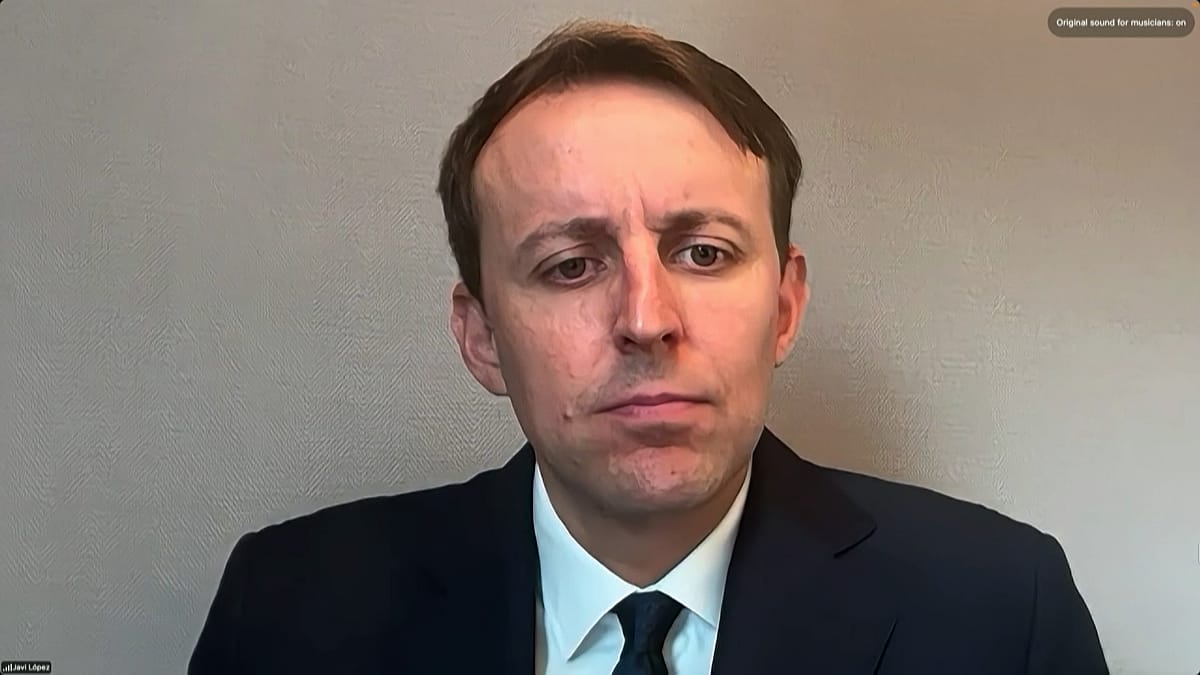
MEP Javi López (S&D, Spain) has argued that the geopolitical pressures exerted by the Trump administration are compelling the European Union to adopt a more mature and assertive role in international affairs. Speaking after the EU and Mexico signed an updated trade deal, López described the agreement as a clear example of the bloc's "offensive foreign action."
The deal, which updates the existing EU-Mexico Global Agreement, is part of a broader strategy to diversify the Union's economic relationships and reduce strategic dependencies on both the United States and China. According to López, recent agreements with India and the Mercosur bloc demonstrate that Brussels is "working in the direction" of a more proactive trade policy.
A Wake-Up Call from Washington
López's comments come at a time when transatlantic relations are under strain. The Trump administration's unilateral decisions—such as the announcement of 5,000 additional US troops for Poland—have raised questions about the reliability of American commitments under NATO. Poland welcomes 5,000 extra US troops, but questions remain over Trump's unilateral move, highlighting the broader uncertainty facing European capitals.
For López, this uncertainty is a catalyst for EU maturity. "The United States is forcing us to grow up," he said. "We can no longer rely on Washington to set the agenda. Europe must define its own interests and pursue them with confidence."
The EU's trade deal with Mexico is particularly significant because it covers not only tariff reductions but also provisions on sustainable development, digital trade, and investment protection. EU and Mexico sign updated trade deal to diversify away from US and China, a move that analysts say strengthens the bloc's hand in global supply chain reconfiguration.
Diversification as a Strategic Imperative
The push for diversification is not limited to Mexico. The EU is also pursuing agreements with India and the Mercosur bloc (Argentina, Brazil, Paraguay, Uruguay). These negotiations, while complex, are seen as essential to reducing the Union's vulnerability to external shocks. "We cannot put all our eggs in one basket," López noted. "The world is multipolar, and Europe must act accordingly."
The timing of these efforts is critical. With the US administration signaling a more transactional approach to alliances, European leaders are increasingly aware that economic security is inseparable from geopolitical stability. EU seals Mexico trade deal as NATO questions US military commitment, a pairing that underscores the interconnected nature of trade and defense.
López's remarks also reflect a broader shift in the European Parliament. The S&D group, which includes many center-left MEPs, has been vocal about the need for the EU to develop its own foreign policy tools. This includes not only trade agreements but also investment in defense capabilities and digital sovereignty.
Critics, however, warn that the EU's ambitions may outpace its capacity. The ratification process for trade deals is often slow, and domestic political opposition in member states can derail progress. Yet López remains optimistic. "We are learning to act as a bloc, not just as a collection of nations. That is the definition of maturity."
As the EU navigates this new landscape, the Mexico deal serves as both a template and a test case. If successful, it could pave the way for a more assertive European presence in global affairs—one that is less reactive and more strategic.