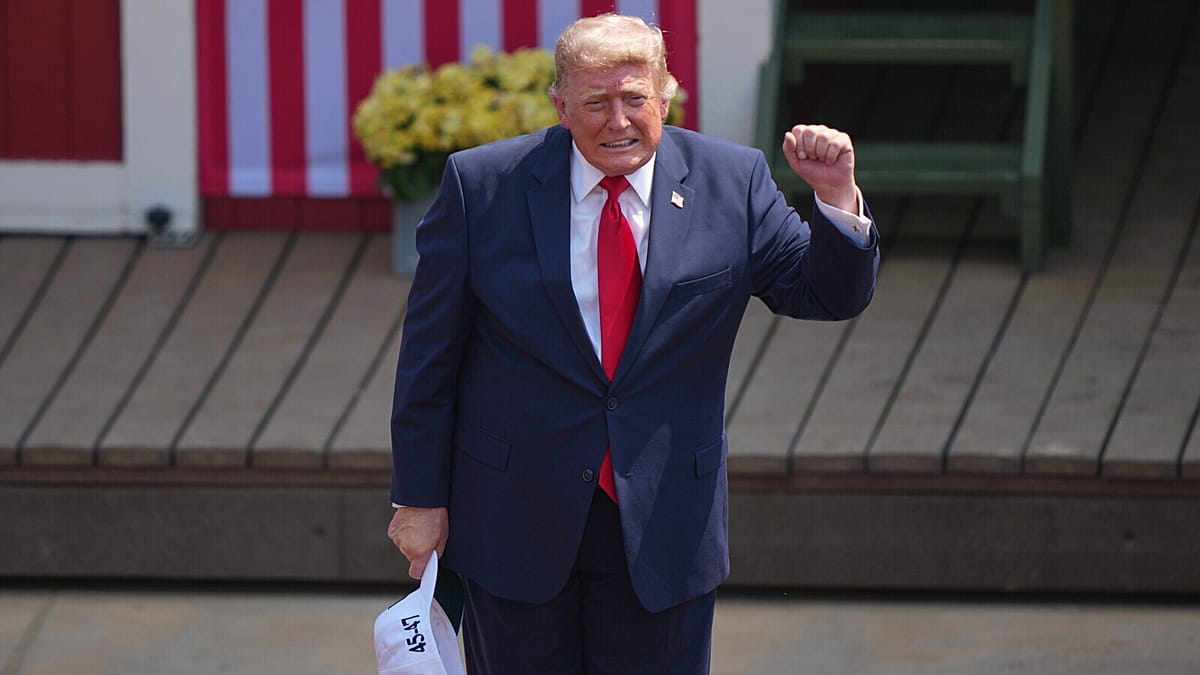
As the countdown to next week's NATO summit in Ankara begins, US President Donald Trump has once again turned up the rhetorical heat on European and Canadian allies. In remarks on Thursday, Trump described the current US relationship with NATO as “ridiculous” and “one-sided,” reviving a familiar grievance that has defined his approach to the alliance since his first term.
Kurt Volker, the former US ambassador to NATO during Trump's first administration, offered a more measured assessment in an interview with Europe Today. “Donald Trump is always raging about something,” Volker said. “And he's unhappy about European contributions, European defence spending, Iran, whatever it might be.” Yet Volker predicted the summit would not collapse: “This is not going to be a blow up of a NATO summit. He has a good relationship with Erdogan, and he doesn't want to rain on Erdogan's parade.”
Trump's second term has been marked by a particularly sharp tone toward allies, whom he has repeatedly labelled “free riders” on US military investment. Relations hit a low after the US and Israel launched an offensive into Iran, with some European states initially refusing to grant access to military bases. “The administration right now likes to say that Europe wasn't there for us,” Volker noted. “That's a bit of an exaggeration. We had to ask and then you could have used them. And we didn't tell anybody we were going to attack Iran. And then we complained that no one was attacking with us.”
For a deeper look at Trump's latest remarks, read our analysis: Trump Calls US Support for NATO 'Ridiculous' Ahead of Ankara Summit.
Ireland's EU Presidency: Budget Battles and Alumina Scandal
Meanwhile, in Cork, the College of European Commissioners, led by President Ursula von der Leyen, is meeting with Irish government counterparts to mark the start of Ireland's six-month rotating EU Council presidency. The choice of Cork is symbolic: it is the hometown of Taoiseach Micheál Martin.
High on the agenda is the next seven-year EU budget, which the Irish presidency must help finalise by year's end. Martin has warned that negotiations will be “extremely difficult” and require “significant” concessions from all sides. “Reconciling the irreconcilable,” he told reporters, describing the challenge of designing a budget that satisfies 27 member states. Ireland plans to present a revised negotiating box in October, with particular focus on so-called own resources—EU-wide taxes meant to complement national contributions. While there is broad agreement that new own resources are necessary to fill budget gaps, consensus on which taxes to implement remains elusive.
Also dominating discussions in Cork is the scandal over Irish-made alumina sales to Russia. Martin said factors such as local jobs, the environment, and supply chains must be considered before a final decision. He promised to share findings from an internal investigation with the Commission and work toward a “core issue” solution, but stopped short of committing to sanctions—a key demand from Kyiv. The Taoiseach spoke of “next steps” but offered no concrete timeline.
Other topics on the table include enlargement, competitiveness, security, rising trade tensions with China, and the latest tariff threats from Trump. Dublin has also been pushing for restrictions on illegal Israeli settlements in the West Bank, though the measure still lacks a qualified majority and a formal proposal.
Ukraine: Zelenskyy Calls for Promised Air Defenses After Deadly Strike
In Kyiv, search and rescue operations continued through Thursday after a massive Russian attack killed 30 people. President Volodymyr Zelenskyy, speaking at the site of a strike in the Darnytskyi district, urged allies to deliver the air defense systems they had promised. “If our partners had delivered what they promised on time, I think we could have saved more homes and, frankly, more lives,” he said. The attack once again exposed Ukraine's continuing shortage of interceptors.
For more on the aftermath, see: Kyiv Mourns After Russian Strike as NATO Prepares for Ankara Summit.
Polish-Ukrainian Tensions Escalate Over Historical Dispute
In Warsaw, Ukrainian Foreign Minister Andrii Sybiha is set to meet his Polish counterpart, Radosław Sikorski, amid an unprecedented diplomatic escalation. The dispute stems from Kyiv's decision to rename a Ukrainian military unit after the Ukrainian Insurgent Army (UPA), a World War II-era force that fought for Ukraine's independence but is remembered in Poland primarily for the Volyn tragedy, in which tens of thousands of Polish civilians were killed.
Polish President Karol Nawrocki revoked President Zelenskyy's Order of the White Eagle on June 19, prompting several senior Ukrainian officials, including Sybiha, to return Polish state honors in protest. Sikorski later called Nawrocki's decision “inappropriate,” saying it “humiliated the president of Ukraine personally.” The meeting in Warsaw will aim to de-escalate tensions between the two neighboring countries, which have been close allies in supporting Ukraine against Russian aggression.