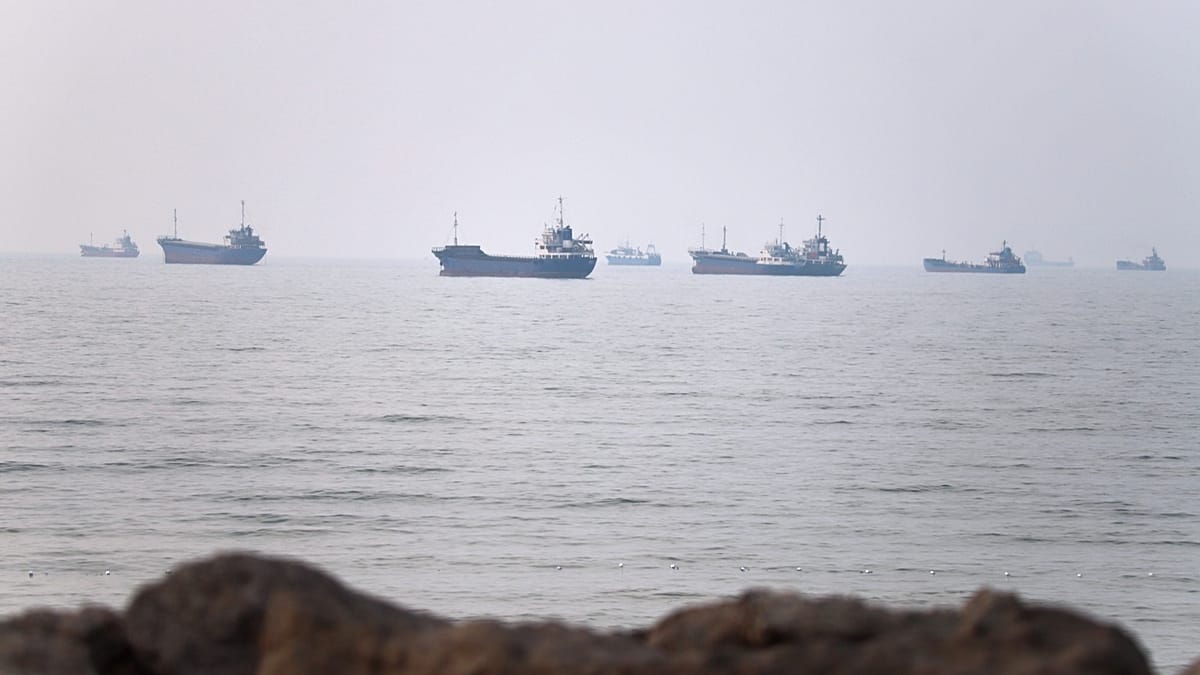
US President Donald Trump has escalated his confrontation with Iran by threatening to use frozen Iranian assets to pay for damage to ships and cargo in and around the Gulf. In a post on his Truth Social platform, Trump wrote: "Please let this statement serve to represent, until further notice, that from this point forth, any and all damages done to Ships, Cargo, or anything related thereto, will be paid for by Iranian Money that the United States has in its possession, and controls."
Iran's foreign minister, Abbas Araghchi, responded sharply on Friday, calling the threat an "incendiary precedent." In a statement, he warned: "Seizing another nation's assets to pay for unrelated future claims is an incendiary precedent. Those who celebrate or profit from such funds should remember: once governments normalise confiscation, no one's assets are safe. Ensuing chaos will not be pretty or peaceful."
The exchange comes as the United States has conducted a 13th consecutive night of strikes on Iranian military and commercial sites. Iranian state media reported explosions in the port city of Bandar Abbas, a critical hub for military supplies and trade cargo, as well as on Qeshm Island, which houses naval assets including drone boats capable of attacking vessels transiting the Strait of Hormuz. Blasts were also reported near Andimeshk, Omidiyeh, and Firuzabad in northwestern Iran.
Strait of Hormuz and Red Sea Tensions
The standoff over the Strait of Hormuz, through which about 20% of the world's oil passes, has intensified. Meanwhile, a new front has emerged in the Red Sea, where Yemen's Iran-backed Houthi rebels have threatened to shut down another key trade route. On Thursday, Trump warned the Houthis of "major military punishment" after the group claimed they struck two Saudi oil tankers transiting the Red Sea. Trump wrote: "The US will hold Iran responsible, in that the Houthis are a surrogate and/or proxy of Iran, and major military punishment will be inflicted upon Iran and, of course, the Houthis themselves" should further attacks occur.
Trump earlier this week said the US would "take care" of the Houthis if shipping and energy exports were jeopardised by a potential blockade of the Bab el-Mandeb strait, a narrow gateway to the Red Sea through which roughly 12% of global trade normally flows.
For European capitals, the escalating conflict poses significant risks. The Strait of Hormuz and the Red Sea are vital arteries for European energy imports and trade with Asia. Any disruption could drive up energy prices and threaten supply chains, particularly for countries like Italy, Greece, and Spain that rely heavily on Mediterranean and Red Sea routes. The European Union has previously sought to de-escalate tensions through diplomatic channels, but Trump's latest move—unilaterally seizing assets—could complicate those efforts.
The asset seizure threat also raises legal and diplomatic questions. European nations, including France and Germany, have their own frozen Iranian assets under EU sanctions regimes, and may face pressure from Washington to follow suit. However, European officials have historically been wary of such unilateral actions, which they argue undermine international law and the rules-based order. The precedent set by Trump's threat could embolden other states to seize assets arbitrarily, as seen in Russia's recent law freezing assets of exiled dissidents.
Iran's foreign minister has framed the issue as a broader threat to global financial stability. His warning that "no one's assets are safe" resonates in European financial hubs like London, Frankfurt, and Zurich, where investors and institutions hold significant cross-border assets. The European Central Bank and national regulators may need to assess the implications for financial markets if asset seizures become more common.
Meanwhile, the US military campaign continues to draw criticism from some European allies, who fear it could spiral into a wider regional war. NATO has already vowed to defend Bulgaria after Iran threatened the country over US military aircraft operations. The conflict's economic toll is mounting: US war costs have surged past $37 billion, and Trump has ruled out negotiations with Tehran.
As the situation evolves, European policymakers face a delicate balancing act: maintaining solidarity with the United States while protecting their own economic and security interests. The coming weeks will test whether Europe can forge a unified response to what is rapidly becoming one of the most volatile flashpoints in the Middle East.



