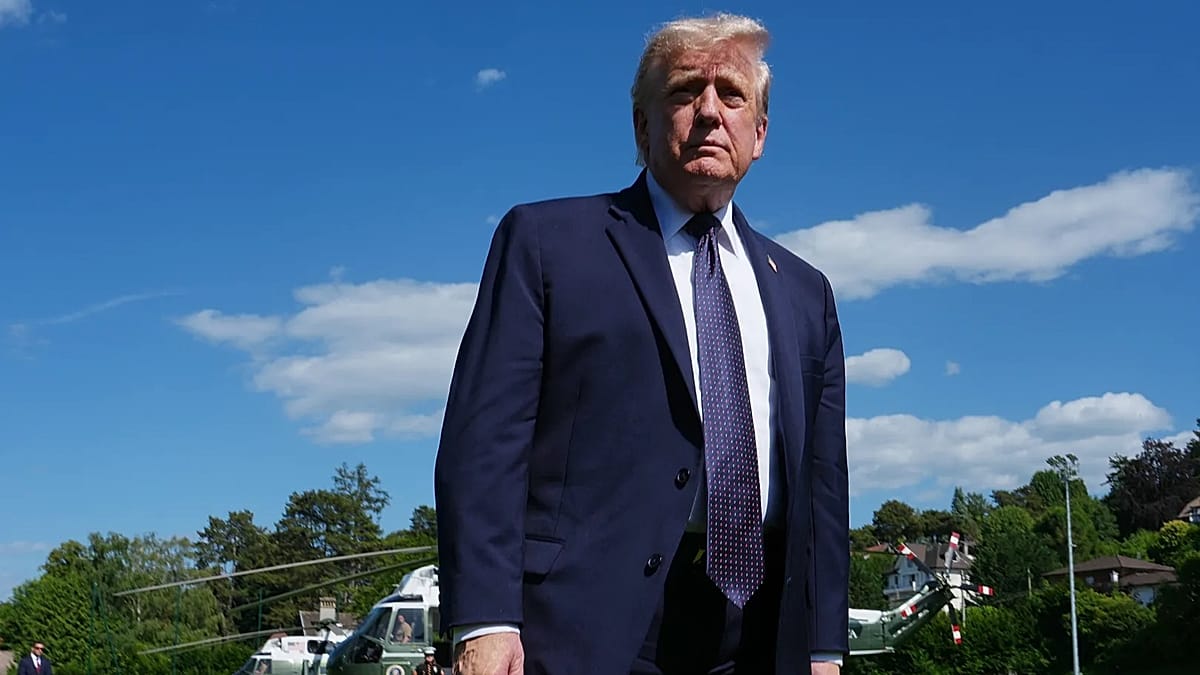
Speaking to reporters on the sidelines of the G7 summit in Évian, France, US President Donald Trump urged Israeli Prime Minister Benjamin Netanyahu to exercise greater restraint in Lebanon and proposed that Syria's leadership take the lead in countering Hezbollah. The remarks, made during a bilateral meeting with Qatar's Emir Tamim bin Hamad Al Thani, reflect growing unease in Washington over the scale of Israeli operations.
Trump directly questioned the proportionality of a recent Israeli airstrike in Beirut, which killed three people and injured more than a dozen. The Israel Defense Forces said the operation targeted a Hezbollah command centre, but Trump was blunt in his assessment: “You don’t have to knock down an entire apartment building every time you’re looking for somebody, because there are a lot of people who live in those apartments and they are not all Hezbollah.”
A Shift in US Messaging on the Region
The president's comments mark a notable departure from his usual unconditional support for Israel. While he acknowledged that Hezbollah remains a regional problem, he suggested that Netanyahu's methods risk undermining stability. “Israel has been fighting Hezbollah for too long, and too many people are being killed,” Trump said, adding that the Beirut strike was “vicious” and “too much.”
Trump pointed to Syria's President Ahmed al-Sharaa as a more capable actor to handle Hezbollah, calling him “very good for me” and “very capable.” He argued that if Israel cannot conduct operations without significant civilian casualties, “he (al-Sharaa) will do the job.” This endorsement of a Syrian role is striking given the complex web of alliances in the region, where Syria has historically been a backer of Hezbollah.
The president also stressed that Lebanon has been “treated the worst” among countries affected by the conflict and “can’t defend themselves.” He called on Netanyahu to “be more responsible with respect to Lebanon.”
These statements come as the US pursues a framework deal with Iran to end the broader war. Trump claimed a deal is imminent, though he has previously accused Tehran of bad faith. The G7 summit in Évian is also addressing AI regulation and trade tensions, including Trump's threat of a 100% tariff on French wine over the digital tax. For more on the summit's broader agenda, see our coverage of the G7 Summit in Évian: Iran Deal, AI Regulation, and Trump's Return.
European diplomats have watched the US-Iran talks closely, as any deal would have significant implications for European security and energy markets. The EU has long advocated for a diplomatic solution, and the prospect of a US-Iran agreement could reshape the region's dynamics. Meanwhile, the situation on the ground remains tense. For context on the challenges of peacekeeping, read our report on UNIFIL Deputy: No Quick Peace Between Israel and Hezbollah Without Political Will.
Trump's comments also highlight the delicate balance the US must strike between supporting Israel and preventing a wider regional conflagration. The president insisted his relationship with Netanyahu remains strong, but his public critique suggests a growing impatience with Israeli tactics. As the G7 continues, the focus will remain on whether the US can broker a deal with Iran and how that might affect the broader Middle East—and Europe's role in it.