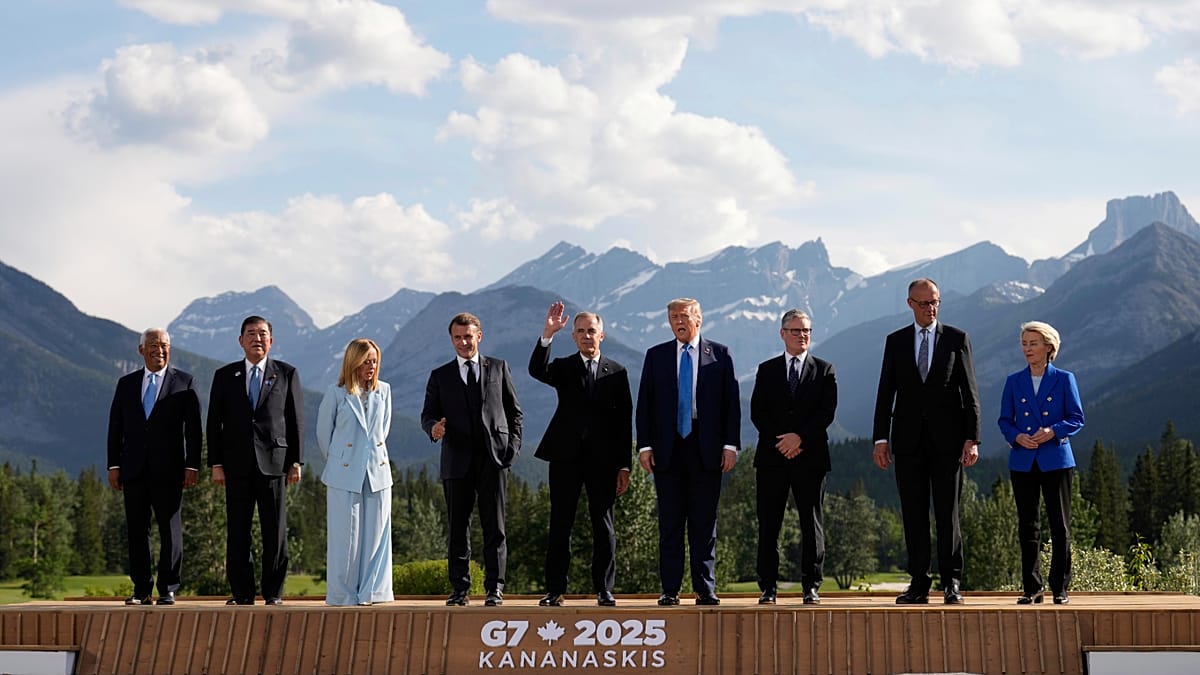
Heads of state from the Group of Seven are converging on the lakeside resort of Évian-les-Bains for a three-day summit that promises to be dominated by geopolitics, technology, and the unpredictable presence of US President Donald Trump. Host Emmanuel Macron faces the delicate task of bridging transatlantic divisions while addressing a packed agenda that includes a potential breakthrough in the Iran conflict, the regulation of artificial intelligence, and the ongoing war in Ukraine.
The summit opened with a dramatic development: Trump announced late Sunday that a memorandum of understanding had been brokered to end the 15-week war between the US and Iran. In a social media post, he declared, “Ships of the World, start your engines,” signalling that the US would lift its blockade of the Strait of Hormuz, a critical chokepoint for global oil supplies. Germany, France, the UK, and Italy issued a joint statement welcoming the “diplomatic breakthrough,” while Macron wrote on X that the resumption of maritime traffic “without restriction or toll” was essential for regional stability and the global economy. He added that the deal should pave the way for comprehensive negotiations addressing Iran’s nuclear and ballistic programmes, as well as its regional destabilisation policies.
The Iran deal is a central topic at the summit, but it is not the only one. A senior EU official, speaking on condition of anonymity, said leaders expect Trump to update them on both the Middle East and Russia’s invasion of Ukraine. Trump’s first face-to-face meeting will be with Macron on Monday evening, hours after his arrival. The French position has been clear: the war must end, and the reopening of the Strait of Hormuz is a priority. Another EU official stressed that the conflict’s resolution must encompass the entire region, including Lebanon. However, divisions could resurface, as NATO allies have faced criticism from Trump for their limited involvement in the US-Iran strikes that began in February, which battered energy infrastructure and sent crude prices soaring.
Ukrainian President Volodymyr Zelenskyy is expected to attend the summit, with officials hoping to explore whether negotiations with Russian President Vladimir Putin are possible as the invasion enters its fifth year. The EU’s foreign policy chief, Kaja Kallas, has resisted calls to appoint a European envoy for peace talks, arguing that Europe must ensure Ukraine is in the strongest possible position before any negotiations. A key question will be whether allied support can evolve from temporary aid to concrete security guarantees. “Just, sustainable and lasting peace is required,” one EU official said.
AI and Tech on the Agenda
Artificial intelligence will feature prominently, with French diplomats inviting leading Silicon Valley executives to a working lunch focused on “the safe, rapid and effective deployment of artificial intelligence.” Participants include Sam Altman of OpenAI, Dario Amodei of Anthropic, and Arthur Mensch of Mistral, alongside eight other tech representatives. The discussion comes after the US government issued a directive ordering Anthropic to restrict foreign nationals’ access to its most advanced AI models—Fable 5 and Mythos 5—citing national security concerns. Anthropic said it would have to “disable” the technology to comply, a move some commentators have described as a “kill switch.” A European Commission spokesperson said US export controls should not be “discriminatory” towards partners, and the issue is likely to be raised at the G7.
The summit also addresses trade tensions with China. Japanese Prime Minister Sanae Takaichi is expected to share insights on countering Chinese trade pressure tactics. The G7 nations—Germany, France, Italy, Canada, the US, the UK, and Japan—represent 45% of global GDP. EU officials stressed the need to discuss “microeconomics,” including the bloc’s ballooning trade deficit with Beijing and how Tokyo has managed similar disputes. The timing is opportune, as European heads of state will gather in Brussels on Thursday for high-level talks on addressing overcapacity and unfair subsidies from China.
Outside the summit, protests have drawn attention. Geneva saw 20,000 protesters demonstrating against the G7 as leaders arrived in Évian. Meanwhile, Syrian President Ahmed al-Sharaa has been invited by Macron, and if he accepts, he would become the first Syrian leader to attend a G7 summit, adding a regional voice to the discussions.
The summit’s outcome remains uncertain, but the combination of a potential Iran deal, AI regulation, and Trump’s return to the international stage ensures that Évian will be a focal point for global attention this week.