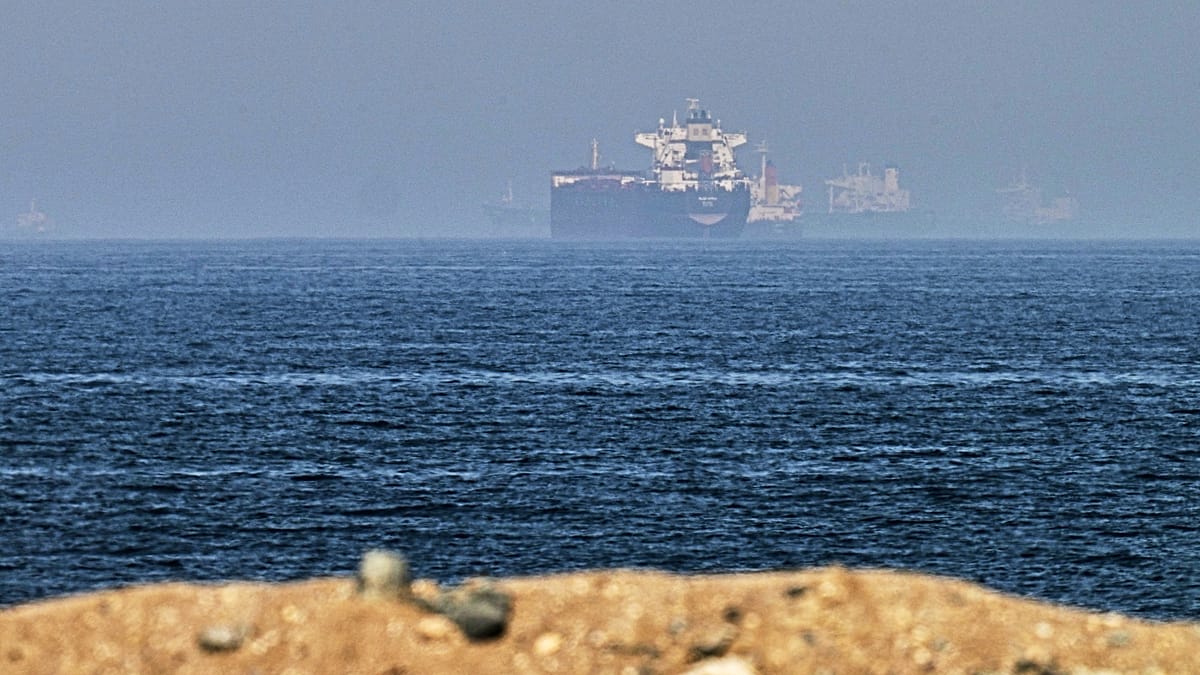
Two commercial tankers reported coming under attack near the Strait of Hormuz on Saturday, according to the United Kingdom Maritime Trade Operations (UKMTO), the British agency that monitors shipping in the region. The incidents add to the already heightened risks for vessels transiting one of the world's most critical energy arteries, as tensions between Washington and Tehran continue to simmer.
The first vessel said it had been "struck by an unknown projectile" while northeast of the Omani port of Lima, causing damage to its engine room. No injuries were reported, the agency said. About three hours later, UKMTO received a second report, this time northeast of Khasab in Oman, where a tanker's master reported seeing "a large splash and explosion in close proximity to the vessel." No damage was noted at the time of the report.
UKMTO advised ships in the area to proceed with caution and report any suspicious activity. Authorities are investigating both incidents.
A vital chokepoint under pressure
The Strait of Hormuz, connecting the Persian Gulf with the Gulf of Oman and the Arabian Sea, carries roughly a quarter of the world's seaborne oil trade. For European consumers and businesses, the waterway's stability is not an abstract concern: disruptions here quickly translate into higher fuel prices and supply uncertainty across the continent. European fuel prices have already felt the strain of earlier closures and attacks.
Tehran effectively closed the strait in late February following US and Israeli strikes on Iran, and it has remained a flashpoint in the broader conflict. Despite a "memorandum of understanding" reached in June, the waterway's status remains contested. On Friday, the US military pushed back against claims that Iran had reclosed the strait, insisting it was "open for commercial vessel transit."
"Iran does not control it. Thousands of ships have sailed through the international waterway over the past four months," US Central Command (CENTCOM) said in a statement.
The statement came as US President Donald Trump expressed growing pessimism about a diplomatic resolution. "At some point, they're going to say, 'we just can't take it anymore,'" he said, threatening to hit Iran "very hard."
US forces resumed strikes on Iran earlier this week after a brief pause, targeting what CENTCOM described as Iranian Revolutionary Guard command centers, maritime capabilities, missile and drone facilities, and coastal surveillance and defence sites. The strikes, CENTCOM said, aimed "to further diminish threats posed by Iran and its proxies to American forces, commercial shipping, and neighboring Gulf countries."
The renewed military activity follows 13 consecutive days of US strikes in July intended to "degrade Iran's ability to threaten commercial shipping in the Strait of Hormuz."
For Europe, the stakes are high. The bloc's energy security depends heavily on stable oil flows from the Gulf, and any sustained closure of the strait would force a scramble for alternative supplies. Iraq has already offered Turkey an additional million barrels per day as part of efforts to reroute exports away from the strait, and Gulf states are racing to develop bypass options. Yet no alternative can fully replace the strait's capacity in the short term.
Saturday's attacks, if confirmed as deliberate, would mark a significant escalation in the maritime dimension of the conflict. They also underscore the fragility of the June understanding, which had briefly raised hopes of de-escalation. Oil prices had slid during a lull in hostilities, but the latest incidents are likely to reverse that trend.
European governments, which have largely stayed on the sidelines of the US-Iran confrontation, are watching closely. The European Union has repeatedly called for restraint and for keeping the strait open under international law. But with Washington and Tehran locked in a cycle of strikes and threats, the risk of a wider conflagration—one that would hit European economies through energy prices and supply chains—remains high.