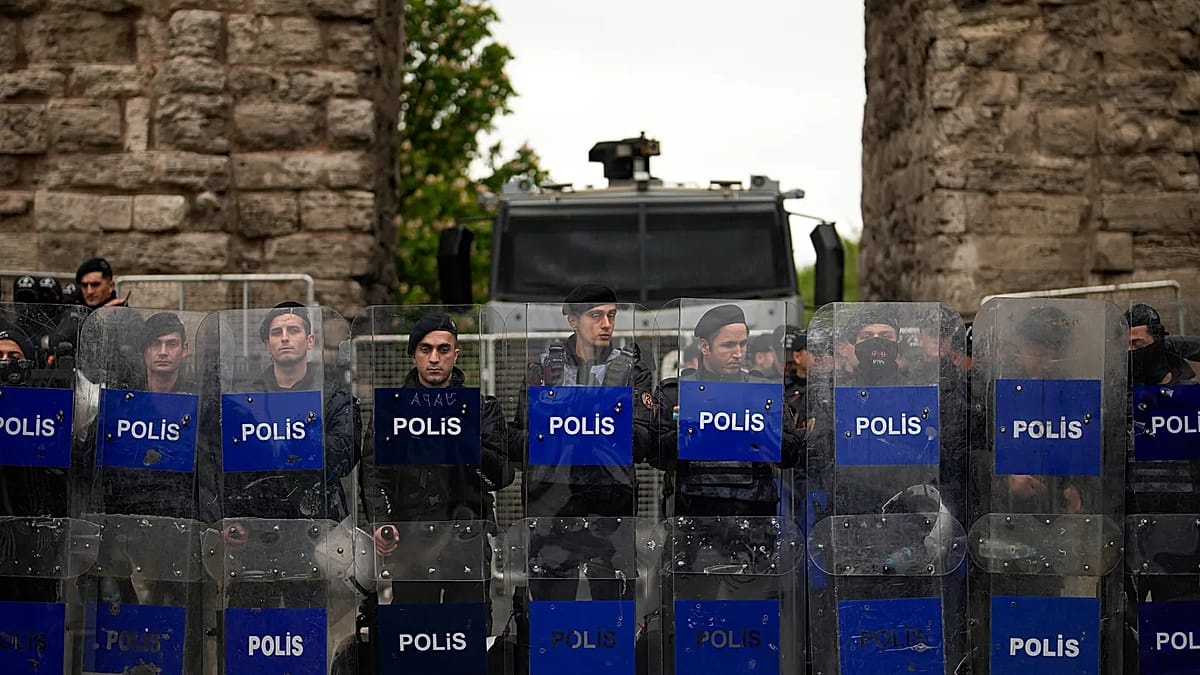
Turkish authorities have detained nearly 40 individuals, including journalists, trade unionists, and opposition figures, in a pre-emptive sweep ahead of International Workers' Day on 1 May. The Istanbul prosecutor general's office announced on Tuesday that arrest and search warrants had been issued against 62 people, of whom 46 were deemed “likely to carry out attacks.” Of those, 39 were taken into custody in Istanbul and the neighbouring Kocaeli province.
The annual celebration of workers and the working classes has long been a flashpoint in Turkey, with authorities routinely deploying large police contingents and sealing off central areas. Last year, protests shifted to the Kadıköy district, where more than 400 people were arrested. This year's detentions follow a familiar pattern of pre-emptive policing, but the scale and the targeting of journalists have drawn particular criticism.
Raids on Opposition Media and Lawyers
According to the MLSA, a Turkish press and legal freedom watchdog, police raids included the home of a lawyer and the offices of the opposition newspapers Özgür Gelecek and Yeni Demokrasi. Witnesses reported that doors were “kicked in” during the operations. Lawyer Serhat Alan, whose home was searched, told the MLSA that custody documents concerning 46 people were presented to him. The organisation added that a 24-hour confidentiality order had been imposed on the case, restricting access to lawyers.
The main pro-Kurdish Peoples' Equality and Democracy Party (DEM), the third-largest in the Turkish parliament, denounced what it called “operations targeting the left and socialists” as well as student organisations ahead of 1 May. In a statement, the party said that “numerous comrades have been taken into custody” and accused the government of aiming to “shrink the space for democratic politics,” warning that such actions would “deepen social tensions.”
Turkey's approach to May Day has long been a barometer of its political climate. Taksim Square, the symbolic heart of Istanbul, has been off-limits to mass gatherings since 2013, when a crackdown on a peaceful protest sparked nationwide demonstrations. Each year, authorities seal off the square and surrounding streets, channelling permitted rallies to other locations under heavy surveillance.
The detentions come amid a broader tightening of control over dissent. In recent months, the government has pursued legal cases against opposition politicians, journalists, and activists, often under anti-terrorism laws. The European Union, which Turkey remains a candidate to join, has repeatedly called for respect for fundamental freedoms, but progress on judicial reforms has stalled.
For an informed European audience, the events in Istanbul serve as a reminder of the fragile state of democratic norms in a key NATO ally and EU neighbour. The treatment of journalists and opposition figures ahead of 1 May echoes concerns raised in other parts of the continent, from Hungary to the Western Balkans, about the erosion of media independence and the rule of law.
As the May Day weekend approaches, all eyes will be on how Turkish authorities manage the protests that do take place. The arrests this week suggest that the government is determined to maintain a tight grip, even as it faces criticism at home and abroad.