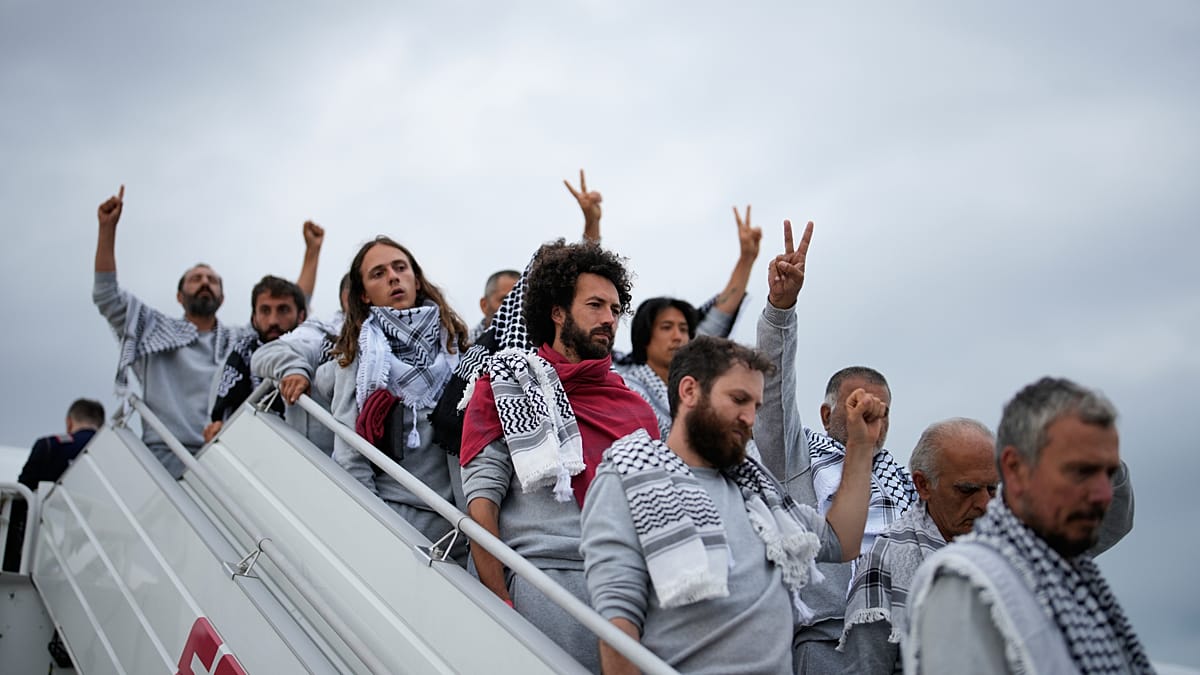
Turkey welcomed 422 activists from the Gaza flotilla in Istanbul on Thursday, after they were deported by Israeli authorities. The group, part of an aid convoy attempting to break the blockade on Gaza, was intercepted by Israeli naval forces off the coast of Cyprus earlier this week. Upon arrival at Istanbul Airport, many activists recounted harrowing experiences, with several alleging physical abuse and torture during their detention.
The flotilla, organized by a coalition of international humanitarian groups, aimed to deliver medical supplies, food, and construction materials to Gaza. Israeli forces boarded the vessels in international waters, leading to a confrontation that has drawn widespread condemnation from European capitals. The incident has reignited debates over the legality of the blockade and the treatment of activists under international law.
European Reactions and Diplomatic Fallout
European Union member states have reacted sharply to the developments. Italy and France have issued formal condemnations, with Rome calling for EU sanctions against an Israeli minister over the treatment of detainees. Italy Calls for EU Sanctions on Israeli Minister Over Flotilla Treatment highlights the growing pressure on Brussels to take a unified stance. Meanwhile, France has joined Italy in denouncing the interception, emphasizing the need for humanitarian access to Gaza.
The European Parliament is expected to debate the issue next week, with several MEPs demanding an independent investigation into the allegations of abuse. The bloc's foreign policy chief has called for restraint and a de-escalation of tensions, but divisions remain among member states over how to respond to Israel's actions.
In a separate development, Israeli Prime Minister Benjamin Netanyahu rebuked a minister after a video surfaced showing taunting of flotilla activists. Netanyahu Rebukes Minister After Video Shows Taunting of Gaza Flotilla Activists details the internal political fallout within Israel, as the incident threatens to strain relations with key European allies.
The flotilla's interception also drew criticism from humanitarian organizations, including the International Committee of the Red Cross, which called for immediate access to the detainees. Turkey, which has positioned itself as a vocal advocate for Palestinian rights, organized the reception of the activists and provided medical and psychological support upon their arrival.
This is not the first time a Gaza-bound flotilla has been intercepted by Israel. In 2010, a similar incident resulted in the deaths of nine Turkish activists, leading to a severe diplomatic rift between Ankara and Tel Aviv that took years to repair. The current episode threatens to reopen old wounds, with Turkish President Recep Tayyip Erdoğan condemning the interception as "state-sponsored piracy."
The broader context of the Israeli-Palestinian conflict continues to shape European policy. The ongoing violence in Gaza and the West Bank, coupled with the recent escalation in Lebanon, has prompted the US to announce a 45-day extension of the Lebanon-Israel ceasefire. US Announces 45-Day Extension of Lebanon-Israel Ceasefire Amid Ongoing Violence underscores the fragile security situation in the region, which European diplomats are closely monitoring.
As the activists recover in Istanbul, the focus now shifts to the legal and diplomatic repercussions. Several European countries have offered to provide consular assistance to their nationals among the detainees, while human rights groups are preparing to file complaints with international tribunals. The European Union's ability to project a coherent foreign policy on the matter will be tested in the coming weeks, as member states weigh economic and political ties with Israel against their commitments to international law and humanitarian principles.