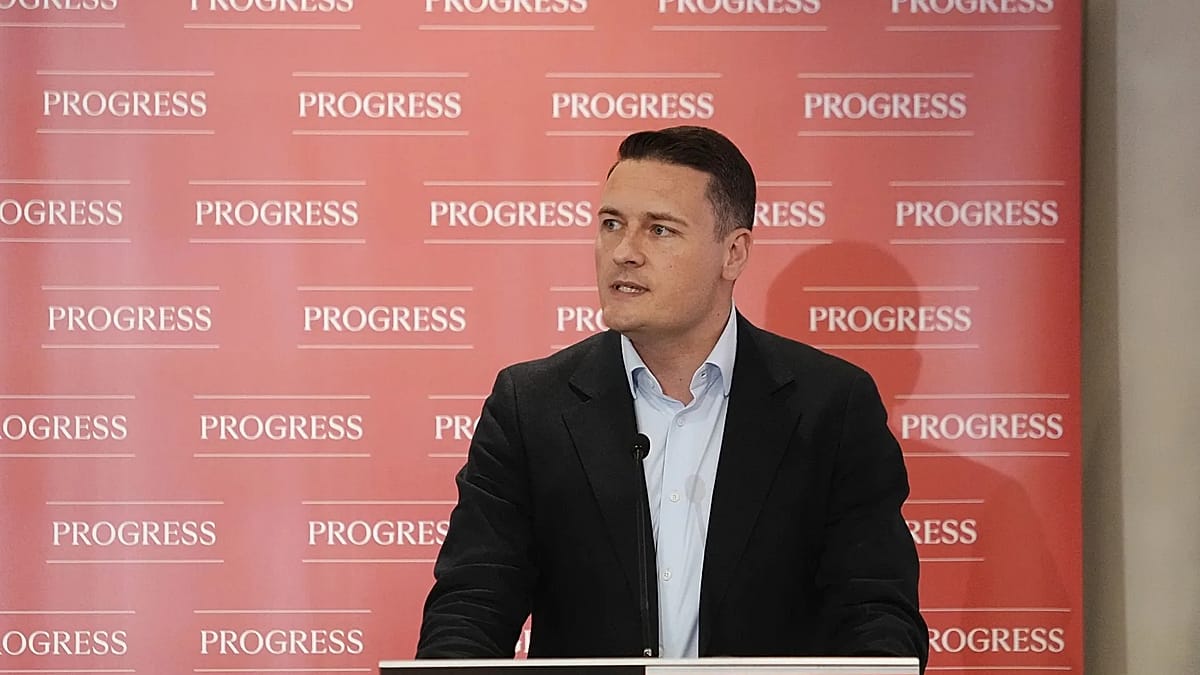
Wes Streeting, the former British health secretary who resigned from the Cabinet earlier this month, has publicly branded the United Kingdom's departure from the European Union a "catastrophic mistake." Speaking on Saturday at the Labour Party's Progress conference, Streeting made clear his intention to stand in any leadership race to replace Prime Minister Keir Starmer, whom he has called on to step down.
Streeting's Critique of Brexit
In his address, Streeting outlined what he described as three fundamental choices facing the country to restore a sense of national progress. "First, leaving the European Union was a catastrophic mistake," he told the audience. "It's left us less wealthy, less powerful and less in control than at any point before the industrial revolution."
Streeting went further, advocating for a long-term realignment with the continent. "We need a new special relationship with the EU, because Britain's future lies with Europe, and one day, one day, back in the European Union," he said. His remarks come amid heightened scrutiny of the UK's post-Brexit trajectory, particularly as the government in London seeks closer ties with Brussels while navigating an uncertain transatlantic relationship under US President Donald Trump.
The UK voted to leave the EU in 2016 after a bitterly divisive referendum campaign led by then-Conservative Prime Minister Boris Johnson, with strong backing from Nigel Farage, now leader of the Reform UK party. The decision has remained a fault line in British politics, and Streeting's intervention signals that the debate over Europe is far from settled within the Labour Party itself.
Streeting's leadership challenge follows his resignation as health secretary, a move that has intensified internal party tensions. For more on his departure, see our earlier report: UK Health Secretary Wes Streeting Resigns, Challenging Starmer's Leadership.
European Implications
Streeting's call for a return to the EU resonates beyond British shores. Across the continent, policymakers in Brussels, Berlin, and Paris have watched the UK's post-Brexit struggles with a mix of caution and, in some quarters, a sense of vindication. The economic costs of leaving the single market have been well documented: reduced trade, labour shortages, and diminished influence in global affairs. Streeting's framing of Brexit as a loss of wealth, power, and control echoes analyses from institutions such as the European Commission and the OECD.
If Streeting were to succeed in his leadership bid and eventually become prime minister, the prospect of a UK return to the EU would reshape European dynamics. However, any such move would require overcoming significant political hurdles, including a likely referendum and the need for unanimous approval from all 27 member states. The EU itself has moved on, focusing on deepening integration in areas like defence, energy, and digital policy, as highlighted by recent awards such as the Charlemagne Prize to Mario Draghi for his Eurozone leadership.
Streeting's remarks also come at a time when the UK is seeking to rebuild bridges with Europe amid global uncertainties. The relationship with Washington has grown more unpredictable under Trump, prompting London to look to Brussels for stability. Yet, the path to rejoining remains fraught. Public opinion in the UK has shifted slightly in favour of EU membership in recent polls, but the issue remains deeply polarising.
For now, Streeting's declaration is a bold opening gambit in what promises to be a contentious leadership contest. Whether it will resonate with Labour members and the broader electorate—or further divide the party—remains to be seen. What is clear is that the question of Europe is once again at the centre of British political debate.