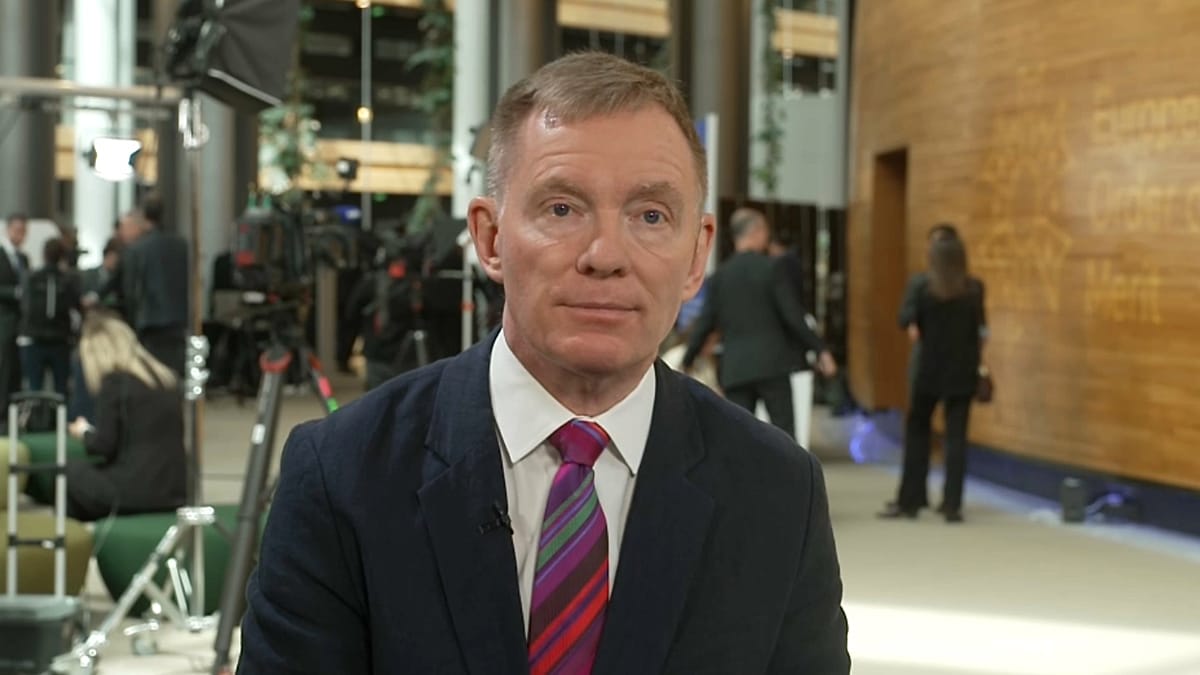
LONDON — The UK's Minister of State for Trade, Chris Bryant, has signaled that negotiations with the European Union on a steel tariff carve-out are nearing a conclusion, just weeks before both sides are set to impose new restrictions on imports. Speaking to Euronews from Strasbourg on Tuesday, Bryant described the talks as “very productive” and expressed optimism that a “good arrangement” could be reached before the July 1 deadline.
The European Union plans to halve its quotas and double tariffs on foreign steel from that date, a response to a surge of cheap Chinese imports and stalled talks with the Trump administration over US tariffs on EU steel. The UK is also set to reduce its tariff-free steel import quota by 60% and impose a 50% tariff on imports above that level, also starting July 1.
Avoiding a Self-Inflicted Wound
Bryant argued that applying these measures to each other would be counterproductive, given that the primary problem is Chinese overcapacity, not transatlantic trade. “We need to make sure that we don't provide a problem for each other because, frankly, the problem of over-capacity in steel, which undermines sovereign steel capacity on the continent of Europe, is not provided by us, it's provided by China and some other countries in the world,” he said.
The minister stressed that the UK and EU should not create new barriers as they work to tighten economic ties. “We shouldn't give ourselves a new problem,” he added.
Bryant also called for the UK to be included in the EU's “Made in Europe” public procurement strategy, which prioritizes European-made components in strategic industries like electric vehicles (EVs). He pointed to the deep integration of supply chains across the continent. “I just think if we have to be realistic about the fact that a French car is likely to have a British braking system in it, so you can start the French car but you can't stop the French car,” he explained.
France, under President Emmanuel Macron, has been a key driver of the “Made in Europe” initiative but has shown skepticism about extending its benefits to the UK. Bryant, however, described “very good conversations” with French counterparts. “If we're going to make sure that the whole of the continent of Europe prospers, I think Made in Europe will probably have to include the UK as part of that agenda,” he said.
Broader Reset Amid Political Turmoil
The steel talks are part of a wider effort by Prime Minister Keir Starmer's Labour government to reset the UK's post-Brexit relationship with the EU. Almost two years after Labour's landslide victory, the two sides hope to finalize a series of sectoral deals in time for a summit scheduled for July. Bryant described it as “common sense” for the EU and UK to align on issues such as agrifood exports, carbon emissions trading, and youth mobility.
He also linked the economic reset to broader security cooperation, noting that British troops may soon serve alongside Danish, Spanish, and German forces in Ukraine. “It will be crazy if by that time we haven't managed to achieve a trading arrangement which allows them to use the same car and buy the same products online,” he said.
However, the push for closer ties comes as Starmer faces his biggest political crisis since taking office. In local elections on May 7, Labour suffered historic losses in Scotland, lost its long-held control in Wales, and was defeated by Nigel Farage's Reform UK in English local contests. Former health secretary Wes Streeting has since stepped down and is expected to launch a leadership bid, while Greater Manchester mayor Andy Burnham is also contesting a by-election and likely to join the race.
Streeting has thrust Brexit back into the spotlight by floating the possibility of the UK rejoining the EU in the future, a stance that contrasts with the government's careful avoidance of reopening the Brexit debate. Asked whether Starmer should adopt a bolder line on Europe, Bryant did not hold back. “I've been a remainer from the beginning of time and I remain a remainer and I will remain a remainer until my dying day, so of course I would love to see the UK as a member of the European Union,” he said.
The comments highlight the tension within Labour between those pushing for deeper integration and the need to hold onto voters who backed Brexit. As the July tariff deadline approaches, the outcome of the steel talks will be a key test of whether the reset can deliver tangible results.