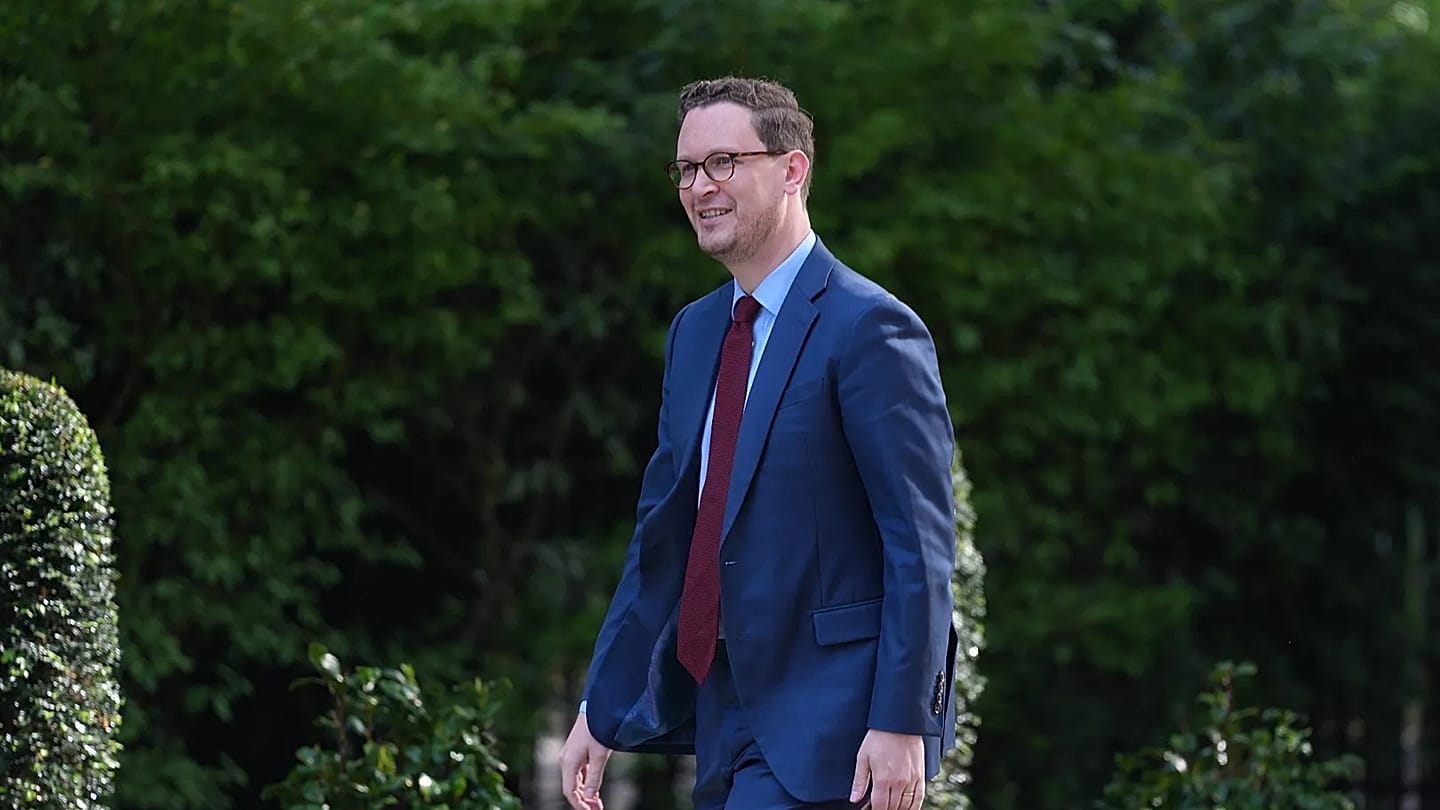
In a significant development for British politics, a senior minister has formally ruled out entering the Labour leadership race, effectively clearing the way for Andy Burnham to succeed Keir Starmer as party leader and prime minister. The decision, announced on Tuesday, removes what was widely seen as the last major hurdle between Burnham and Downing Street.
Burnham, the Mayor of Greater Manchester, has long been considered a frontrunner in the contest, which was triggered by Starmer's resignation last week. The minister's withdrawal means that Burnham now faces a largely uncontested path to the leadership, with no other heavyweight challenger expected to step forward.
Political analysts in London note that the move could accelerate the timeline for a transition of power. If Burnham secures the leadership, he could be installed in Downing Street as early as July, pending a formal vote by Labour members and the parliamentary party. The speed of this process reflects the party's desire to avoid a prolonged internal battle following Starmer's departure.
Implications for UK-EU Relations
Burnham's likely ascent has implications beyond domestic politics. As a vocal critic of the Brexit settlement, he has signalled a desire to rebuild ties with Brussels and EU member states. His leadership could herald a shift in the UK's approach to European cooperation, particularly on issues such as trade, security, and travel rules that have long frustrated British citizens.
European capitals are watching closely. In Berlin and Paris, officials have privately expressed cautious optimism about a Burnham premiership, viewing him as more pragmatic than his predecessor. However, they also note that any rapprochement will be constrained by the UK's red lines on sovereignty and the single market.
The leadership race itself has been marked by a series of strategic withdrawals. Earlier this month, several potential candidates, including shadow cabinet members, opted not to run, citing the need for party unity. The minister's decision is the latest in a pattern that has left Burnham as the clear favourite.
In a statement, the minister said: "I have decided not to put my name forward for the leadership. My focus remains on serving my constituents and supporting the next leader of our party." The statement made no direct mention of Burnham, but the implication was clear.
Burnham, for his part, has been careful to avoid appearing presumptuous. In a speech in Manchester on Monday, he emphasised the need for a "fresh start" and a "renewed social contract" with the British people. He also touched on foreign policy, calling for a "more mature relationship" with Europe.
The Labour leadership contest is expected to conclude by late June, with the winner formally taking over as prime minister shortly thereafter. If Burnham prevails, he will inherit a party that is deeply divided over Brexit and the future direction of the UK. His ability to navigate these divisions will be tested from day one.
For now, the focus remains on the mechanics of the leadership election. The party's National Executive Committee is expected to finalise the timetable this week, with nominations closing on Friday. Burnham is widely expected to secure the necessary support from MPs and party members.
As the race enters its final phase, the question in Westminster is no longer who will win, but how quickly Burnham can move into Number 10. The minister's decision has removed the last obstacle, and the countdown to a new era in British politics has begun.