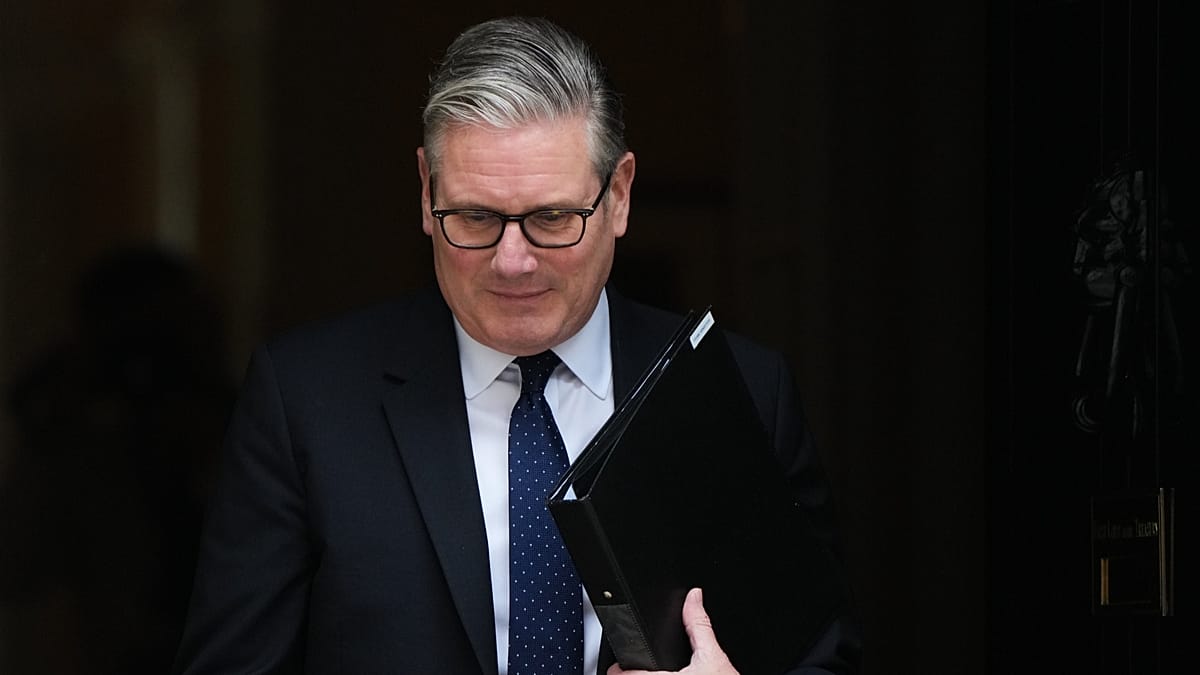
British Prime Minister Keir Starmer announced his resignation as leader of the Labour Party on Wednesday, setting in motion a leadership contest that will conclude in September. Starmer will remain in Downing Street as caretaker prime minister until his successor is elected, a process the party expects to complete by early autumn.
Speaking outside 10 Downing Street, a visibly emotional Starmer said: "Every decision I have taken has been about putting the country I love first. That is why I will resign as leader of the Labour Party." The announcement ends a tenure that lasted just over two years, making him the sixth Conservative or Labour prime minister since the 2016 Brexit referendum.
Burnham's Return Shifts Labour's Balance
The immediate trigger for Starmer's departure was the return of former Greater Manchester mayor Andy Burnham to the House of Commons. Burnham won a by-election in Makerfield on Monday and was sworn in as an MP hours before Starmer's statement. Under Labour's internal rules, the party leader must be a sitting MP, and Burnham—a favourite among the party's left and centre-left—is now widely expected to stand for the leadership.
Starmer had faced growing unrest within his own ranks after a disastrous round of local elections earlier this month, in which Labour suffered significant losses to Nigel Farage's hard-right Reform UK party. Until this week, Starmer had insisted he would fight any leadership challenge, but the scale of the defeat and Burnham's return made his position untenable.
The leadership election will formally launch in July, with a new leader expected to be in place by September. The winner will become the seventh UK prime minister in ten years, following David Cameron, Theresa May, Boris Johnson, Liz Truss, Rishi Sunak, and Starmer himself.
Reform UK Demands a General Election
Reform UK leader Nigel Farage immediately seized on the instability, posting on X: "If Labour thinks it can shove another professional politician into No 10, it has another thing coming." He added that Reform UK "demands an election, and we are ready to deliver radical change." Farage's party has surged in opinion polls, capitalising on voter frustration with both main parties.
The demand for a general election is unlikely to be met. Under the Fixed-term Parliaments Act, the next election is not due until 2029, and a change of prime minister alone does not trigger a national vote. However, the political turbulence has already cast doubt on the planned EU-UK summit, which was intended to reset relations after Brexit.
Von der Leyen Praises Starmer's Security Record
European Commission President Ursula von der Leyen offered a rare tribute to a departing British leader, posting online: "It can take many leaders years to grow into the statesman you became in just two years. European and Ukrainian security is stronger because of you. Thank you, dear Keir." Starmer had made defence and support for Ukraine a cornerstone of his foreign policy, strengthening ties with NATO and the EU on security matters.
His resignation comes at a delicate moment for European security, with the war in Ukraine ongoing and tensions between Poland and Ukraine over grain exports. The UK's role as a key European defence partner will now be under scrutiny as the leadership contest unfolds.
For Londoners, the news was met with a mix of resignation and fatigue. "Another day, another leader," one resident told European Pulse, reflecting a broader sense of political instability that has defined British politics for nearly a decade.
The Labour Party now faces a critical choice: whether to pivot back toward the centre-left with Burnham or choose a candidate who can counter the Reform UK surge. The outcome will shape not only Britain's domestic agenda but also its relationship with the European Union and the wider continent.