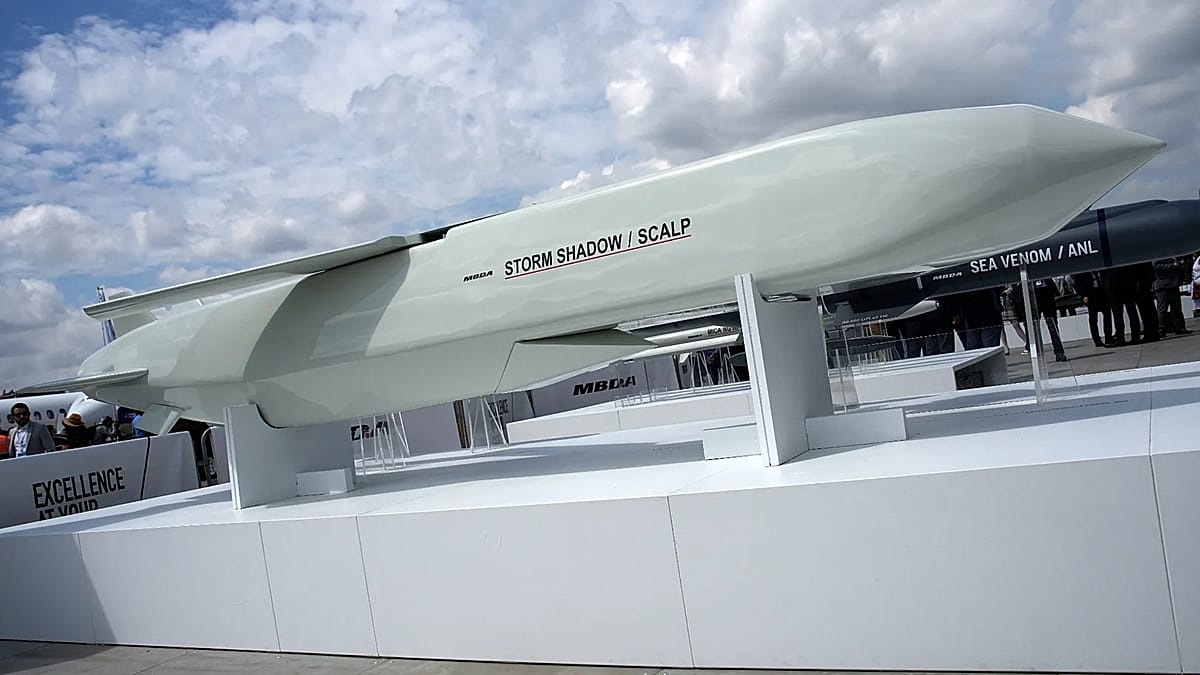
Ukraine and France are negotiating a license that would allow Kyiv to produce SCALP cruise missiles domestically, Defence Minister Mykhailo Fedorov confirmed this week. The talks mark a significant step in Ukraine's efforts to expand its own defence manufacturing capacity, reducing reliance on foreign deliveries.
The SCALP missile, manufactured by MBDA France, is the French equivalent of the British Storm Shadow, with a range of up to 250 kilometres. Paris first agreed to transfer the missiles to Ukraine in July 2023, during the NATO summit in Vilnius. Since then, Ukrainian forces have used them in strikes against targets inside Russia and occupied Crimea.
“There is indeed progress but it is still too early to say, because it is a difficult process regarding intellectual property in general, the opening of production and so on, there is a certain bureaucracy in this regard,” Fedorov said in an interview. He added that the initiative was launched by Ukrainian President Volodymyr Zelenskyy and his French counterpart Emmanuel Macron earlier in June, and that discussions are now continuing with both the French government and the manufacturer.
G7 Backs Local Production of Western Weapons
Following a summit in Évian-les-Bains earlier in June, the leaders of the G7 issued a statement saying they had discussed the possibility of Ukraine producing Western weapons and were “ready to consider” issuing such licenses. That declaration raised hopes in Kyiv that it might also obtain a license for anti-ballistic interceptors, particularly the US-made Patriot system.
For months, Zelenskyy has been pressing Washington to grant Ukraine a license to manufacture Patriot air defence interceptors. While no permission has yet been granted, Zelenskyy said on 21 June that US President Donald Trump plans to ask American defence firms to issue such licenses to Ukraine.
The Patriot system remains the only surface-to-air missile in Ukraine's arsenal capable of countering Moscow's ballistic missile threat. Manufactured in the United States by Raytheon and Lockheed Martin, Patriots have been widely deployed by US allies, including in the Gulf region. However, the US-Israel military campaign against Iran has depleted nearly a third of global Patriot interceptor stockpiles. According to some estimates, Gulf states have collectively fired more than 1,100 interceptors in recent months.
Lockheed Martin produces roughly 600 interceptors per year, and Zelenskyy noted in earlier remarks that monthly production reaches at most 60 to 65 missiles. That pace is far below what Ukraine would need to defend its cities and infrastructure from regular Russian ballistic missile attacks.
The push for licensed production comes as Ukraine's energy grid faces renewed strain from a heatwave moving east across the continent, compounding the damage from Russian strikes on power infrastructure. The broader European security landscape is also shifting, with the UK's new government under Keir Starmer unveiling an £80 billion defence plan focused on drones and artificial intelligence.
If successful, the SCALP license would mark a major milestone in Ukraine's defence industrial strategy, allowing it to produce one of the most effective long-range strike weapons in its arsenal. But as Fedorov acknowledged, the path from negotiation to production is fraught with legal and bureaucratic obstacles, particularly around intellectual property rights.