The European Union has pushed back against renewed trade pressure from Washington, after the United States accused the bloc of allowing Chinese goods to bypass American tariffs and demanded that Brussels roll back key environmental and human rights rules for businesses.
Andrew Puzder, the US ambassador to the EU, called on the bloc to align the provisions of the Corporate Sustainability Due Diligence Directive (CSDDD) and the Corporate Sustainability Reporting Directive (CSRD) with the EU-US trade agreement reached last year. In a post on X, Puzder said it was “time for the EU to deliver,” attaching a US government document listing a series of “concerns” with the two laws.
The document warned that Washington would “take any actions necessary to address unreasonable burdens on US commerce” if a solution was not found. It argued that the directives’ “extraterritorial reach and costly and onerous supply chain due diligence obligations” would harm the ability of American businesses to compete on a level playing field in the EU market.
Brussels stands firm
Responding to Puzder’s message, European Commission spokesperson Arianna Podesta said the EU continued to “exchange on both tariff and non-tariff issues” with the United States, describing the process as “constructive.” But she added: “We have been very clear and consistent on the fact that neither our rules framework nor our regulatory autonomy are up for negotiation.”
The CSDDD requires large companies to identify and address the adverse human rights and environmental impacts of their supply chains worldwide. The CSRD obliges firms to disclose their climate impact, emissions, and the steps they are taking to limit them. Both laws have already been scaled back under pressure from businesses inside and outside the bloc, with delayed implementation and exemptions for smaller companies. The US document, however, said those changes did not go far enough.
Puzder’s comments came a day after he criticised the EU’s Carbon Border Adjustment Mechanism (CBAM), calling it “a tariff in substance, no matter the ‘climate policy’ label.”
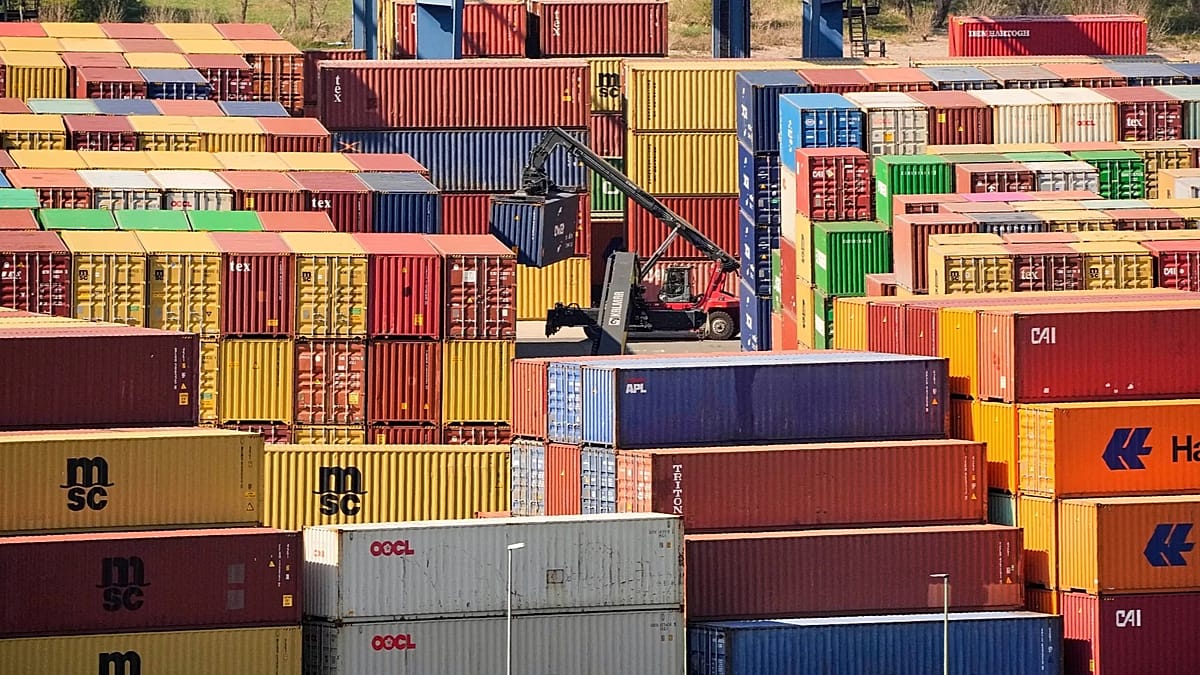
Separately, the EU was among dozens of trading partners flagged in a White House report on Thursday as posing a risk of “illegal transshipment” from China—a practice where goods are routed through third countries to avoid the sweeping tariffs imposed by President Donald Trump. The report, which also targeted Mexico, Canada, and Japan, promised to use artificial intelligence to detect such practices in the future.
Podesta said Brussels was “engaging” with Washington to better understand the report’s “potential implications for the EU,” while noting that the document itself acknowledged that the EU’s transshipment risk was “embedded within broad legitimate trade flows.” She added that the EU shared the US objective of tackling customs fraud.
The standoff comes as the EU and US navigate a complex trade relationship, with both sides seeking to protect their economic interests. The EU has been exploring ways to reduce its reliance on US payment systems and digital infrastructure, as seen in its push for a digital euro and payment roaming. Meanwhile, the bloc is also grappling with broader strategic questions, including enlargement and internal reforms.
Analysts say the US pressure on the EU’s sustainability rules could complicate transatlantic cooperation on climate and trade, but Brussels appears determined to defend its regulatory approach. As Podesta put it, the EU’s rules are not up for negotiation—even as it seeks to maintain a constructive dialogue with Washington.