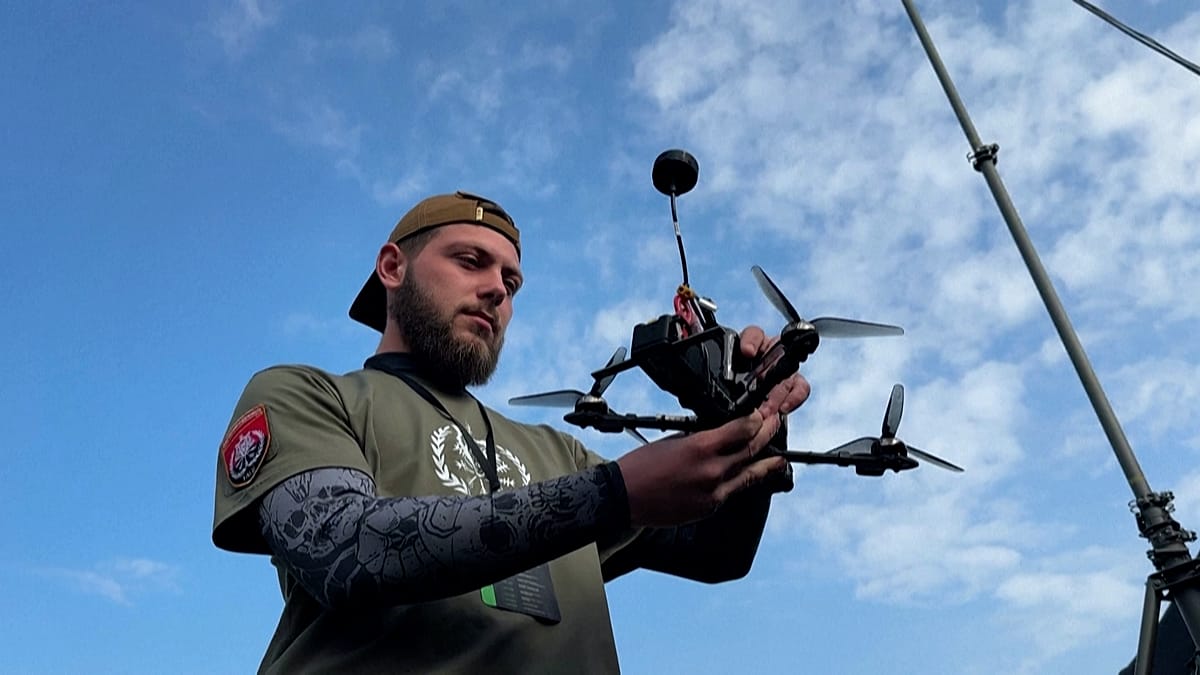
In a novel approach to military training, Ukraine is turning first-person-view (FPV) drone piloting into high-speed competitive tournaments. These events are designed to sharpen the reflexes, accuracy, and tactical decision-making of operators who are increasingly vital on the front lines against Russian forces.
From Simulator to Sky: The Tournament Format
Held at undisclosed locations across the country, the tournaments involve pilots navigating obstacle courses at breakneck speeds, often while under simulated electronic warfare conditions. The goal is not just to win a trophy but to replicate the split-second choices required in real combat, where a drone can be the difference between a successful strike and a catastrophic loss.
Participants, many of whom are volunteers or soldiers on rotation, compete in heats that test their ability to fly through narrow gaps, evade mock anti-drone systems, and hit targets with precision. The events are organized by a mix of military units and civilian drone enthusiast groups, reflecting the grassroots nature of Ukraine's drone warfare evolution.
"It's like a video game, but the stakes are real," said one pilot who gave only his call sign, "Viter." He added that the tournaments help build muscle memory and camaraderie, which are crucial when operating in high-stress environments. The competitions also serve as a scouting ground for identifying the most talented operators, who are then fast-tracked to specialized units.
Strategic Implications for the War
The use of FPV drones has become a hallmark of Ukraine's asymmetric warfare strategy, allowing small units to destroy expensive Russian armor and artillery with relatively cheap munitions. By gamifying the training process, Kyiv aims to accelerate the learning curve for new pilots, many of whom have no prior military experience.
This approach mirrors broader trends in modern warfare, where drone operators are increasingly treated as a distinct military specialty. The tournaments also serve a psychological purpose: they boost morale and provide a sense of progress and skill development amid the grinding attrition of the war.
The competitive format has drawn attention from international military observers, who see it as a cost-effective way to rapidly upskill personnel. Some NATO countries have expressed interest in adopting similar methods, particularly as drone threats proliferate across the continent. The recent NATO and Baltic states brace against drone threats, highlighting the broader European security implications.
Broader Context: Drone Warfare in Europe
Ukraine's drone tournaments are part of a larger shift in European defense thinking. The war has demonstrated that drones are not just reconnaissance tools but decisive weapons on the battlefield. In response, countries from Poland to the United Kingdom are ramping up their own drone programs, both for offensive and defensive purposes.
Meanwhile, the threat is not limited to Ukraine. Latvia warns residents after drone incursion, and tensions are rising in the Baltics as Russia continues to test NATO airspace. The Lithuania drone incident sparks Baltic security crisis, prompting EU-level discussions on counter-drone strategies.
For Ukraine, the tournaments are a practical necessity. With limited resources, the military must innovate to maintain an edge. The competitive format also helps standardize training across disparate units, ensuring that pilots from different brigades can operate effectively together.
As the war enters its third year, the ability to field skilled drone operators quickly could prove decisive. The tournaments are a small but telling example of how Ukraine is adapting to the demands of 21st-century warfare, turning a hobbyist pursuit into a lethal military asset.